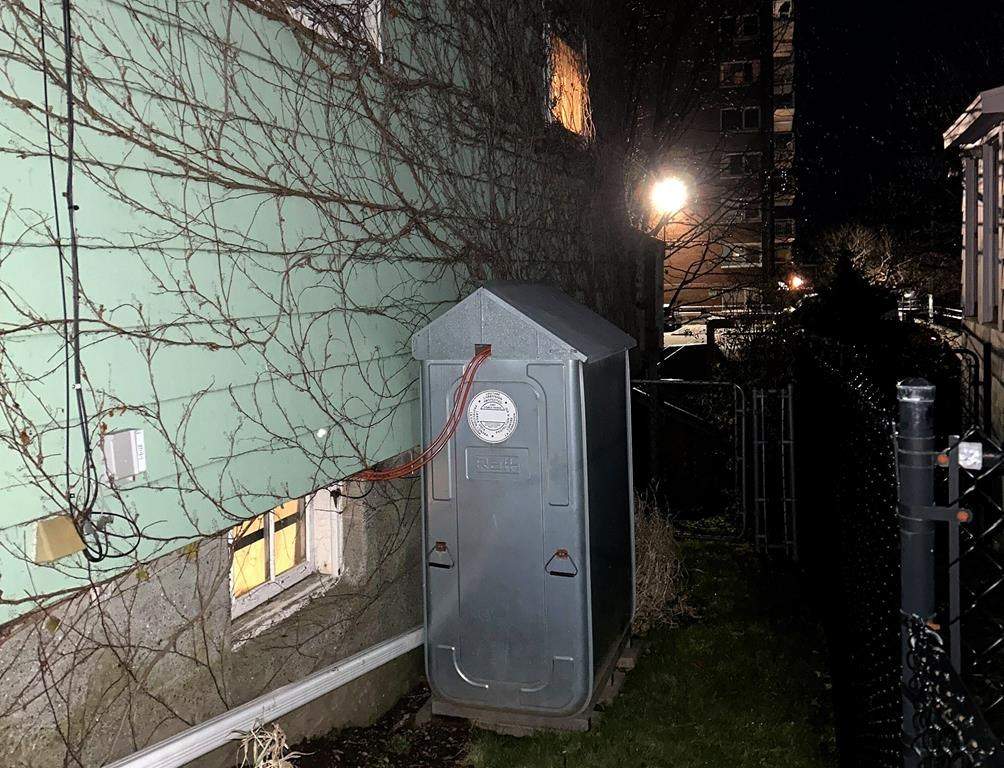
Public policy shifts during macroeconomic contractions reveal the underlying trade-offs governments face between fiscal restraint and social safety net preservation. The structural adjustment of Nova Scotia’s Heating Assistance Rebate Program (HARP) serves as a prime case study in policy retraction. By lowering net income eligibility ceilings—moving individuals from a $55,000 threshold down to $30,000, and multi-person households from $70,000 down to $45,000—the provincial government altered the mechanics of its energy relief mechanism. Deconstructing this policy shift requires examining the fiscal pressures, the behavioral responses of vulnerable populations, and the systemic consequences of narrowing eligibility criteria during periods of persistent energy inflation.
The Fiscal Mechanics of Subsidy Retraction
Government transfer programs operate under fixed budgetary constraints. When energy commodity prices surge—particularly for heating oil, electricity, and propane, which heavily index into Atlantic Canadian energy consumption—the aggregate cost of maintaining a universal or broad-based subsidy scales non-linearly.
The mechanism of retraction relies on a hard threshold adjustment rather than a sliding scale. This creates a sharp discontinuity in economic welfare.
- The Inclusion-Exclusion Boundary: A household earning marginally above the revised threshold faces the exact same marginal energy cost inflation as a household earning below it, yet absorbs the full financial shock without state transfer.
- The Fixed-Nominal Value Trap: While eligibility criteria contracted, the nominal rebate value remained capped at $400 per eligible household. In an inflationary environment, a fixed nominal benefit represents a declining real purchasing power parity over the heating season.
This dynamic shifts the financial burden directly onto the working-class demographic that populates the gap between the old thresholds and the new limits. These households earn too much to qualify for assistance yet lack the capital reserves to absorb multi-hundred-dollar monthly increases in home energy expenditures.
Operational Pressures on the Emergency Relief Ecosystem
When public policy narrows its eligibility criteria, demand does not vanish; it merely displaces from state balance sheets onto private and non-profit operational networks. The secondary effects of HARP's contraction are directly observable in the surging utilization metrics of community-level assistance organizations.
Food banks and emergency furniture banks report double-digit annual percentage increases in heating cost support requests. This migration of demand highlights a structural disconnect:
- State Offloading: By restricting the primary administrative safety net, the provincial fiscal deficit is partially shielded at the immediate expense of charitable liquidity.
- Buffer Depletion: Community groups operate on donor-driven cash flows rather than tax-backed revenues. Consequently, their capacity to absorb overflow demand is fundamentally finite, creating a severe bottleneck as winter temperatures decline.
- The Paycheque-to-Paycheque Velocity: For urban renters and rural homeowners alike, liquidity constraints mean that a single unexpected expense or minor wage fluctuation triggers a cascade toward utility default or arrears.
Household Cost Function and Behavioral Adaptation
To understand the lived impact of the policy shift, one must analyze the household energy cost function. Residential heating in Atlantic Canada is heavily reliant on electric baseboards or heating oil, both of which exhibit high price volatility compared to regulated municipal natural gas grids found in other jurisdictions.
When faced with a fixed income, a narrowed rebate, and rising unit costs, households execute specific operational trade-offs to balance their monthly budgets:
- Deferred Maintenance: Homeowners delay efficiency upgrades, such as heat pump installations or insulation retrofits, because the upfront capital expenditure remains prohibitive without expansive government co-funding.
- Thermal Compounding: Occupants resort to localized heating shutdowns, closing vents or turning down thermostats in specific rooms. However, improper thermal management in older housing stock often induces moisture accumulation, mold growth, and long-term structural degradation of the property envelope.
- Energy-Food Trade-offs: In microeconomic terms, energy is an inelastic good; a baseline of heat is non-negotiable for human survival. Therefore, households cut discretionary spending and essential nutrition budgets to maintain fuel and electricity payments.
Strategic Policy Implications
The restructuring of provincial heating rebates illustrates the limits of targeted fiscal austerity during structural commodity shocks. When eligibility thresholds are compressed faster than real median wages adjust to inflation, the policy achieves short-term treasury savings by transferring financial risk downward onto vulnerable populations and civil society institutions.
Future resilience in regional energy policy requires aligning transfer mechanisms dynamically with median income indexes rather than static fiscal cutoffs. Without an automated adjustment mechanism tied to real-time energy price indices, policy interventions will continue to lag behind actual household exposure, leaving large segments of the population vulnerable to systemic price volatility.