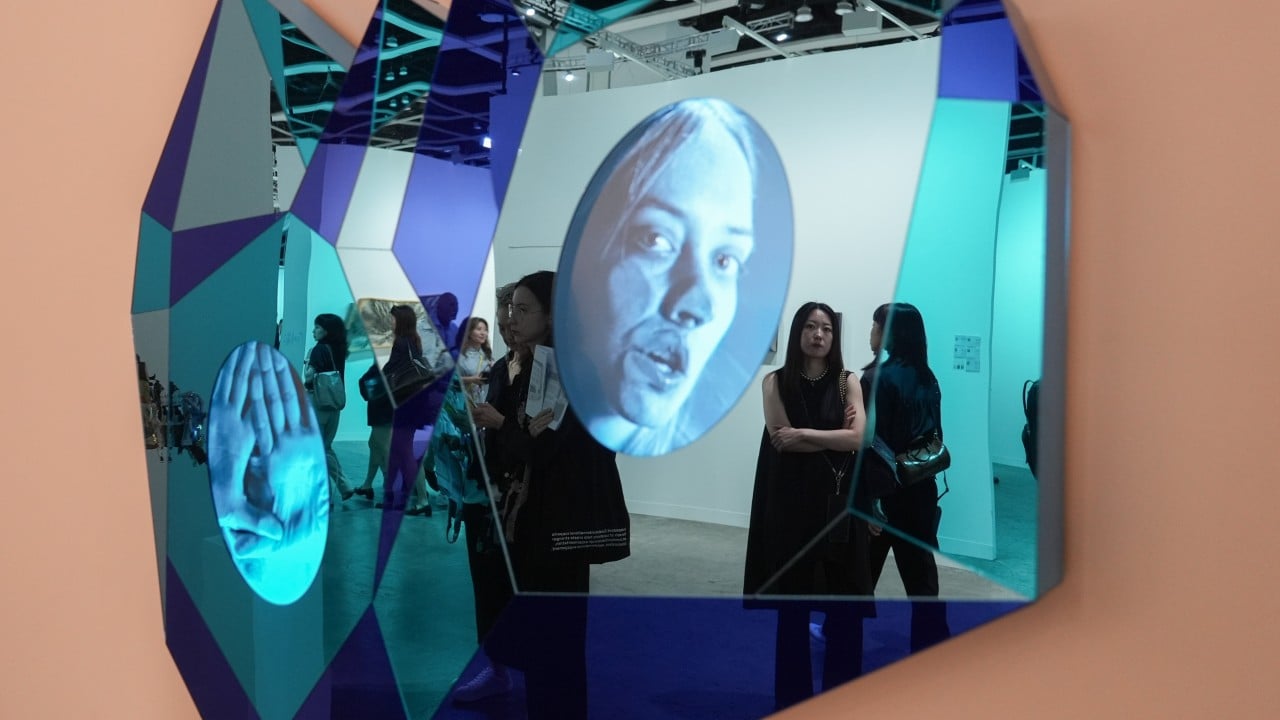
The success of Hong Kong’s Art March is often attributed to vague notions of "vibrancy" or "creativity," but its actual value lies in its function as a high-density liquidity event for the global attention economy. To transition from a seasonal spike to a sustainable economic moat, the city must solve the tension between state-sponsored curation and organic cultural production. The fundamental problem is that top-down cultural initiatives often suffer from the "museumification" effect, where an excess of government intervention sanitizes the very edge that attracts global high-net-worth individuals and the creative class.
The Architecture of Art March Efficiency
Art March functions as a multi-layered economic engine. It is not merely a collection of exhibitions; it is a synchronized logistics and marketing operation that reduces the friction of international art acquisition and cultural consumption. The efficiency of this period rests on three structural pillars.
High-Density Aggregation
By clustering Art Basel Hong Kong, Art Central, and numerous satellite installations within a 31-day window, the city minimizes the search and transaction costs for global collectors. In economic terms, this creates a "thick market" where the probability of high-value transactions increases exponentially because all relevant actors—galleries, curators, private collectors, and institutional buyers—are physically localized.
The Regulatory Arbitrage of Free Port Status
Hong Kong’s competitive advantage over regional rivals like Singapore or Shanghai is its status as a tax-free port for art. There are no import or export duties, and no sales tax or value-added tax (VAT) on art transactions. This creates a price advantage of roughly 7% to 20% compared to other global hubs. When combined with the Art March programming, this fiscal environment transforms cultural participation into a rational financial decision for the global elite.
Soft Power as Infrastructure
The government’s role in funding large-scale public installations, such as the "TeamLab: Continuous" display on the harborfront, serves as a loss-leader. These public-facing assets do not generate direct ticket revenue but serve as a "proof of life" for the city's international status. They provide the visual data points necessary for social media amplification, which functions as free, globalized marketing for the city’s broader tourism and business sectors.
The Authenticity Bottleneck and the Risk of Commodity Culture
A significant risk to the Art March model is the drift toward "Instagrammable" superficiality. When art is curated specifically for its shareability, it loses its "scarcity value." For a city to remain a global cultural capital, it must produce culture, not just host it. Currently, Hong Kong acts primarily as a high-end showroom for international works.
The "Authenticity Gap" occurs when there is a disconnect between the polished, government-sanctioned events and the gritty, decentralized creative output of the local population. If the city becomes a mere platform for foreign galleries, it faces the "Circuit de Monaco" problem: a venue that is prestigious once a year but remains culturally hollow the rest of the time.
The Cost Function of Over-Curation
Over-curation introduces a specific set of negative externalities:
- Homogenization: Events begin to look identical to those in London, Miami, or Basel, removing the "geographic premium" of visiting Hong Kong.
- Displacement: High rents driven by international galleries can push local grassroots organizations out of the very districts being promoted as "artsy."
- Sterilization: Heavy-handed vetting of public art to avoid controversy can lead to a "safe" aesthetic that fails to engage the intellectual curiosity of serious collectors.
To mitigate these risks, the strategy must shift from "hosting" to "integration." This requires a shift in how resources are allocated between the Mega Arts and Cultural Events (ACE) Fund and local talent development.
Quantifying the Spillover Effect on Non-Art Sectors
The Art March impact extends far beyond the walls of the Convention and Exhibition Centre. The surge in high-net-worth arrivals triggers a high-velocity spending cycle in the luxury hospitality and professional services sectors.
Hospitality and the Occupancy Premium
During Art March, five-star hotels in the Central and Admiralty districts report occupancy rates exceeding 90%, often with a 30% to 50% premium on Average Daily Rates (ADR) compared to February. This is not just a volume play; it is a demographic play. The visitors attracted by Art Basel represent a higher lifetime value (LTV) than the average mass-market tourist. They are more likely to engage with wealth management services, legal consultancies, and private medical facilities during their stay.
The Wealth Management Link
There is a direct correlation between cultural status and capital flight protection. By positioning itself as the art capital of Asia, Hong Kong reinforces its image as a safe, sophisticated jurisdiction for asset storage. Art is an asset class. A city that handles art transactions with world-class efficiency is implicitly signaling its capability to handle complex financial transactions.
Structural Constraints and Regional Competition
The Art March model is not immune to competition. Singapore has attempted to replicate this success with "Art SG," while Tokyo is aggressively revising its tax laws to challenge Hong Kong’s dominance in the art trade.
The Logistics of Art Logistics
Hong Kong’s lead is currently protected by its superior art handling infrastructure. The city possesses specialized climate-controlled warehousing and a workforce trained in the high-stakes movement of multi-million dollar pieces. This physical infrastructure is harder to replicate than a government subsidy. However, the bottleneck remains the high cost of space. For Hong Kong to scale its art economy, it must convert underutilized industrial buildings—specifically in areas like Wong Chuk Hang or Kwun Tong—into permanent, low-cost creative hubs.
The Perception Variable
The "authenticity" of a cultural hub is largely tied to its perceived freedom of expression. In the global art market, "edge" is a commodity. If the international community perceives that Hong Kong’s creative boundaries are narrowing, the premium associated with the Hong Kong brand will diminish. This is a cold, mathematical reality of the art market: censorship is correlated with lower resale value for contemporary works because it limits the work's historical and social relevance.
Optimization Protocols for Future Cycles
To move beyond the current plateau, the city’s cultural strategy requires a shift toward "Institutional Depth." This involves moving away from ephemeral "events" and toward permanent "ecosystems."
Decentralizing the Cultural Portfolio
Instead of concentrating all activity in the "Art March" window, the government should incentivize a "Staggered Release" model. This involves creating secondary peaks throughout the year to ensure that the infrastructure—hotels, transport, and galleries—operates at a higher baseline capacity rather than suffering from extreme seasonality.
The Local Content Requirement
The ACE Fund should implement a "Local Integration Coefficient." To receive government funding for a major international exhibition, the organizers must prove a tangible link to local artists or academic institutions. This creates a forced transfer of knowledge and prestige from global brands to local practitioners.
Digital-Physical Hybridization
Hong Kong should lead in the tokenization of physical art. By integrating its robust financial technology (FinTech) sector with the art market, the city could allow fractional ownership of high-value pieces stored in Hong Kong vaults. This would democratize art investment and create a new revenue stream that is not dependent on physical tourism.
Strategic Pivot: From Platform to Producer
The long-term viability of Hong Kong as an art hub depends on its ability to produce "Cultural Alpha." If the city only hosts what is already popular elsewhere, it is a middleman. If it discovers and promotes the next generation of Asian talent, it becomes an originator.
The strategic play is to leverage the immense data and foot traffic from Art March to identify emerging trends and then use the city’s venture capital networks to fund the creators behind those trends. Authenticity cannot be manufactured by a committee, but it can be funded. The city must move from a model of "Control and Command" to one of "Incentivize and Integrate." This means reducing the bureaucratic friction for street art, independent galleries, and experimental performances that give a city its "soul"—the very quality that the world’s wealthiest collectors are willing to travel thousands of miles to experience.
The ultimate measure of success for Art March will not be the number of attendees in 2026, but the number of local artists whose work is being exported to New York, London, and Paris in 2030. Cultivating this internal engine is the only way to ensure the city's cultural dividends continue to grow in a competitive global market.