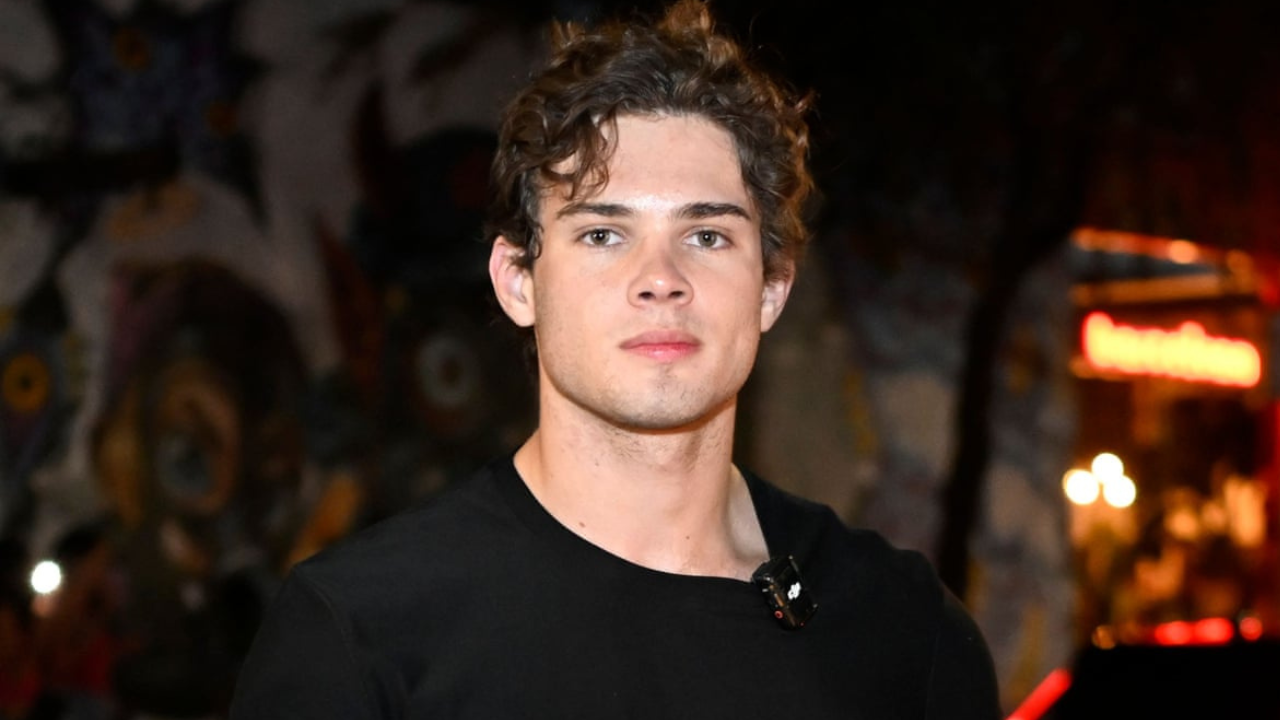
Modern attention markets operate on volatility. When content creators transition from stationary broadcast setups to untethered real-world environments, the underlying risk architecture shifts entirely. The decision by Kick broadcaster Braden Peters, known as Clavicular, to launch a multi-city college and fraternity livestream tour represents a specific monetization model built on high-friction social engagement. Rather than viewing this project through the lens of traditional entertainment, market analysts must deconstruct it as an exercise in high-risk distribution, audience capture, and liability management.
The structural mechanics of an in-real-life campus tour depend on three distinct variables: spatial unpredictability, crowd dynamics, and platform incentive structures. Static broadcasts rely on controlled environments where content velocity is maintained through dialogue, gaming mechanics, or guest interviews. In contrast, untethered mobile broadcasting relies on exogenous shocks. When a creator enters a university campus or a fraternity house, the environment supplies infinite variables that the creator cannot script. This lack of control acts as the primary engine for viewer retention. The audience is not tuning in for structured programming; they are participating in a probabilistic experiment where the core utility is watching how the creator navigates social friction, law enforcement encounters, and hostile environments. You might also find this similar story insightful: Why Amanda Knox at the Edinburgh Fringe is the Ultimate Triumph of the Morbid Curiosity Economy.
The economic viability of this format is directly tied to platform monetization models. Kick, as a streaming ecosystem, operates with looser content moderation thresholds and more aggressive revenue splits compared to legacy competitors, creating an environment where high-risk behavior can be directly converted into short-term financial gain and brand velocity. The tour format functions as a funnel. By physically moving through high-density youth demographics, the streamer manufactures viral moments—such as spontaneous altercations, campus security interactions, or meme-generating social encounters—which are then fragmented into vertical video clips and redistributed across TikTok, X, and Instagram. This creates a multi-tier marketing loop where offline friction generates online impressions, which in turn drive direct platform subscriptions and ad revenue.
However, the cost function of this strategy involves severe operational liabilities. Moving physical bodies through unvetted public and semi-private spaces without professional crowd control introduces compounding risks. The overhead of an untethered tour includes legal exposure, physical safety hazards, and platform ban risks. When content is broadcast live with zero latency, the creator has no buffer against immediate escalation. Previous high-profile incidents involving the streamer—ranging from campus security clashes and local law enforcement interventions to severe public altercations—highlight the structural fragility of this content model. Each escalation temporarily spikes viewership metrics while simultaneously increasing the probability of catastrophic operational failure, such as permanent platform deplatforming or criminal charges. As highlighted in latest reports by Rolling Stone, the implications are worth noting.
The logistics of executing a national campus tour require analyzing the friction points between digital subcultures and physical institutions. Universities and Greek organizations operate under strict institutional liability frameworks. Unannounced or disruptive broadcasts inside fraternity houses or campus quadrangles invariably trigger a defensive response from property owners, students, and institutional security. The strategic error made by casual observers is assuming that internet notoriety translates seamlessly into physical immunity. In reality, physical spaces impose localized rules that override digital status. The intersection of unvetted crowds, mobile cellular broadcasting equipment, and volatile personal behavior creates a high-probability environment for operational disruption.
To evaluate the long-term sustainability of the campus tour model, one must examine the law of diminishing returns inherent in shock-value entertainment. As audiences become desensitized to baseline chaos, creators are forced to escalate the intensity of their environments to maintain equivalent engagement metrics. This creates an unsustainable upward spiral in risk-taking. The marginal utility of each subsequent viral clip decreases while the marginal cost of legal, physical, and platform liabilities increases exponentially.
The strategic trajectory for this specific distribution method points toward systemic institutional pushback. As physical venues, local municipalities, and tech platforms tighten enforcement around unconsented public recording and disruptive broadcasting, the operational window for unstructured IRL tours narrows. Creators attempting to scale this model must either pivot toward institutional partnerships and controlled access or accept structural marginalization as insurance costs, legal fees, and platform bans erode profit margins. The viability of the format is bounded entirely by the tolerance threshold of the physical world meeting the digital attention economy.