A $173,000 appellate judgment against a New Jersey property owner for a falling oak tree signals a decisive shift in residential risk allocation. Standard homeowner assumptions treat falling timber as an uninsurable "Act of God," shifting the financial burden onto the victim's first-party property policy. When a court upholds a six-figure award for a neglected tree, it establishes that biological decay is a foreseeable, quantifiable liability rather than a random meteorological event. Property owners who fail to audit the structural integrity of mature boundary trees now face direct personal and commercial exposure that bypasses traditional insurance shields.
To understand why this appellate ruling holds weight for residential real estate, asset management, and property insurance underwriting, one must dissect the legal mechanics of premises liability, the arboricultural indicators of structural failure, and the financial asymmetry between preventative maintenance and litigation defense.
The Legal Architecture of Tree Liability
Premises liability regarding natural conditions operates on a strict continuum between rural immunity and urban duty of care. Historically, English common law shielded landowners from liability for natural conditions on their property, regardless of the hazard posed to adjacent parcels. Modern American jurisprudence—and New Jersey tort law specifically—has dismantled this shield in suburban and urban environments.
The governing legal standard relies on the doctrine of constructive notice. A plaintiff does not need to prove that a neighbor intentionally weaponized a decaying tree, nor do they need a written confession that the owner knew the tree would fail on a specific date. Instead, liability attaches when three sequential conditions are met:
- Duty of Reasonable Inspection: In developed areas, a landowner possesses an affirmative duty to inspect trees adjacent to property lines, public rights-of-way, and neighboring structures.
- Patent vs. Latent Defects: The hazard must be patent—discoverable through a reasonable visual inspection by a layperson or a standard arboricultural assessment—rather than latent (hidden entirely within the subterranean root plate or internal heartwood without external indicators).
- Proximate Causation: The structural failure must stem directly from the unaddressed biological defect rather than an unprecedented, unforeseeable weather event that would have toppled a healthy specimen of the same species.
When an appellate court upholds a $173,000 award, it validates the trial court's finding that the defendant breached this duty of care. The financial judgment is not a penalty for owning a large oak; it is a mathematical assessment of the structural damage caused by ignoring visible biological degradation over an extended timeframe.
The Erosion of the Act of God Defense
Insurance carriers routinely deny third-party liability claims by invoking the force majeure or "Act of God" defense, arguing that wind, heavy rain, or ice accumulation caused the tree to fall. This defense collapses under rigorous forensic scrutiny when the tree exhibits pre-existing structural compromise.
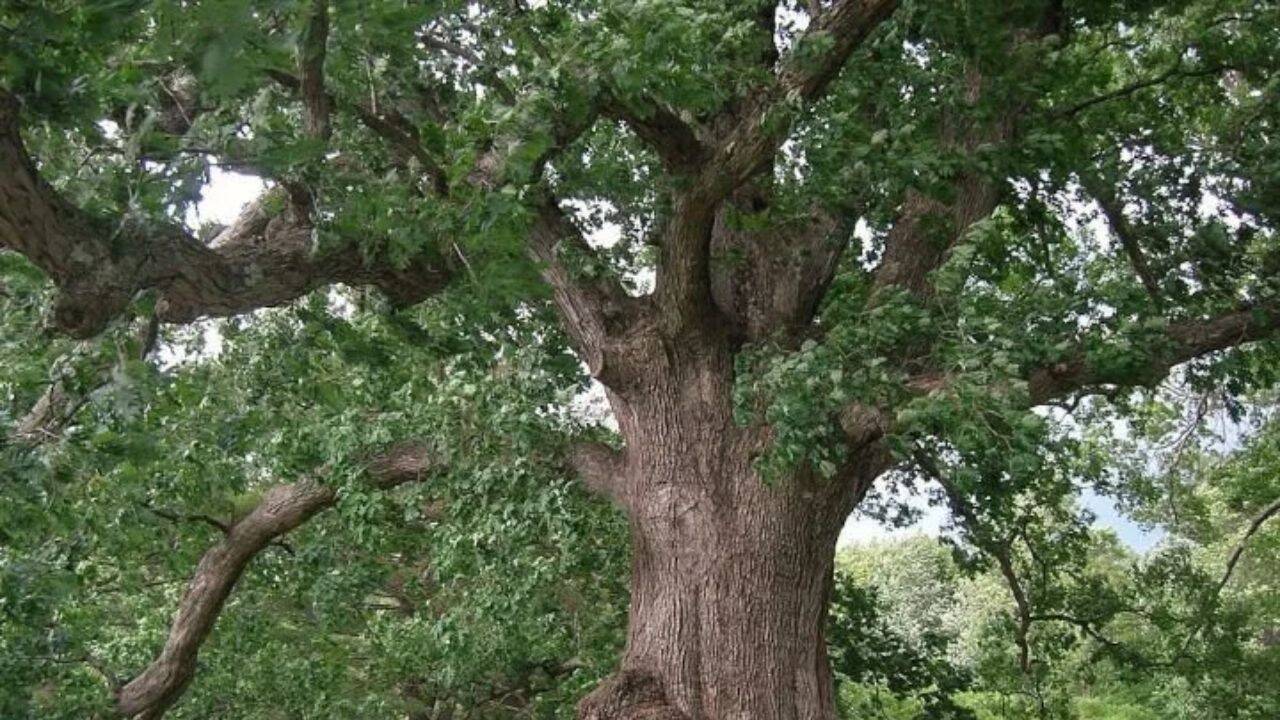
In meteorological and structural engineering terms, healthy mature oaks (Quercus species) are engineered to withstand significant wind loads through dynamic damping—the ability of branches and foliage to flex and dissipate kinetic energy. When internal decay hollows out the trunk or fungal pathogens sever the structural root system, the tree's wind-load threshold drops precipitously. If a tree fails during a routine seasonal storm—defined by local meteorological data as wind gusts well below historical design-load thresholds—the weather is merely the trigger, not the proximate cause. The courts consistently rule that an Act of God defense is unavailable when human negligence (failure to remove a visibly dead or dying tree) concurs with natural forces to produce the damage.
The Biological Mechanics of Structural Failure
A $173,000 structural loss rarely happens overnight. Oak trees are slow-growing, dense hardwoods that take decades to reach maturity and often years to die. This prolonged decline creates an extensive paper trail—and visual record—of negligence. Understanding the physiological failure modes of mature oaks explains why courts view these incidents as preventable.
Indicators of Constructive Notice
Courts evaluate constructive notice by examining whether specific, recognizable signs of decay were present prior to the failure. In arboriculture, these indicators fall into distinct diagnostic categories:
- Crown Dieback: The progressive death of twigs and branches starting from the upper and outer perimeter of the canopy. Because water and nutrients must travel the furthest to reach the upper crown, vascular system failure manifests here first. A canopy displaying 30% or more deadwood during the summer growing season is a primary indicator of systemic decline.
- Fungal Fruiting Bodies: The appearance of conks, brackets, or mushrooms (such as Laetiporus sulphureus or Armillaria species) on the lower trunk or root flare. A fungal fruiting body is not a superficial skin condition; it is the reproductive structure of an organism that has already colonized and digested the structural lignin and cellulose within the tree's core.
- Included Bark and Co-dominant Stems: Structural weak points where two or more main trunks grow tightly together without forming a strong connective branch collar. As the stems expand in diameter, they exert outward pressure against one another, creating a vertical split that requires minimal wind force to shear apart.
- Root Plate Heaving: Soil cracking, mounding, or lifting on the side of the tree opposite the direction of lean. This indicates that the subterranean anchoring roots have snapped or rotted, leaving the tree balanced solely by its dead weight.
- Basal Cavities and Sloughing Bark: Large vertical cracks, missing sections of bark exposing dry, dead sapwood, or hollow cavities at the base of the trunk. According to standard arboricultural biomechanics (specifically the Mattheck t/R ratio, which measures sound wood thickness relative to trunk radius), once internal decay reduces the outer wall of sound wood below a critical threshold, mechanical failure becomes a mathematical certainty.
When any combination of these symptoms exists for multiple seasons, a layperson does not need a degree in forestry to recognize a hazard. If a neighbor documents these conditions via timestamped photographs or certified correspondence, the legal threshold for actual notice is crossed, eliminating any plausible deniability in subsequent litigation.
The Cost Function of Deferred Maintenance
From a pure capital allocation perspective, allowing a hazardous tree to remain standing represents an irrational risk-reward asymmetry. Property owners frequently defer tree removal due to the immediate, tangible cash outflow required for professional arboricultural services, opting instead to absorb an unquantified tail risk.
Capital Expenditure vs. Uncapped Liability
The market cost to dismantle and remove a large, hazardous mature oak in a suburban New Jersey jurisdiction—requiring crane access, certified climbers, rigging crews, and debris hauling—typically ranges from $3,500 to $8,500, depending on proximity to structures and utility lines.
Compare this fixed, predictable capital expenditure against the actual financial exposure realized in the $173,000 judgment:
- Direct Structural Reconstruction: Crushing a residential roofline involves far more than replacing shingles and plywood. Impact forces compromise load-bearing wall framing, shear roof trusses, shatter fenestration, and fracture foundation walls. In the Northeast corridor, where residential construction labor and material costs rank among the highest in the nation, structural framing, roofing, drywall, electrical rewiring, and interior finish restoration rapidly exceed six figures.
- Additional Living Expenses (ALE): While a home undergoes months of structural engineering assessments, municipal permitting, and reconstruction, the displaced occupants require comparable temporary housing. Liability judgments routinely encompass the recovery of hotel stays, short-term rental leases, and storage costs.
- Subrogation and Legal Defense Costs: When a victim's first-party homeowner's insurance pays out for a crushed roof, the carrier does not simply absorb the loss. Through the contractual right of subrogation, the insurer steps into the shoes of the policyholder and sues the negligent neighbor to recover the payout. Insurance companies employ dedicated subrogation litigation teams with deep capital reserves, ensuring that a negligent landowner faces relentless legal pressure.
- Policy Limit Exhaustion and Personal Asset Exposure: Standard homeowner policies carry personal liability limits typically capped at $100,000 or $300,000. If a defendant's policy limit is $100,000, a $173,000 judgment leaves a $73,000 uninsured deficit. The plaintiff or subrogating carrier can pursue this deficit directly against the defendant's personal bank accounts, brokerage holdings, or place a judgment lien directly against their real estate.
The expected value calculation is unequivocal: spending $5,000 to eliminate a known structural hazard avoids a catastrophic loss event exceeding 30 times the preventative cost.
Underwriting Shifts and Property Risk Management
The ripple effects of appellate judgments upholding high-value tree liability awards extend directly into property and casualty (P&C) insurance underwriting. Insurers facing rising catastrophe losses and inflated reconstruction costs are aggressively tightening policy terms regarding vegetative hazards.
Modern underwriting protocols increasingly utilize high-resolution aerial imagery, LiDAR mapping, and satellite analytics to audit residential parcels prior to policy issuance and renewal. Carriers now routinely issue non-renewal notices or mandatory remediation directives when aerial scans detect overhanging canopy coverage above residential rooflines or visible deadwood within striking distance of insured structures.
Furthermore, insurers are modifying policy language to limit exposure. Some carriers introduce specific exclusions or sub-limits for damage caused by unmaintained trees, while others utilize strict negligence standards to deny liability coverage altogether if the insured ignored prior written warnings from municipal code enforcement or adjacent property owners. Relying on a standard homeowner policy as a backstop for deferred property maintenance is an increasingly failing strategy.
Operational Protocol for Boundary Tree Risk Mitigation
Property owners, real estate investors, and asset managers must treat mature trees adjacent to structures as depreciating physical infrastructure requiring scheduled inspection and maintenance. Relying on passive observation creates unacceptable legal exposure. Execute the following four-step risk mitigation protocol to eliminate constructive notice liability and protect balance sheet assets.
Step 1: Conduct a Spatial Striking-Distance Audit
Map every mature tree on the parcel using a simple geometric baseline: measure the tree's total height and establish a circular drop zone with a radius equal to 1.5 times that height. Any tree whose drop zone intersects a neighboring dwelling, garage, driveway, parked vehicle zone, or public sidewalk constitutes a high-consequence target. Trees outside this radius represent low-consequence ecological assets; trees inside this radius require active risk management.
Step 2: Commission a TRAQ-Certified Assessment
Do not rely on general landscapers or uncredentialed tree trimmers for structural risk evaluations. Hire an arborist certified by the International Society of Arboriculture (ISA) who holds the Tree Risk Assessment Qualification (TRAQ).
Request a written Level 2 Basic Assessment for all high-consequence target trees. This assessment provides an objective, standardized evaluation of tree health, structural defects, target value, and likelihood of failure. A documented TRAQ assessment serves two critical functions: it identifies hidden hazards before failure occurs, and it establishes a legally defensible record proving that the landowner exercised a high standard of care.
Step 3: Execute Immediate Remediation on Compromised Assets
If the TRAQ assessment identifies moderate-to-high failure risk—such as root decay, severe lean, or extensive crown dieback—authorize immediate removal or structural pruning (such as weight reduction or cabling, where biologically viable). Delaying action after receiving a written arborist report converts a potential constructive notice issue into indisputable actual notice. Once a defect is documented in writing, any subsequent failure guarantees liability.
Step 4: Formalize Neighboring Hazard Notifications
When the hazard resides on an adjacent parcel and threatens your structure, you must systematically transfer the legal burden of risk onto the neighboring landowner before a failure occurs:
- Document Visually: Capture high-resolution, timestamped photographs clearly showing the deadwood, fungal conks, leaning trunk, and its spatial proximity to your roofline.
- Obtain an Independent Opinion: Have your certified arborist inspect the neighbor's tree from your side of the property line and issue a brief written statement noting the visible structural defects.
- Deliver Formal Notice: Send a concise, non-emotional letter via USPS Certified Mail with Return Receipt Requested (as well as standard first-class mail) to the property owner of record. Attach the photographs and the arborist's note. State clearly that the tree poses an imminent structural hazard to your property and request its removal.
- Archive the Record: Retain the signed green return receipt, copies of the correspondence, and the digital metadata of the photographs in a cloud archive.
If the neighbor refuses to act and the tree subsequently fails, this documentation eliminates the Act of God defense, satisfies the legal requirement of actual notice, and enables your first-party insurer to successfully subrogate the entire claim—protecting your claims history, preventing premium surcharges, and ensuring full recovery of your deductible and uninsured losses.