The desk lamp in the basement office flickered, casting a tired, amber glow over maps that felt increasingly obsolete. Outside, the world kept turning on its routine axis, oblivious to the fact that half a world away, a fragile pause had just snapped like dry pine.
For nearly a week, the air across the Persian Gulf had carried a deceptive stillness. Diplomats whispered behind closed doors; citizens in Tehran and Washington dared to exhale. But quiet in a protracted conflict is rarely peace. It is merely a breath held underwater, waiting for someone to choke.
That breath ran out when a volley of ballistic missiles cut through the night sky toward a coalition base in Jordan. Patriot batteries roared into action, tracking and intercepting the incoming threats before they could find their mark.
Consider what happens next in the machinery of modern escalation. Action demands reaction. Physics demands equal and opposite force.
From the Oval Office, the response came not with a scalpel, but with a hammer. President Donald Trump made his intentions clear to reporters, stating simply that it was time to hit back hard. Within hours, the United States Central Command put those words into motion. Over a concentrated two-hour window, American air assets unleashed a heavy wave of strikes targeting dozens of installations belonging to the Islamic Revolutionary Guard Corps.
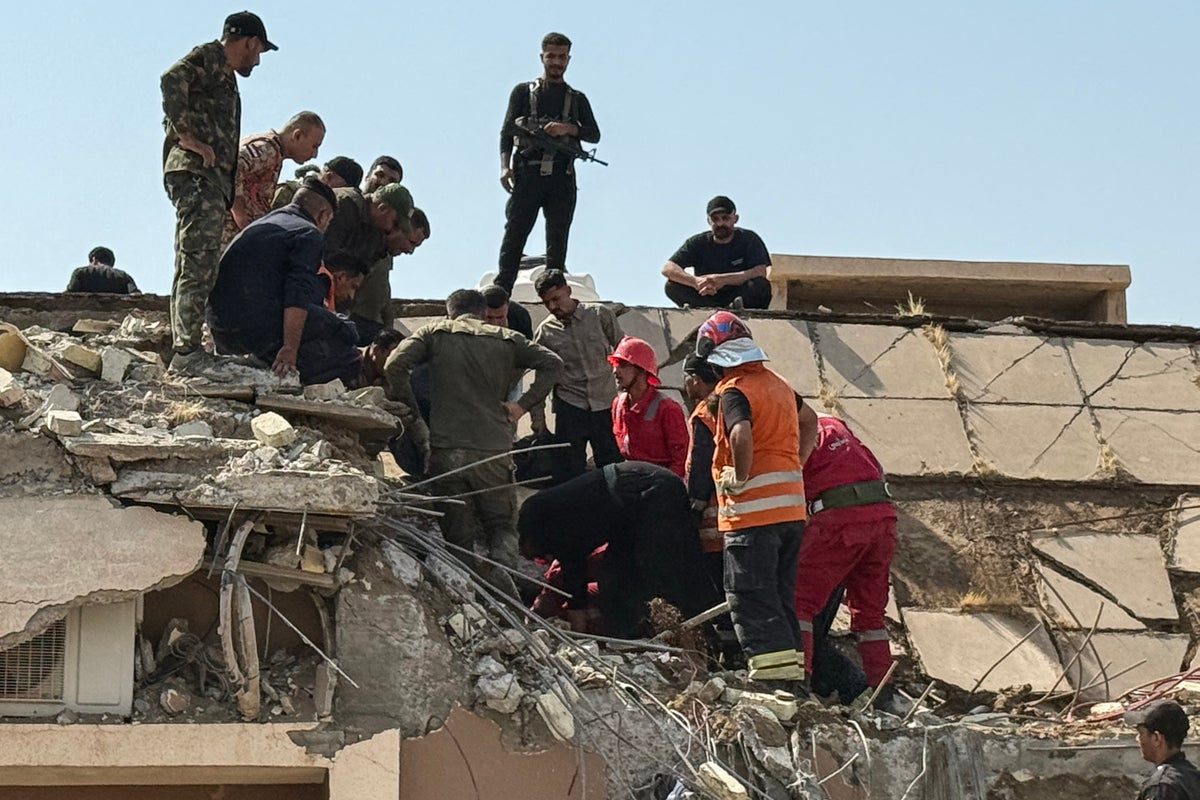
Radar stations went dark. Command hubs crumbled. Drone and missile storage facilities across southern provinces, including the strategic contours of Qeshm Island, absorbed the brunt of the barrage.
The geography of this war is not abstract. It is stamped into the daily lives of people caught beneath flight paths. Imagine waking up to the concussive rattle of windowpanes in Abadan or watching smoke rise near the coastal fringes of the Strait of Hormuz. For a hypothetical family living near these military outposts, the geopolitical chess match translates directly to shaking floors, sirens wailing into the pre-dawn hours, and the heavy, metallic taste of fear.
This latest violence did not erupt in a vacuum. Just twenty-four hours prior, joint American and Saudi strikes hammered Iran-backed militias deep inside neighboring Iraq, a rare and consequential operational crossover that left scores of fighters and multiple advisers dead. It marked the first time a major Gulf state directly integrated military actions of this scale during the ongoing five-month campaign, pushing the region past invisible boundaries into uncharted territory.
Meanwhile, thousands of miles away from the missile plumes, the invisible arteries of global commerce began to clot.
The Strait of Hormuz remains effectively choked. Cargo ships sit idle or alter courses, caught between a U.S.-enforced naval blockade and Iranian threats against non-compliant vessels. Energy markets jitter with every radar blip. When a drone strike later sparked fires on gas storage vessels at Egypt's Mediterranean port of Damietta, the ripple effect proved that modern supply chains are as fragile as blown glass. No one was hurt in that specific port fire, yet the psychological toll on international shipping lanes compounded overnight.
Wars like this grind down more than concrete and steel. They exhaust stockpiles of precision-guided munitions that take years to manufacture. They stretch alliances thin. They leave eighteen American service members dead and over six hundred wounded since the conflict's inception, turning abstract casualty figures into empty chairs at kitchen tables across the United States.
Back in the command centers, analysts note that both Washington and Tehran appear trapped in a grim loop. Neither side sees a clear path to total victory, yet neither believes stepping back will yield anything other than a perceived surrender. Negotiations stall. Ceasefires fracture under the weight of the next incoming projectile.
The smoke over Qeshm Island began to drift eastward toward the open water. Night fell once again over the Gulf, heavy and absolute, leaving the horizon waiting for the next spark.