Living in southeast Calgary means dealing with the usual hum of traffic and the steady expansion of new suburban communities. But for weeks, thousands of residents woke up to something entirely different. They woke up to thick, acrid smoke blanketing neighbourhoods like Quarry Park, Ogden, and Douglasdale. They kept their windows sealed tight, bought upgraded furnace filters, and abandoned outdoor sports fields.
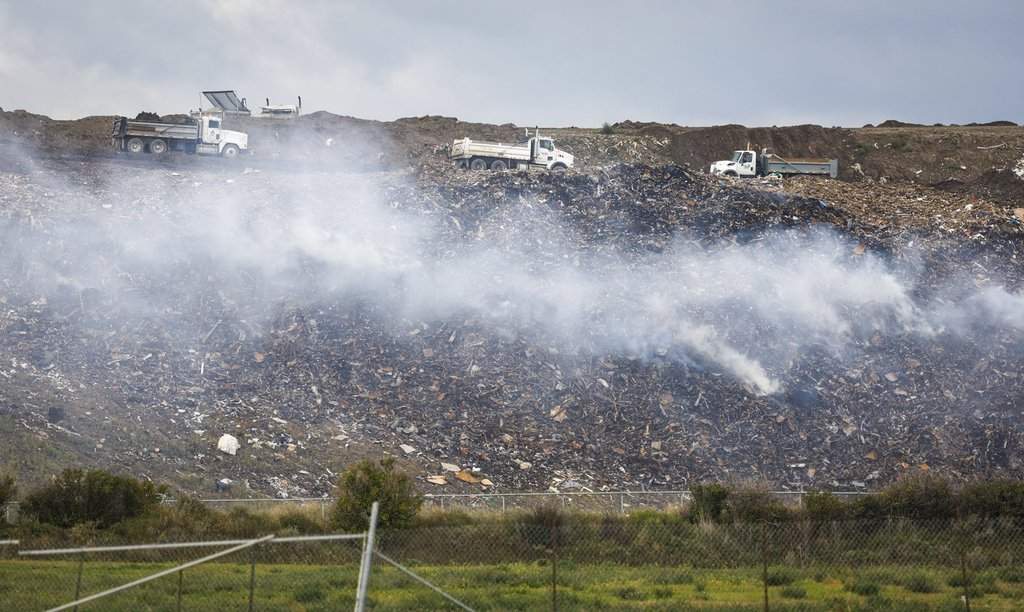
The culprit was a massive, stubborn fire burning deep inside the ECCO Recycling and Energy Corp. landfill. While fire crews battled the underground blaze, local frustration boiled over into a full-scale community revolt. A resident-led petition quickly gathered thousands of signatures, demanding a permanent end to operations at the site. This crisis isn't just about a single smoky week. It highlights a massive mismatch between legacy industrial sites and a rapidly growing modern city.
Anatomy of a Landfill Crisis
Landfill fires aren't like standard structure fires. You can't just spray water on top and walk away. When deep-seated material—such as the dry construction and demolition waste piled at the ECCO site—catches fire, it smolders underground for weeks or even months.
The Calgary Fire Department faced a logistical nightmare trying to reach hot spots along steep, unstable slopes of refuse. Heavy equipment operators had to pile soil and cap openings to starve the fire of oxygen, turning the area into an industrial zone of constant suppression work.
For people living nearby, the physical toll was immediate. Air quality reached high-risk levels intermittently, forcing families indoors and frustrating parents whose children couldn't play outside. When local residents like Aymie Rondeau launched a petition to decommission the site, they tapped into a deep well of local exhaustion. The petition surpassed its initial goals in days, proving that people living near the Bow River corridor are done accepting industrial hazards as background noise.
Legal Battles and Broken Rules
The fire threw a harsh spotlight on years of friction between municipal authorities and the facility operators. The City of Calgary didn't just stand by while smoke choked the southeast. Officials laid multiple charges against ECCO Recycling and its owner, pointing to failures in complying with the Municipal Government Act and local land-use bylaws.
Court records revealed a history of friction. Judges previously penalized the company for using land contrary to development permits, and investigators even alleged fresh dumping occurred near the burning debris while firefighters were actively on the scene. ECCO maintained that the site only held dry materials like lumber and drywall and that operations had shifted over time, but the courts and the city took a much stricter stance.
When judges grant injunctions requiring companies to clear unauthorized waste from a site, it sends a clear message. The surface of the earth isn't an open-air dumpster. When industrial operators push the boundaries of their permits, the surrounding community pays the price in smoke, stress, and declining property environments.
Why Southeast Calgary Has Outgrown Industrial Pockets
The core issue here goes far beyond one bad fire or a single contentious property. Southeast Calgary has changed dramatically over the last two decades. Where industrial tracts once sat safely away from population centers, master-planned communities and high-density transit-oriented developments have sprouted up.
Future transit projects like the planned Green Line station sit right near Quarry Park. Putting high-density urban transit next to an active, troubled landfill makes zero planning sense. Cities evolve. Industrial zoning that made sense fifty years ago becomes a glaring liability once tens of thousands of residents move into the immediate footprint.
People who bought homes near the river expect clean air, usable parks, and a safe environment. They don't expect to monitor air quality indices every morning just to figure out if walking their dogs is safe. The petition isn't just a reaction to smoke; it is a demand for modern urban planning that prioritizes human health over outdated industrial permissions.
What Needs to Happen Next
Shutting down a complex landfill site safely requires coordination between municipal leaders, provincial regulators, and the property owners. The immediate priority must remain the complete extinguishment of every underground hot spot to ensure no reignition.
Beyond putting out the flames, the land needs a real remediation strategy. Transitioning the ECCO property away from waste management and toward long-term redevelopment aligns with the growth of southeast Calgary. Residents should keep track of municipal hearings, support transparent air-monitoring initiatives, and hold local representatives accountable to ensure that industrial zoning rules are enforced strictly and swiftly. Southeast Calgary has outgrown the era of hidden garbage mountains, and the push to clear them out is long overdue.