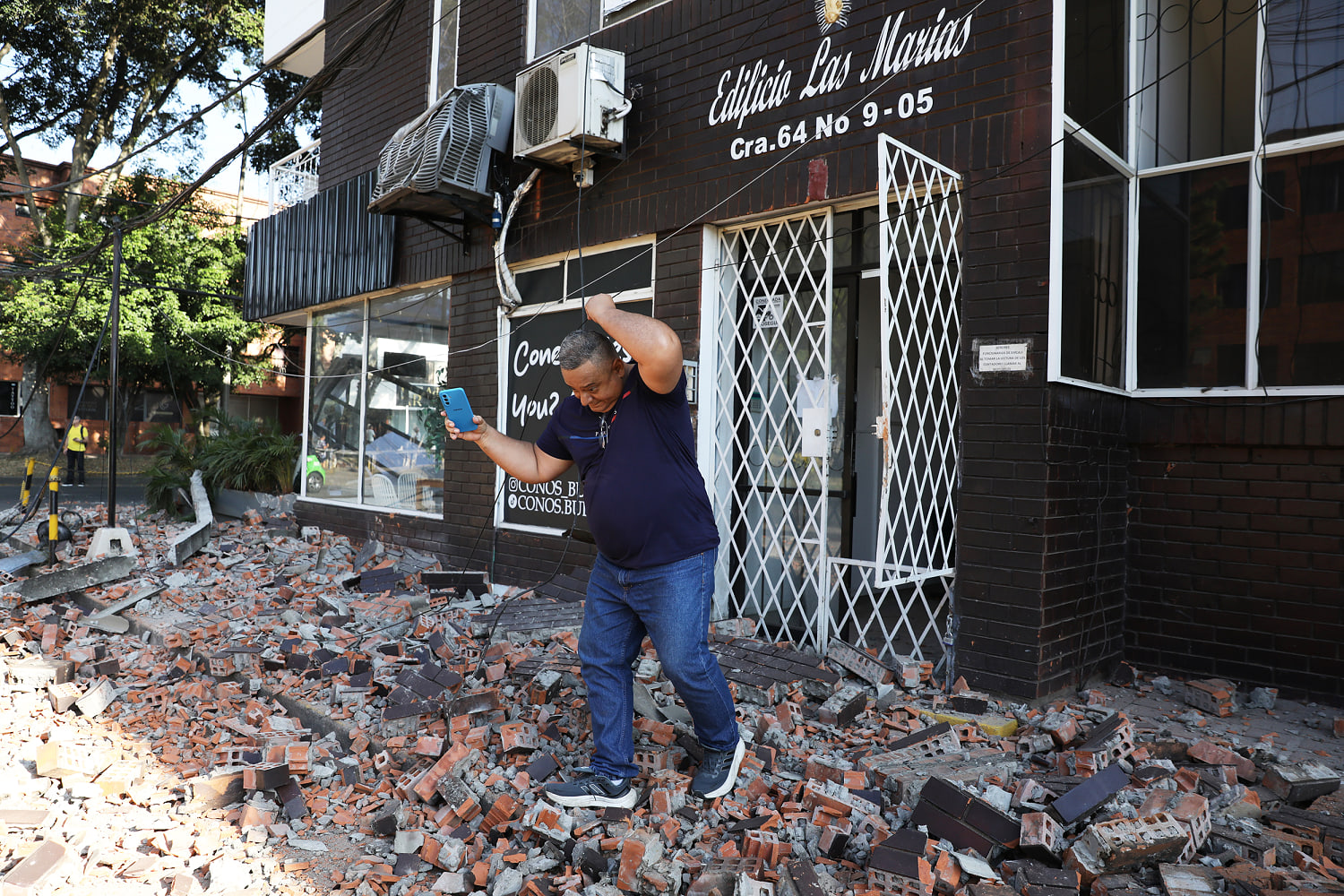
The floor does not warn you. It is the one constant we inherit from our first steps—the unyielding foundation that tells us we are safe, that gravity is a contract, that tomorrow has somewhere to stand. Then, in the span of a single heartbeat, the contract is voided.
Imagine waking up not to an alarm clock, but to a roar that rises from the core of the planet, a sound like a freight train barreling through your bedroom floor. This is what happened when a powerful earthquake struck the borders of Colombia and Ecuador, a violent rupture that turned quiet midnight hours into scenes of desperate survival.
Ground zero did not care about borders. Seismic energy rarely does.
When a magnitude 6.3 or higher tectonic shift tears through the Andes, the math of everyday life instantly collapses. Walls buckle. Dust chokes the air. Power grids die, plunging neighborhoods into a terrifying blackout where the only illumination comes from car headlights and the frantic sweep of mobile phone flashlights. Officials in both nations scrambled through the dark, receiving fragmented reports from remote mountain villages and coastal towns where communication lines snapped like dry twigs.
Houses built over generations out of concrete and brick proved to be fragile shells against the planet's sudden fury.
Consider the perspective of a local shopkeeper in a small Andean town. Hours earlier, he was locking his wooden door, checking his ledger, worrying about inflation and tomorrow's deliveries. Now, his storefront is a pile of gray rubble, and he is standing in the middle of the street in his bare feet, holding a sleeping child who woke up crying into a nightmare without walls. This is the human cost of a tectonic collision. It is not just a statistic on a seismograph or a data point for international news tickers. It is a life compressed into dust and memory.
Emergency services mobilized immediately, yet geography fought back. Landslides, triggered by the violent shaking, choked winding mountain roads. Ambulances hit walls of dirt and stone, forced to wait or turn around while medical personnel grabbed backpacks and hiked the final miles on foot. In these moments, humanity relies on instinct. Neighbors pull neighbors from collapsed masonry with bare hands, bleeding fingertips ignored in the adrenaline-fueled race against time and aftershocks.
Why does the earth break like this?
Beneath the lush green valleys and towering peaks of South America, the Nazca Plate is relentlessly diving beneath the South American Plate. This subduction zone is one of the most active geological engines on Earth. The plates lock, pressure builds over decades, friction resists, and then—snap. The accumulated energy of a lifetime is released in seconds. It is a slow-motion inevitability punctuated by instantaneous terror.
Scientists can measure the depth, calculate the epicenter, and map the fault lines with satellite precision. They can tell us that the seismic wave radiated outward with devastating efficiency. Yet, science cannot measure the weight of a mother searching for her daughter's schoolbag in the wreckage of a classroom. It cannot quantify the silence that follows an aftershock, when an entire neighborhood holds its breath, listening for sirens or cries for help.
Rescue operations stretched into the grueling hours of dawn. Search dogs picked their way across unstable slabs of concrete, their handlers calling out into the quiet destruction. Hospitals filled quickly. Cots lined hallways. Doctors and nurses worked without pause, treating fractures, lacerations, and the invisible, pervasive shock of survival.
Governments promised aid, deployment of disaster relief teams, and temporary shelter for the displaced. Tarps and bottled water began moving along the cleared highways. But bureaucracy moves slowly compared to tectonic plates. For the families sitting on curb sides wrapped in woolen blankets, waiting is the hardest part. The realization that everything can vanish while you sleep leaves a permanent fracture in the mind long after the rubble is swept away.
We build our lives on crusts that float on fire. We forget this daily. We pay our bills, plant our gardens, argue about politics, and trust the ground beneath our feet.
Then the earth remembers its power.
In the aftermath, amidst the ruins of collapsed buildings and the grief of lost lives, the true measure of a community reveals itself. It is found in the shared pot of coffee brewed on a sidewalk, the stranger who offers a hand to pull you from the dust, the refusal to let the darkness win. The ground broke, but the people did not. They remain, standing in the open air, waiting for the sun to rise over a landscape forever changed.