Silence.
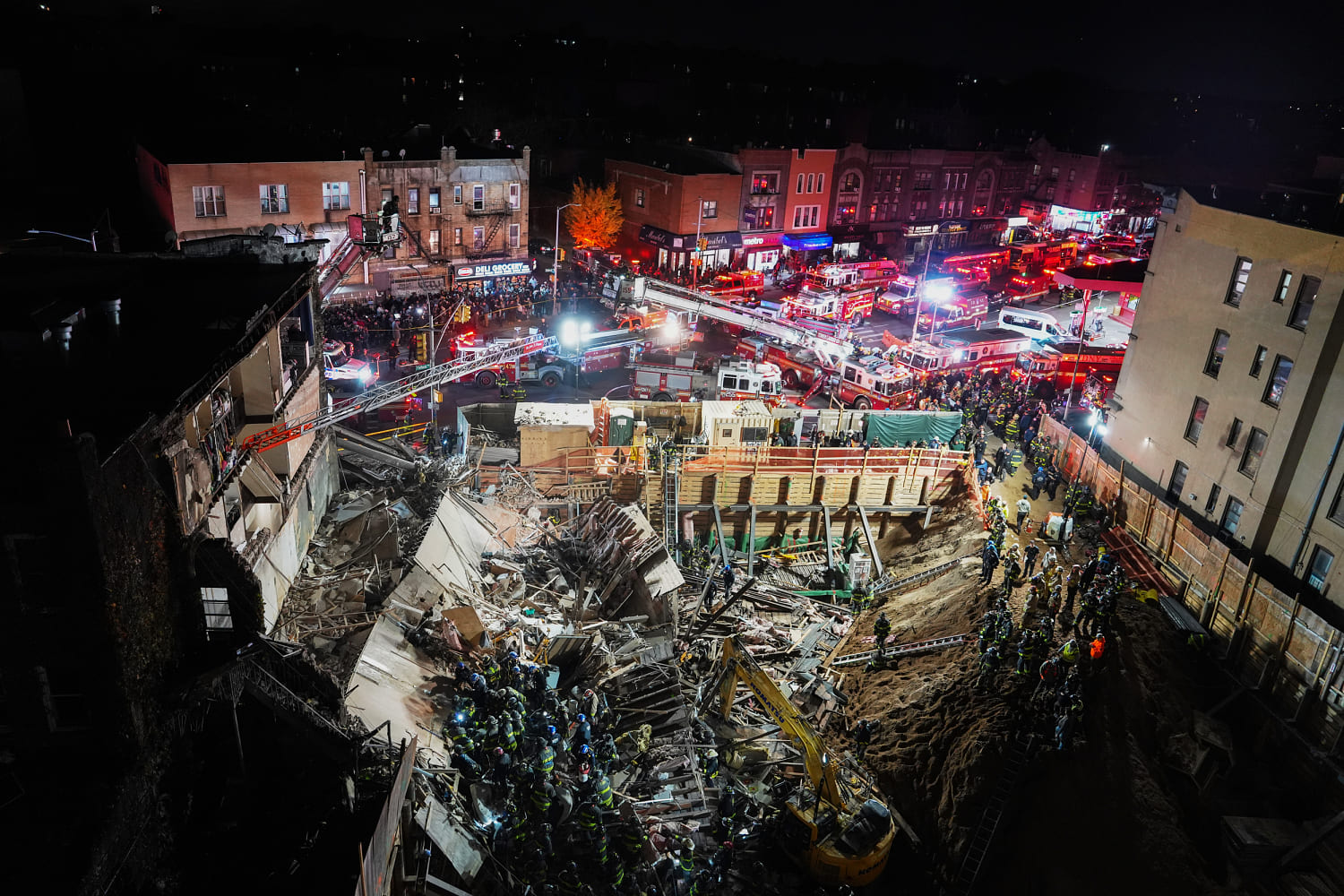
That is the first thing you notice when a brick wall decides it can no longer hold up the sky, a bizarre, vacuum-sealed stillness that precedes the roar, the splintering of old-growth timber, and the suffocating gray bloom of pulverized mortar that turns a sunny Tuesday afternoon into a winter dusk.
When a building collapses in Brooklyn—leaving at least two people dead and trapping others beneath tons of jagged masonry—the headlines reduce the catastrophe to cold arithmetic. Two fatalities. Several rescued. Dozens displaced. An investigation underway by the Department of Buildings. We read the numbers over morning coffee, wince at the photograph of a sheared-off facade exposing a lonely bathtub or a framed family portrait dangling three stories above the street, and scroll onward.
We treat structural failure like a freak weather event, a sudden bolt of lightning striking an unlucky block in Crown Heights, Sunset Park, or Williamsburg.
We are wrong.
Buildings do not simply decide to fall down. They are pushed, starved, overloaded, and ignored over years—sometimes decades—until gravity finally collects a debt that someone else was supposed to pay. Behind every emergency dispatch of FDNY rescue squads, trained search dogs, and heavy cranes lies a quiet, predictable chain of human decisions, deferred maintenance, and invisible corners cut behind plywood construction fences.
To understand what actually happened when those floors pancaked onto the people below, you have to step past the yellow caution tape and look at the anatomy of a city built on ambition, old brick, and razor-thin margins.
The Weight of a Hundred Winters
Picture a hypothetical resident—let’s call her Elena—living on the second floor of a pre-war Brooklyn walk-up. She knows the quirks of her apartment intimately. She knows the bedroom door won’t latch in July because the humidity swells the frame, and she knows the floorboards near the radiator groan like an old ship whenever the upstairs neighbor walks across the room. She assumes these sounds are charm. In New York, we romanticize decay as character.
What Elena cannot see is what is happening inside the masonry walls just inches behind her plaster.
Much of Brooklyn’s residential and commercial spine was laid down between 1890 and 1930. Builders back then used lime mortar—a softer, more breathable compound than modern Portland cement—paired with thick load-bearing brick walls and timber joists. Think of an old brick building not as a rigid concrete bunker, but as a carefully balanced stack of heavy books resting on wooden shelves. Every brick relies on its neighbor to distribute weight downward into the foundation.
Over a century, water becomes the quiet assassin. Rain seeps through unsealed parapet walls on the roof. Freezing winter temperatures turn trapped moisture into microscopic wedges of ice, slowly prying bricks apart from the inside out. Rusting steel lintels above windows expand like sponges, cracking the stone around them.
Normally, a building tells you it is hurting long before it fails. Bricks bulge outward like a strained muscle. Mortar turns to sand at the touch of a fingernail. Stair-step cracks zigzag down exterior walls.
Yet in a real estate market where every square foot is worth a small fortune, acknowledging those warning signs costs money. Repairing a compromised facade or underpinning a sagging foundation requires scaffolding, permits, structural engineers, and months of lost rent. So, too often, a coat of waterproof paint is slapped over crumbling brick, masking the symptom while trapping moisture deeper inside the wall.
When Renovation Becomes Demolition
The danger multiplies exponentially the moment a crew arrives with sledgehammers.
Across Brooklyn’s rapidly gentrifying corridors, historic brownstones, aging garages, and century-old commercial storefronts are constantly being gutted, expanded, and vertically stretched to maximize square footage. Walk down almost any block and you will see the familiar green plywood sheds shielding an active construction site.
Here is where the physics of old buildings turns unforgiving.
Imagine removing a single bottom card from a house of cards while someone is actively stacking more cards on top. In a modern steel-frame skyscraper, interior walls are mostly partitions; you can knock them down without threatening the skeleton. In a traditional Brooklyn brick-and-timber structure, interior walls are often load-bearing. They are the spine holding up the floors above.
When an unpermitted crew—or a contractor rushing to meet an aggressive deadline—cuts into a bearing wall to create an "open-concept" floor plan, or excavates a basement deeper to carve out a duplex apartment without properly underpinning the neighbor’s foundation, the weight has nowhere to go. It shifts violently onto adjacent beams never designed to carry it.
Consider what happens next: a timber joist splits with a sound like a rifle shot. A brick pier buckles. Within three seconds, the roof drops onto the third floor, the third floor crushes the second, and tens of thousands of pounds of brick, cast-iron radiators, refrigerators, and concrete cascade into the cellar.
At least two lives end before they even have time to comprehend the noise. Others find themselves pinned in pitch blackness, breathing through narrow pockets of air trapped between fallen beams, listening to the muffled shouting of firefighters above while dust coats their tongues like chalk.
The Architecture of Impunity
If you have ever stood across the street from a collapsed building watching rescue workers dig by hand—because heavy machinery might trigger a secondary pancake collapse and crush survivors—you carry a specific kind of anger that never quite washes off.
You look at the frantic choreography of first responders shoring up unstable walls with hydraulic struts, risking their own lives to pull strangers from voids barely wide enough for a human chest, and then you look at the public record of the building itself. Almost every single time a structure fails in New York City, the paper trail was already screaming for help months or years before the sirens sounded.
Neighbors called 311 about vibrations shaking dishes off their shelves. Tenants reported widening cracks in hallways and doors that suddenly refused to close. City inspectors issued stop-work orders or violations for unpermitted structural work, slap-on-the-wrist fines that unscrupulous developers treat not as deterrents, but as minor line items in a multi-million-dollar budget.
I will admit something that anyone who lives in an aging city knows deep in their bones: it is terrifying to realize how much blind faith we place in ceilings.
Every night, millions of New Yorkers fall asleep beneath roofs maintained by LLCs hidden behind shell companies, inspected by stretched-thin municipal agencies tasked with overseeing more than a million buildings across five boroughs. We assume that because a building stood yesterday, it will stand tomorrow. We confuse endurance with invulnerability.
The math of urban neglect is brutal. A landlord can ignore a structural violation for years, rack up tens of thousands of dollars in unpaid penalties, and still refinance the property or sell it at a profit. Meanwhile, the workers on site—often undocumented day laborers paid cash with zero safety training, no hard hats, and no union protections—are the ones sent into the basement with jackhammers when the warning signs appear. When the walls give way, they are the ones buried beneath the rubble, while the corporate owners hire defense attorneys before the dust has even cleared the block.
Reading the Warning Signs Before the Siren
We cannot personally inspect every foundation in Brooklyn, nor should citizens have to become structural engineers just to walk down the sidewalk or sleep in their own beds. Real accountability requires teeth: criminal liability for owners who ignore stop-work orders, immediate asset freezes when unpermitted excavation threatens neighboring homes, and mandatory third-party structural monitoring whenever heavy alterations touch pre-war masonry.
Yet while policy crawls forward at the speed of bureaucracy, knowing how a building communicates distress can save your life or your neighbor’s. Buildings rarely collapse without whispering first.
If you live in or near an older masonry structure—especially one undergoing renovation—pay relentless attention to sudden changes:
- Sudden jamming of doors and windows: When a frame shifts out of square overnight, the building is settling unevenly under stress.
- Diagonal or stair-step cracks: Hairline vertical cracks in plaster are common; jagged diagonal cracks that widen quickly around window corners or across brick exteriors signal active structural movement.
- Bulging walls or bowing floors: Look down the length of an exterior brick wall from the sidewalk. If the brick belly curves outward, the outer layer is separating from the structural backing.
- Unexplained dust, popping sounds, or active excavation next door: Deep digging below the level of an adjacent foundation without visible wooden or steel shoring boards holding back the earth is an immediate red flag.
When you see those signs, do not wait for the landlord to return your email. Document them with timestamped photos, alert your neighbors immediately, and report an active structural emergency—not a routine maintenance complaint—so inspectors are forced to treat the hazard as life-threatening rather than administrative.
The Empty Space on the Block
Days after a collapse, after the search dogs are loaded back into vans and the heavy cranes finally haul away the twisted steel and splintered pine, a strange void remains on the street.
Where a four-story building once stood—holding kitchens, arguments, birthday dinners, morning coffees, and generations of quiet routines—there is suddenly just a raw slice of sky framed by the exposed, painted brick walls of the surviving buildings on either side. You can see the ghost outlines of staircases etched into the neighboring plaster, diagonal scars showing where people used to walk up and down every day.
A tarp flaps softly in the wind over a chain-link fence. A makeshift memorial of white candles and damp flowers gathers near the curb. And three blocks away, behind another sheet of green plywood, the rhythmic thud of a sledgehammer echoes down the avenue, steady as a heartbeat.