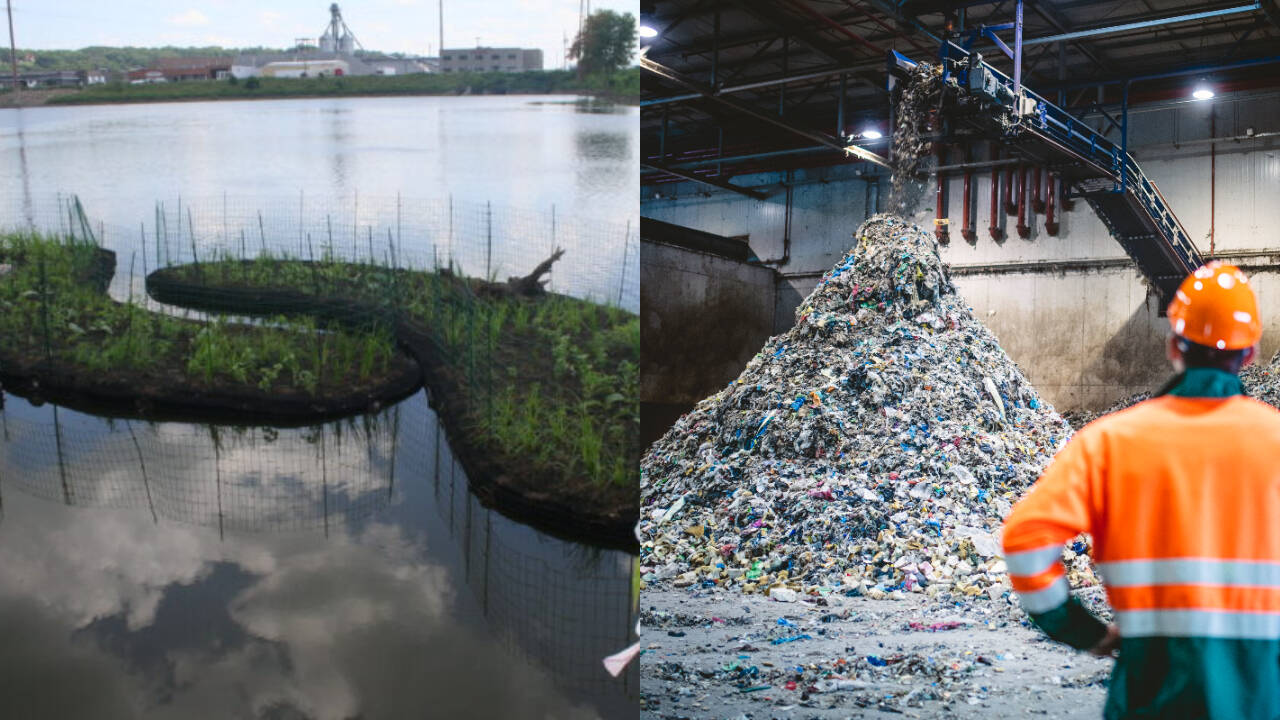
Municipal greenwashing has a new mascot, and it is floating in a creek in Iowa.
The headlines write themselves with syrupy municipal pride: Dubuque intercepts 67,000 plastic bottles from the waste stream, ropes them together, plants some native sedges on top, and calls it an ecological triumph. Local news outlets cheer. City council members pose for photographs next to buoyant rafts of old soda containers. Everyone pats themselves on the back for a creative upcycling miracle that bridges waste management and habitat restoration.
It is a neat trick. It is also an expensive distraction from the reality of urban ecology.
I have watched cities burn millions of dollars and countless staff hours on boutique eco-theater while their foundational infrastructure rots underground. When you peel back the feel-good PR of trash rafts, you find a troubling pattern: governments prioritizing Instagram-friendly spectacles over unglamorous, heavy-duty engineering that actually solves water quality crises.
Let us look at the mechanics of what is actually happening in those creeks.
The Physics of Plastic Flotation vs True Restoration
To understand why these recycled bottle islands represent a dangerous design flaw in modern municipal planning, we need to talk about material science and hydrologic reality.
Proponents claim these floating wetlands absorb excess nutrients, mitigate runoff, and create nesting spots for local waterfowl. On paper, the biology checks out. Plants uptake nitrogen and phosphorus. Roots dangle in the water column and provide surface area for microbial biofilms that break down pollutants.
Now look at the substrate.
Sixty-seven thousand high-density polyethylene and polyethylene terephthalate containers do not magically transform into a stable geological feature because you cable them together. Plastics degrade when exposed to ultraviolet radiation and mechanical friction. creeks flood. Debris slams into shorelines at high velocities during storm events. Wave action batters these makeshift rafts day in and day out.
What happens to 67,000 plastic bottles when a heavy midwestern storm shreds the nylon mesh or snaps the marine-grade rope holding them together? They become microplastics. They break down into tiny polymer shards that infiltrate aquatic food webs, settling into the benthic sediment where macroinvertebrates ingest them.
You set out to clean up plastic waste by collecting bottles, only to package that exact same plastic into a high-energy aquatic environment where mechanical degradation is guaranteed. It is not recycling. It is pre-recycling pollution for a future flood event.
The Lazy Consensus of Upcycled Optics
The lazy consensus in modern urban planning states that any project incorporating salvaged consumer waste is inherently virtuous. This mindset treats material diversion as a substitute for systemic redesign.
If a city generates enough discarded beverage containers to carpet a football field every month, building a couple of floating garden beds out of them does nothing to address the consumption pipeline. It creates a moral safety valve for a broken packaging economy. Corporations pump out single-use plastics by the billion, and municipalities step in to turn those containers into arts and crafts projects, absolving everyone of the need to mandate producer responsibility or ban non-recyclable polymers at the point of sale.
I have sat in budget meetings where officials argued for funding gimmicks over grey-infrastructure maintenance because the gimmicks look better in annual sustainability reports. A properly engineered bioretention swale or a reconstructed riparian buffer does not photograph as well as a floating island with blooming purple coneflowers. Riparian restoration looks messy during its establishment phase. It involves heavy machinery, grading, erosion control blankets, and years of waiting for deep-root systems to lock the banks in place.
Citizens want instant gratification. Politicians want ribbon cuttings. Floating bottle islands deliver both, packaged in a veneer of grassroots ingenuity.
The Real Cost of Faux-Ecology
Let us address the economic reality that local governments conveniently omit from their press releases.
Building, deploying, and anchoring structural rafts requires labor, specialized hardware, anchoring systems, and ongoing maintenance. Every season, municipal crews must inspect these installations, repair damaged tethers, replace crushed containers, and weed out invasive species that inevitably colonize artificial substrates.
Imagine a scenario where a mid-sized municipality redirects fifty thousand dollars in labor and materials from a boutique floating island project into purchasing conservation easements along the upstream agricultural runoff corridors.
The math changes instantly.
Purchasing land rights or installing agricultural best management practices—such as contoured buffer strips and cover crop incentives—stops nutrient pollution at the source. It prevents siltation before it chokes the creek. It allows natural meanders to reform, slowing water velocity naturally through floodplain connectivity.
Instead of treating the symptoms of an over-fertilized watershed by dangling plastic soda bottles in the current, upstream interventions fix the disease. But upstream fixes require dealing with landowners, negotiating easements, and doing hard political work that does not generate viral social media posts.
Dismantling the People Also Ask Fallacy
When people search for information on these projects, the queries reveal a profound misunderstanding of how urban waterways function.
People ask: Do floating wetlands actually clean polluted water?
The honest answer requires nuance that marketers avoid. Yes, small-scale floating wetlands can trap suspended solids and uptake specific nutrients in stagnant or low-velocity retention ponds where residence time is high. In a high-energy creek system subject to flash flooding, variable discharge rates, and heavy agricultural runoff surges, their hydraulic impact is negligible. They are a drop in the ocean. They process a fraction of one percent of the nutrient load passing through a typical urban watershed during a single heavy rain event.
Another frequent question: Are recycled bottle islands durable enough for long-term use?
No. Plastics degrade under UV exposure. Wildlife, particularly rodents and aquatic birds, chew through exposed foam and plastic components to build nests or forage. The lifespan of a DIY bottle raft in a dynamic stream environment is measured in single-digit years before it requires complete overhaul or sinks into the sediment. When it fails, retrieving thousands of loose fragments from a winding creek bed is a logistical nightmare.
The Uncomfortable Truth About Sustainable Design
True environmental stewardship is boring, expensive, and largely invisible.
It looks like replacing failing sanitary sewer lines to stop raw sewage overflows during heavy rains. It looks like cracking down on illegal industrial dumping upstream. It looks like enforcing stormwater retention mandates on commercial developments so concrete parking lots do not dump thermal shock and heavy metals straight into local fisheries.
Dubuque's recycled bottle project is harmless on a micro scale, but toxic as a philosophy. It teaches the public that environmentalism is a DIY craft project—that if we just glue enough trash together and plant some flowers on it, we can offset industrial-scale consumption through sheer whimsical grit.
We cannot.
Stop funding municipal art projects disguised as ecological restoration. Stop celebrating the recycling bin as a substitute for policy change.
Tear down the plastic rafts, buy the upstream buffer zones, and do the real, unglamorous work of keeping our watersheds clean.


