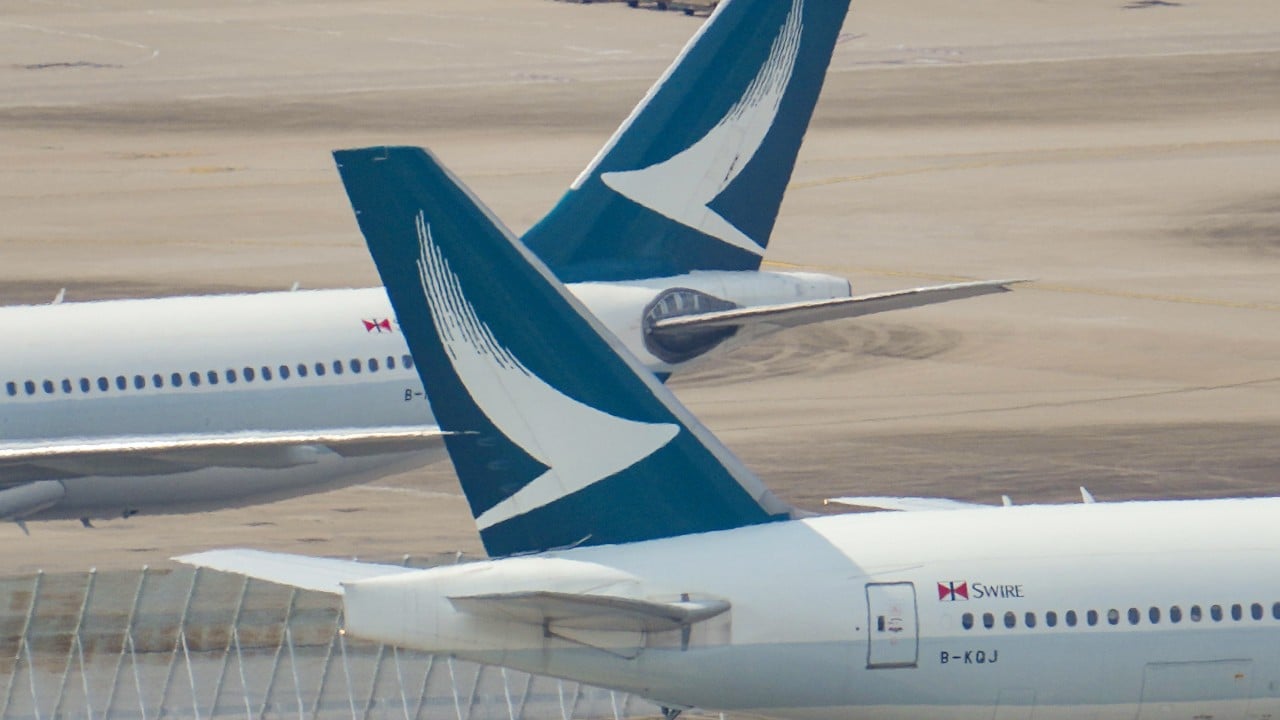
The aviation industry loves a good math trick. Cathay Pacific and local trade groups are popping champagne over the announcement that direct flights between Hong Kong and Almaty will resume in early 2027, supposedly saving travelers ten hours of transit time. They claim this connection will unlock the untapped potential of Central Asia, flood the territory with big-spending tourists, and give localized businesses a friction-free gateway to the Silk Road.
It is a beautiful corporate narrative. It is also completely disconnected from operational reality.
I have spent fifteen years analyzing route profitabilities and watch corporate boards sink millions into vanity destinations because a government press release told them to. Shaving paper hours off a flight itinerary does not automatically manufacture a market where one does not naturally exist. The lazy consensus assumes that a direct flight creates demand. The brutal reality of network aviation is that demand must pre-date the aircraft, or the route dies in silence.
The Ten Hour Time Illusion
The core argument driving the current excitement is pure optics. Promoters point out that flying from Hong Kong International Airport to Almaty currently requires a tedious layover in Beijing, Chengdu, or Ürümqi, dragging the trip out to nine or ten hours. By cutting the flight down to a clean, seven-hour direct hop on an Airbus A330-300, the narrative claims we are fixing a massive logistical bottleneck.
This ignores how high-value business travel actually functions.
"For business people, usually when we travel for business, it's not like for holidays and so we won't take a very long time; especially for people in Hong Kong, they like to take three-day, two-night trips, or even a day trip."
This perspective, recently championed by local lawmakers, highlights a fundamental misunderstanding of geographical reality. Almaty is not Taipei. It is not Shanghai. You do not run a "day trip" across five time zones and four thousand kilometers of mountainous airspace, regardless of whether the flight has a stopover.
When you look at the actual schedule, the supposed ten hours saved evaporates under the weight of frequency constraints. Cathay Pacific is planning a three-times-weekly service. In aviation economics, a thrice-weekly schedule is the absolute bare minimum to keep a route alive; it is utterly useless for agile corporate executives.
Imagine a scenario where a Hong Kong private equity investor needs to close a deal in Almaty on a Tuesday morning. If the direct flight only operates on Mondays, Wednesdays, and Fridays, that executive is still trapped by a rigid schedule. If the meeting runs over, they cannot just catch the next shuttle home. They wait forty-eight hours or they route themselves back through mainland China anyway.
The flexibility of daily hub connections through mainland carriers will almost always beat a direct flight that only shows up three times a week.
The Tourism Fallacy
Then comes the tourist argument. Industry chiefs express immense confidence that Central Asia’s stunning mountain scenery and unexplored resources will draw massive crowds from Hong Kong, while simultaneously funneling wealthy Kazakh tourists into local luxury retail markets.
Let us look at the structural headwinds this assumption faces.
- The Scale Inequity: Kazakhstan has a total population of roughly twenty million people spread across a massive landmass. Hong Kong is chasing a tiny sliver of affluent consumers within that demographic who aren't already dedicated to vacationing in Dubai or Western Europe.
- The Infrastructure Gap: Almaty is a spectacular city, but it lacks the sheer volume of English- and Cantonese-fluent tourism infrastructure required to sustain mass market travel from the Far East.
- The Viscosity of Travel Habits: Hong Kong leisure travelers are fiercely loyal to high-frequency, friction-free corridors like Japan, Thailand, and South Korea. Expecting a sudden, structural shift toward Central Asia because of three weekly flights is wishful thinking.
Before the pandemic ground the global aviation industry to a halt in 2020, Air Astana operated this exact direct route. It did not transform Hong Kong’s tourism sector then, and it will not do it now. The historical data shows that the route was heavily reliant on low-yield transit traffic pushing deeper into Europe or Russia, rather than point-to-point destination tourism.
The Real Cost of Corporate Vanity Routes
To understand why this route is being pushed so aggressively despite the shaky fundamentals, you have to look past the airline ticket counters and into the halls of diplomatic policy. This is a political route, not an economic one. It is a highly visible nod to the Belt and Road initiative, designed to signal alignment between the Hong Kong Special Administrative Region and Central Asia’s largest economy.
There is undeniable value in signing double taxation avoidance agreements and building cross-border financial listings between the Hong Kong Exchanges and Clearing and the Astana International Financial Centre. But let us not confuse a macroeconomic handshake with a profitable aviation corridor.
When an airline dedicates a wide-body wide-cabin asset like an A330-300 to a long, thin route three times a week, that aircraft is being pulled away from proven, high-density regions. The opportunity cost is staggering.
| Metric | High-Density Regional Route (e.g., Tokyo/Singapore) | Speculative Long-Thin Route (Almaty) |
|---|---|---|
| Weekly Frequency | Multiple Daily Flights | 3 Flights Per Week |
| Premium Cabin Demand | Sustained, Corporate-Contracted | Highly Seasonal, Speculative |
| Cargo Belly Utilization | Consistent E-commerce & Electronics | Variable, Low-Density Commodities |
| Network Redundancy | High (Easy to re-route passengers) | Zero (Next flight is days away) |
Airlines running vanity routes eventually face a grim choice: heavily subsidize the empty business class seats through inflated cargo rates, or quietly cancel the service once the political spotlight shifts elsewhere.
Demanding the Wrong Solution
The market is asking the wrong question. The problem facing Hong Kong’s connectivity with emerging markets isn't a lack of direct metal flying to secondary hubs. The real bottleneck is the regulatory and operational friction that makes transiting through regional hubs less appealing than it should be.
If lawmakers truly want to facilitate business with Central Asia, the answer isn't begging flag carriers to operate risky, low-frequency routes. The answer lies in optimizing code-share arrangements with mainland Chinese carriers who already dominate the airspace over Xinjiang and Western China, ensuring baggage, customs, and schedules mesh perfectly.
Until that happens, the direct Almaty flight will remain a highly praised, under-utilized asset. It will look great in annual reports and government press briefings, but it will do absolutely nothing to shift the needle for Hong Kong tourism.
Stop pretending that a seven-hour flight turns a distant, culturally distinct financial outpost into a weekend getaway. If you want to build a bridge to Central Asia, pack your bags, prepare for a layover in Ürümqi, and accept that real market development takes decades of boots-on-the-ground presence—not a thrice-weekly flight coupon.