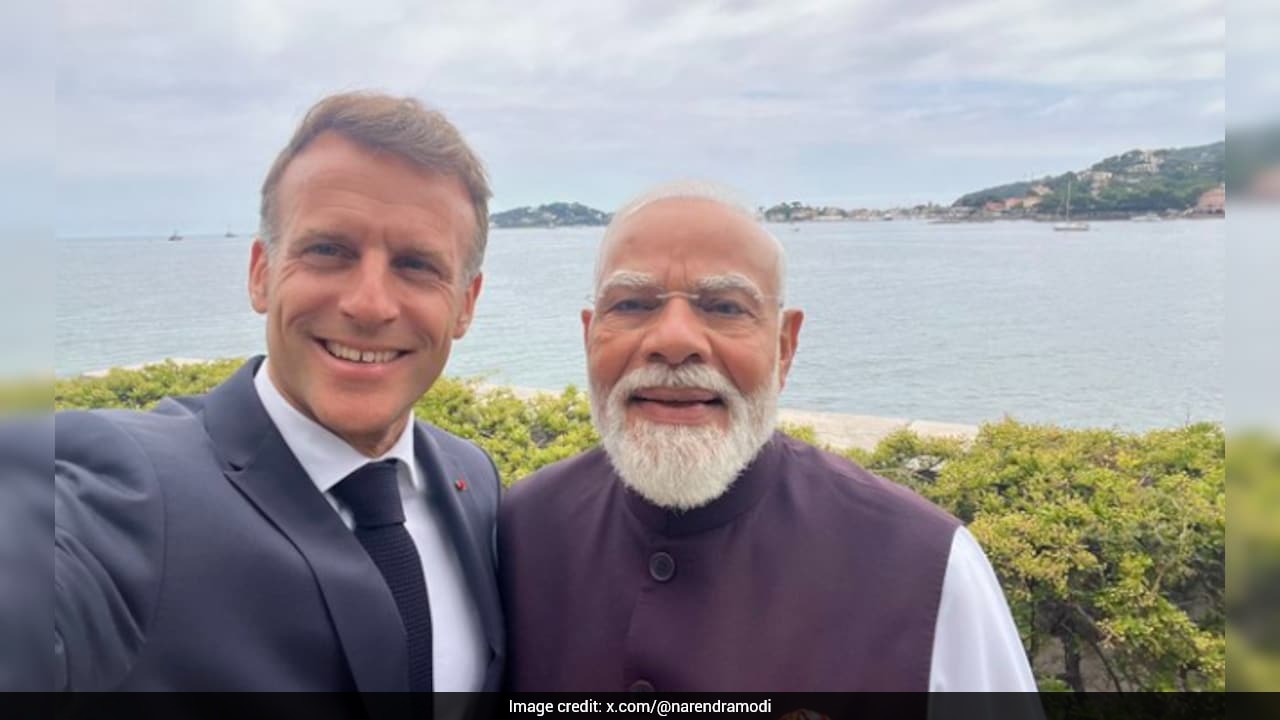
Mainstream media outlets love low-hanging fruit. When Indian Prime Minister Narendra Modi and French President Emmanuel Macron share a smiling, sunlit selfie with the Mediterranean gleaming in the background, the press rushes to print the same predictable narrative. They call it a masterclass in personal diplomacy. They fawn over the "unprecedented chemistry" between global leaders. They dissect the wordplay of a "Nice" meeting in a French coastal city as if a pun were a substitute for foreign policy.
It is lazy journalism, and it fundamentally misunderstands how the machinery of global power operates. If you enjoyed this piece, you might want to read: this related article.
International relations are not forged over casual snapshots, nor are trillion-dollar defense frameworks built on mutual affection. The public is being fed a carefully engineered illusion—a sanitized, feel-good distraction that masks cold, transactional, and deeply calculated national interests. While the internet obsesses over the optics of a digital bromance, the real story is happening thousands of miles away from the cameras, driven by structural pressures that neither leader can afford to ignore.
The Myth of Personal Chemistry in Statecraft
Let’s dismantle the premise that personal friendship alters the trajectory of geopolitics. This is the classic attribution error of modern media. They look at two charismatic leaders smiling on a balcony and conclude that their friendship is driving the bilateral relationship. For another look on this story, see the recent coverage from USA Today.
The reality is exactly the reverse. The structural alignment of India and France forces these two men into the same room. The selfie is merely the marketing campaign for a product that was already manufactured by career bureaucrats, intelligence chiefs, and defense contractors years prior.
Consider the historical ledger. India and France have maintained a Strategic Partnership since 1998. This bond survived the tenure of Jacques Chirac, Nicolas Sarkozy, François Hollande, and now Emmanuel Macron on the French side, and Atal Bihari Vajpayee, Manmohan Singh, and Narendra Modi on the Indian side. The ideological leanings of the individuals change; the strategic necessity does not.
To believe that a warm smile or a shared tweet dictates the flow of statecraft is to believe that the hood ornament steers the automobile.
What the Cameras Keep Out of the Frame
When you look at that viral image from the French Riviera, your eyes are drawn to the foreground. But to understand the true dynamics of the Indo-French alliance, you have to look at what is intentionally left out of the frame.
The Indian Ocean Strategy
France is not just a European nation; it is an Indo-Pacific power. Thanks to overseas territories like Réunion and Mayotte, France controls millions of square kilometers of Exclusive Economic Zones (EEZs) in the Indian Ocean. As China expands its maritime footprint through its string-of-pearls strategy, Paris finds itself vulnerable. India, sitting at the center of the Indian Ocean architecture, is the only naval power capable of acting as a reliable security guarantor for French interests in the region. France needs India to secure its sovereign territories; India needs France as a Western ally that does not lecture New Delhi on its internal affairs.
The Defense Procurement Pipeline
Let's talk about the hard currency of diplomacy: weapons. India is the world’s largest arms importer. For decades, New Delhi relied heavily on Moscow for its military hardware. But the war in Ukraine and subsequent supply chain disruptions have forced India to aggressively diversify its defense imports. France has stepped into that vacuum with ruthless efficiency.
The sale of Rafale fighter jets, Scorpène-class submarines, and the co-development of military aircraft engines are the true pillars of this relationship. A multi-billion dollar defense contract creates a multi-decade dependency structure. It requires engineers, spare parts, training programs, and joint exercises. That is the concrete that binds nations together, not a shared digital photograph.
The Strategic Autonomy Club
What truly unites New Delhi and Paris is a shared psychological aversion to a bipolar world dominated exclusively by Washington and Beijing. Both nations suffer from a deep-seated desire for what political scientists call "strategic autonomy."
France has a long history of charting its own course within the Western alliance, a legacy stretching back to Charles de Gaulle’s decision to withdraw from NATO’s integrated military command structure in 1966. Paris wants to lead a strong, independent Europe that acts as a balancing force between the United States and China, rather than serving as a junior partner to the Americans.
India pursues a remarkably similar doctrine. From the founding days of the Non-Aligned Movement to the modern framework of "multi-alignment," New Delhi resists being boxed into any formal military alliance. India refuses to choose a side in the geopolitical rivalry between the West and Russia, as evidenced by its continued purchase of Russian crude oil despite intense pressure from Washington.
+-----------------------------------------------------------------+
|               THE STRATEGIC AUTONOMY PARADOX                    |
+-----------------------------------------------------------------+
|  FRANCE:                                                        |
|  Seeks to lead a sovereign Europe independent of US hegemony.   |
|                                                                 |
|  INDIA:                                                         |
|  Pursues multi-alignment to avoid becoming a Western satellite. |
|                                                                 |
|  THE RESULT:                                                    |
|  They align not because they want to build a shared global      |
|  order, but because they both reject the orders proposed by     |
|  everyone else.                                                 |
+-----------------------------------------------------------------+
This is the great paradox of the Indo-French relationship: they are close allies precisely because they both distrust the concept of absolute alliances. They understand each other's stubborn insistence on national sovereignty because they share the exact same trait. When Macron hosts Modi, he is not welcoming a compliant member of the Western coalition; he is engaging with a fellow sovereign disruptor.
Dismantling the People Also Ask Fallacies
The public discourse surrounding these high-profile diplomatic summits is plagued by fundamental misunderstandings. If you look at the most common questions asked during these bilateral visits, the flawed premises become glaringly obvious.
Do personal relationships between leaders actually change foreign policy?
No. This is a romanticized view of history propagated by biographers and political strategists. A leader's primary directive is to protect national interest and ensure political survival at home. If a policy benefits a nation's economy or security, it will be pursued even if the two leaders despise each other. If a policy harms a nation's core interests, it will be rejected, regardless of how many selfies are taken on a terrace in Nice. True alignment is born of shared threats and mutual benefits, never from personal affection.
Is France replacing Russia as India's primary defense partner?
It is a transition, but not a clean replacement. India’s military infrastructure remains deeply entangled with Russian technology. Roughly 60 to 70 percent of India’s defense inventory is of Soviet or Russian origin. You cannot swap out that level of systemic integration overnight. What France offers is an alternative Western pipeline that comes without the moralistic strings often attached to American defense deals. France sells weapons as a commercial transaction, not as a tool for ideological leverage.
Why does France look past India's domestic political controversies?
Because Paris is hyper-pragmatic. While Anglo-American media outlets frequently critique India's domestic policies and human rights record, the French state apparatus remains largely silent. France views India through the lens of pure realpolitik. In the French view, destabilizing or alienating a massive nuclear-armed democracy over domestic governance issues is counterproductive to the larger goal of balancing power in Asia. It is a transactional relationship built on mutual non-interference.
The Real Cost of the Spectacle
There is a distinct downside to this reliance on manufactured optics. When diplomacy is reduced to a series of highly curated media moments, it creates a dangerous gap between public expectation and structural reality.
By focusing on the superficial warmth of the relationship, both governments risk ignoring the real friction points that exist beneath the surface. For example:
- Trade Barriers: Total bilateral trade between India and France remains remarkably low given the size of their respective economies. Negotiations for a comprehensive Free Trade Agreement between India and the European Union have dragged on for years, bogged down by protectionist agricultural policies in Europe and high tariffs on luxury goods and automobiles in India.
- Nuclear Deadlocks: The long-delayed project to build six European Pressurized Reactors (EPR) at Jaitapur in Maharashtra has been stalled for over a decade due to disagreements over liability laws, pricing, and technical specifications. No amount of personal chemistry between Modi and Macron has been able to break that bureaucratic logjam.
- Immigration Friction: While France eager to attract Indian tech talent and students, the broader European political climate is shifting rapidly toward strict migration controls. Reconciling India’s demand for greater mobility for its citizens with Europe's domestic political realities is a looming point of tension that a selfie simply cannot resolve.
Stop Applauding the Theater
The next time a photograph of two world leaders goes viral, change your perspective. Stop analyzing the body language. Stop reading the scripted tweets. Stop believing that global security is being decided by a moment of spontaneous warmth.
The selfie taken in Nice was not proof of a unique friendship. It was a highly deliberate, calculated exercise in brand management executed by two master politicians who understand the value of optical illusion. Macron needed to project global statesmanship to a fractured domestic audience at home. Modi needed to demonstrate his immense international standing to voters in India.
The smile is theater. The reality is found in the cargo holds of maritime transport ships, the telemetry data of joint naval exercises, and the balance sheets of aerospace conglomerates. Strip away the aesthetics of the Mediterranean backdrop, and what remains is not a romance, but a cold, hard, and utterly unsentimental transaction of power.