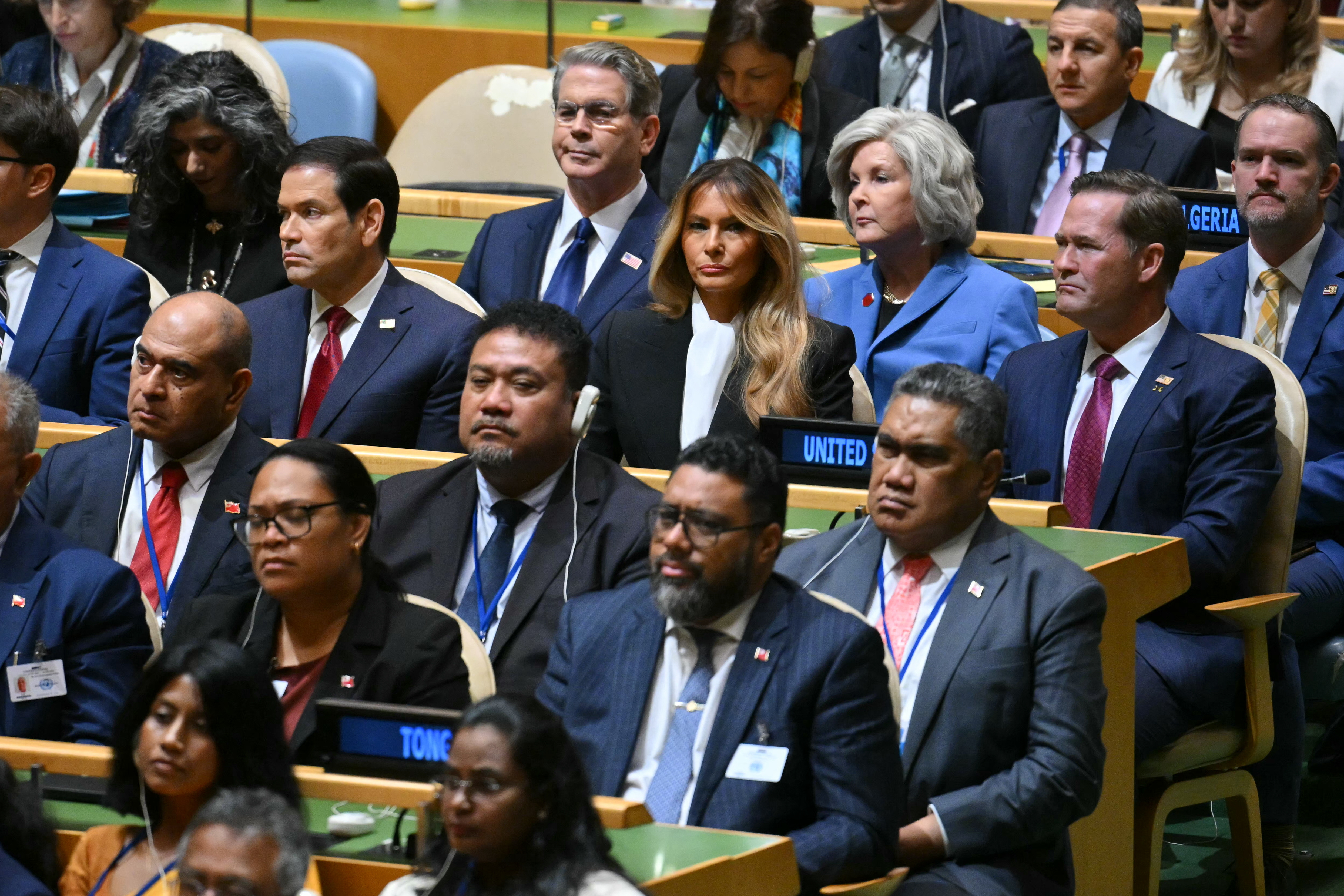
The clock on the mahogany wall in Turtle Bay does not tick. It hums. A low, synthetic vibration that marks off sixty seconds of human history while delegates down below shuffle heavy paper and adjust translation earpieces that never quite fit right.
I stood in that gallery once, watching a career diplomat negotiate a humanitarian corridor through a conflict zone that most people couldn't point to on a map without sliding a finger across three separate mountain ranges. Her name badge was pressed against a lapel that had survived four administrations and three coffee spills that morning. She wasn't shouting. She wasn't pounding a fist against the polished wood of the Security Council horse-shoe. She was leaning forward, her shoulders slightly rounded, listening to a man three times her age explain why his government could not possibly open a border crossing before Tuesday.
That is where international policy actually lives. Not in the ticker tape at the bottom of a cable news broadcast. Not in the triumphant press releases issued at midnight by staffers eager for morning newspaper coverage. It lives in the endurance of quiet stubbornness.
When the United States ambassador to the United Nations steps behind a bank of microphones to discuss progress on key global issues, the cameras flash for twenty seconds. The red recording indicator blinks its mechanical eye. Then the broadcast cuts to a commercial for luxury SUVs or pharmaceutical drugs with eighteen syllables in their chemical names. The audience changes the channel. The world moves on.
Yet the work does not move on. It stays in the room.
Consider what happens when a resolution stalls over a single comma. To a civilian, a comma is a punctuation mark. A brief pause for breath. To a legal advisor sitting in a windowless basement beneath the General Assembly building at three in the morning, that same comma is a potential veto. It is the difference between food trucks rolling across an international boundary and artillery shells raining down on a schoolhouse.
We forget this because abstraction is comfortable. We talk about multilateralism, geopolitical stability, and diplomatic leverage as if they were weather patterns sweeping across an indifferent continent. They are not weather. They are choices made by tired human beings running on lukewarm tap water and cold sandwiches, trying desperately to prevent tomorrow from looking like yesterday.
Let us trace a hypothetical morning in the life of a mid-level political counselor assigned to the New York mission. Let us call him David.
David is thirty-four years old. He has dark circles under his eyes that no amount of concealor can erase, acquired during two years in a regional desk handling refugee resettlement logistics. He knows the exact tonnage of wheat required to feed a displaced population of forty thousand souls for a month. He also knows the precise name of the customs official in a distant port city who historically refuses to clear cargo unless his palm is crossed with bureaucratic delays that stretch into months.
On a typical Tuesday, David's day begins at 5:30 AM with a secure phone call from a capital eight time zones away. A ceasefire has frayed. A patrol has crossed a demarcation line that exists only on paper and in the minds of eighteen-year-old conscripts who are terrified and holding loaded rifles.
By 8:00 AM, David is sitting in a briefing room smelling of industrial carpet and stale pastries. He has forty-five minutes to synthesize three hundred pages of intelligence cables into a three-minute talking point for the ambassador. The language must be precise enough to satisfy Washington, ambiguous enough to keep an unstable coalition partner from walking out of the negotiating chamber, and clear enough to be translated simultaneously into Arabic, French, Russian, and Mandarin without losing its moral weight.
This is the machinery of global progress. It is unglamorous. It smells of old paper and nervous sweat.
When people ask what the United Nations is actually doing, they are usually imagining a grand theater of nations where world leaders thunder against injustice before empty leather chairs. That theater exists. But it is only the proscenium arch. Behind the curtain, the real play is being written line by grueling line by people whose names will never appear on a bronze plaque.
The recent updates from the ambassador’s office regarding food security, maritime safety corridors, and peacekeeping mandates in volatile regions sound dry when translated into bureaucratic prose. They are packaged as progress reports. They use words like framework, mechanism, and stakeholder.
Strip away the jargon. Look at what those words actually purchase.
A maritime safety corridor means a rusted grain freighter with a Ukrainian crew can slip through a minefield in the Black Sea without being blown to splinters by an automated naval drone. It means a family in Cairo can buy a loaf of bread without spending half their weekly wages. It means a child in a drought-stricken province in East Africa has a statistical chance of seeing his tenth birthday.
That is the true ledger of international diplomacy. It is not measured in abstract percentages of compliance or the number of resolutions passed by a two-thirds majority. It is measured in heartbeats saved from the silent scythe of hunger and crossfire.
We live in an era that demands instant catharsis. We want villains identified, heroes crowned, and conflicts resolved within the span of a ninety-second video clip. When diplomacy fails to provide that cinematic neatness, we dismiss the entire institution as a talking shop. A toothless tiger howling at the moon.
That cynicism is lazy. Worse, it is dangerous.
The alternative to the endless, grinding labor of multilateral negotiation is not a sudden, beautiful dawn of global harmony. The alternative is the dark. It is the return of the unconstrained fist. It is the belief that the only law worth respecting is the law of the heaviest artillery battery.
I remember watching an ambassador lose an argument over humanitarian access in the dry season of 2018. The opposition delegate stood up, slammed his portfolio shut, and walked out of the room. The air conditioning hummed. The translators took off their headphones and rubbed their ears. For thirty seconds, nobody spoke.
Then our ambassador picked up her pen, crossed out the third paragraph of the draft proposal, and looked across the empty chair at the opposing delegation's junior advisor who had been left behind to gather the scattered papers.
"Tell your boss," she said quietly, her voice entirely devoid of theatrical anger, "that we will be back in this room tomorrow morning at eight. And the morning after that. Until he is ready to talk about the grain silos."
She was not bluffing. She was never bluffing. She came back the next day. And the day after that. On the fourth day, the signature was secured. Three ships sailed.
That is what progress looks like from the inside. It is not a lightning strike. It is a glacier carving its way through granite, millimeter by stubborn millimeter, until the landscape is permanently altered.
When we evaluate the work happening at the international level today, we must look past the bureaucratic veneer. We must look for the human friction points where stubborn idealism grinds against the hard rock of national self-interest.
The ambassador standing at the podium in New York is not just reading a statement compiled by a committee of anonymous policy wonks. She is holding a line. She is standing in the breach between what the world is—brutal, fractured, and fiercely tribal—and what it desperately needs to become if our grandchildren are to inherit something better than charred ruins and walled borders.
The work is unfinished. It will always be unfinished. The ink on the treaty is dry for only as long as it takes the next crisis to test its bindings.
Yet every time a corridor is opened, every time a peacekeeping mandate is renewed before a local militia can fill the vacuum, every time a shipment of medicine slips past a corrupt checkpoint, the world tilts just a fraction of an inch back toward sanity.
Listen closely the next time the cameras roll and the ambassador begins to speak. Do not listen for the sound bites designed for the evening news. Listen for the hum of the room behind her. Listen for the weight of the millions of ordinary lives hanging in the balance of a single, carefully chosen word.
That is where we are. That is what is at stake.
And somewhere in a windowless basement three floors down, a tired kid with a cup of lukewarm coffee is already drafting the notes for tomorrow's impossible argument.