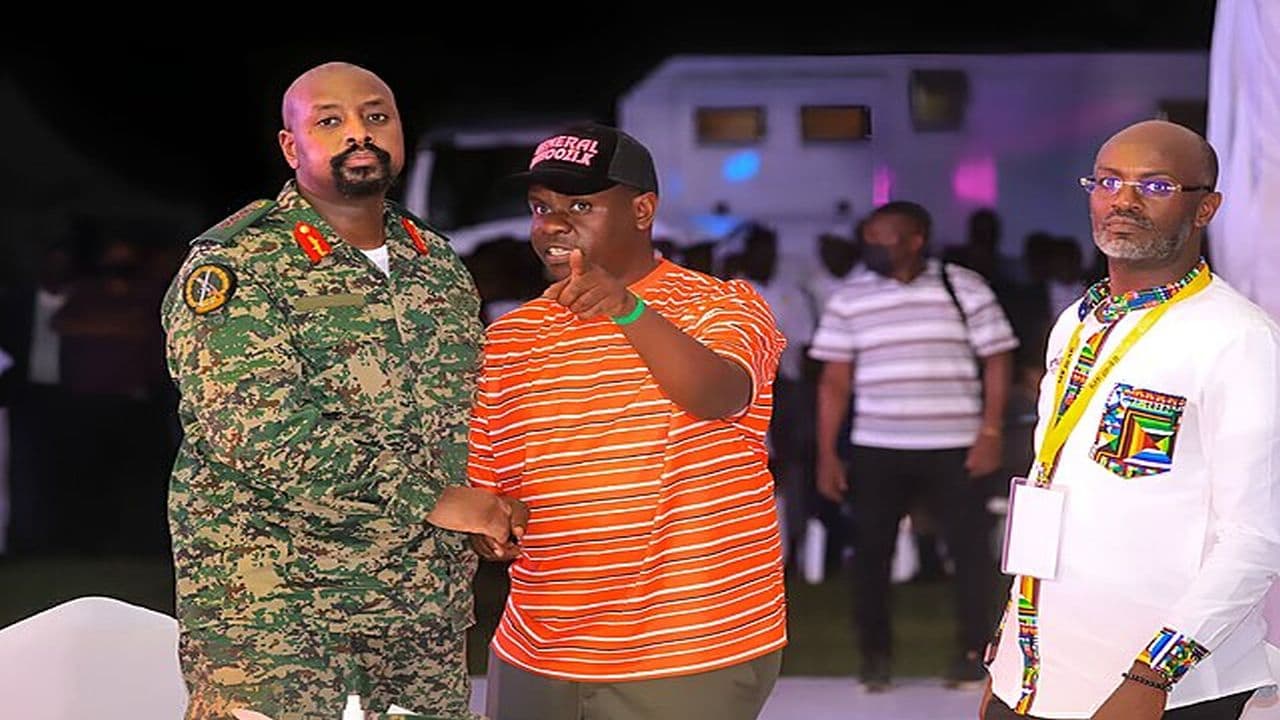
In the quiet, humid corridors of Kampala’s power centers, the most potent weapon isn’t a rifle. It is a smartphone. Specifically, it is the one held by General Muhoozi Kainerugaba. For those unfamiliar with the geography of East African influence, Muhoozi is not just any general; he is the commander of Uganda’s defense forces and the son of President Yoweri Museveni. When he taps his screen, the shockwaves don't just ripple through the Great Lakes region. They tear across the Mediterranean and into the heart of the Levant.
Power used to speak in whispers. Diplomats would spend months crafting a "communique" that said nothing while meaning everything. Those days are dead. Now, a single man with a verified account can bypass the entire Ministry of Foreign Affairs before his morning coffee has gone cold. This isn't just about social media. It is about the terrifying, raw intersection of inherited authority and digital spontaneity.
Consider the weight of a word in a time of war. While the global community treads a razor’s edge regarding the conflict in Gaza, Muhoozi didn't just walk the line; he sprinted across it. He declared that an attack on Israel is an attack on the "UPDF" (Uganda Peoples' Defence Forces). Think about that for a second. A high-ranking military official in a sovereign African nation effectively pledged his troops to a Middle Eastern nuclear power via a micro-blogging platform.
He didn't stop there. He pivoted to Turkey, praising its leadership and suggesting a deep, almost spiritual alignment between Ankara and Kampala. To the casual observer in the West, this might look like "erratic posting." To those on the ground, it is a tectonic shift. It is the sound of a new generation of African leadership deciding that the old rules of "neutrality" and "quiet diplomacy" are relics of a colonial past they no longer care to honor.
The Ghost in the Machine
Let’s step away from the maps and the military briefings for a moment. Imagine a young diplomatic attache in a windowless office in Tel Aviv or Istanbul. Their job is to monitor "regional stability." Suddenly, an alert pops up. A four-star general in Uganda has just shifted the nation's perceived geopolitical alignment with 280 characters. The attache has to decide: Is this official policy? Is this a personal whim? Or is it a trial balloon sent up to see who shoots it down?
This is the "Muhoozi Effect." It creates a permanent state of strategic ambiguity. In the world of high-stakes gambling, this is known as "tilting the table." By being unpredictable, Muhoozi makes himself the center of every conversation. You cannot ignore a man who might tweet a declaration of war or a marriage proposal to a foreign leader's daughter at three in the morning.
The human element here is ego, but it is also a very specific kind of loneliness. When you are the "First Son," the "General," and the "Successor," the traditional channels of communication feel like cages. The screen offers an unmediated connection to the world. It is addictive. It feels like power because, in our attention economy, it is power.
Why the World is Scared of a Tweet
The fear isn't that Uganda is going to invade a Mediterranean power tomorrow. The fear is the erosion of the "Buffer Zone." Historically, if a leader said something reckless, a dozen advisors could walk it back, claim a mistranslation, or issue a clarification. But when the leader is the medium, there is no backspace.
When Muhoozi posts about Israel, he isn't just talking to Israelis. He is talking to the United States, to Iran, and to his own domestic rivals. He is signaling that Uganda is no longer a passive recipient of Western "guidance." He is claiming the right to be as messy, as opinionated, and as controversial as any leader in the Global North.
However, there is a cost. The "Invisible Stake" in this narrative is the stability of the Ugandan state itself. For decades, President Museveni has played a masterclass in balance—keeping the U.S. happy with counter-terrorism cooperation while courting Chinese investment and Russian hardware. It was a silent, delicate dance. Muhoozi’s digital footprint is more like a heavy-metal drum solo in the middle of a ballet.
The Hypothetical Secretary
Imagine a woman named Sarah. She works for an international NGO in Northern Uganda. Her funding depends on the perception that Uganda is a stable, predictable partner in the "Rules-Based International Order." Every time a high-level post sparks a diplomatic spat with a major donor or a regional neighbor, Sarah’s work gets harder. The interest rates on national debt might tick up by a fraction of a percent because of "political uncertainty." The cost of a bag of grain in a rural market might rise because a trade partner in the Middle East takes offense to a casual remark about their sovereignty.
These aren't metaphors. This is how the digital becomes the visceral.
The posts regarding Turkey are perhaps even more complex. Turkey has been aggressively expanding its influence in Africa, positioning itself as a "third way" between the West and China. By praising Erdogan and Turkish military might, Muhoozi is effectively auditioning for a new set of allies. He is telling the world that if the old guard finds his "style" too abrasive, he has other friends he can call.
The Silence Between the Posts
We often focus on what is said, but the real story is in the silence that follows. Notice how the official Ugandan government accounts rarely "correct" the General. They don't distance themselves. This silence is a confirmation of a new reality: the military and the state are becoming a singular, digital personality.
This isn't a glitch in the system. It is the system.
We are watching the birth of "Sovereign Influencers." These are leaders who realize that a million followers are more valuable than a dozen ambassadors. They understand that in 2026, the battle for the hearts and minds of a population is won on the glowing rectangles in their pockets. Muhoozi is simply the most visible practitioner of this new art form in Africa.
He is testing the boundaries of what a military commander can be. Can you be a warrior, a diplomat, and a provocateur all at once? The world is watching his feed to find out, but the stakes are far higher than a "like" or a "retweet."
The real danger isn't a single post about Israel or Turkey. The danger is the moment we stop being surprised. When we accept that the foreign policy of a nation can be changed on a whim between clips of military parades and birthday celebrations, we have entered a new, much darker era of history.
The screen flickers. The thumb hovers over the "Post" button. In that split second, the future of a continent hangs in the balance, waiting for the next spark to catch.