Every time a sitting governor demands an opponent pull an attack ad, political reporters sprint to their keyboards and treat the outrage like a seismic event.
It isn't. It's a script.
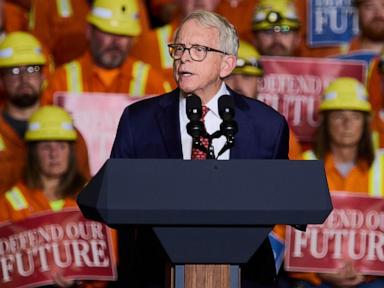
When Ohio Governor Mike DeWine condemns a Vivek Ramaswamy ad and calls on him to take it down, the lazy consensus reads it as a clash of principles or an urgent check on campaigning gone too far. That reading misses the mechanics of modern politics completely. DeWine doesn't actually expect Ramaswamy to hit delete. If Ramaswamy complies, DeWine claims victory over bad behavior. If Ramaswamy refuses, DeWine gets a second news cycle painting his rival as reckless.
Heads DeWine wins. Tails Ramaswamy gets free oxygen.
I've watched political operatives spend seven figures trying to manufacture the exact kind of viral friction that a single high-profile condemnation hands over for free. Campaigns burn money on media buys, focus groups, and cable surrogates hoping to break through the noise, only to get outmaneuvered by a forty-second clash over an ad that half the electorate hadn't even seen yet. Most people covering these fights confuse decibel level with persuasion. They aren't the same thing. Not even close.
The Wrong Question Everyone Is Asking
When a story like this breaks, the reflex questions follow a predictable groove. Will Ramaswamy take the ad down? Does DeWine's rebuke hurt Ramaswamy with moderate voters? Who won the feud?
Those are the wrong questions. They treat a distribution tactic like a moral trial.
In modern campaigns, an ad's primary job isn't always to convert a persuadable voter sitting on the fence in a suburban living room. Sometimes the ad is engineered to provoke an establishment figure into giving it a megaphone. A condemnation from a prominent state leader—especially one with name recognition like Mike DeWine—acts as an unpaid amplification engine. Journalists write about the dispute. Clip shows replay the contested imagery. Voters who tune out standard policy spots suddenly pay attention because someone with authority is yelling "stop."
Ask yourself a basic question about incentives. If a campaign thought an ad was failing to move its base or annoy its opponents, would a rival's public tantrum make the ad more valuable or less valuable?
More valuable. Every single time.
Politicians aren't naive. Governors know how media ecosystems work. When DeWine publicly calls on Ramaswamy to take down an ad, he isn't stepping into a vacuum; he's stepping onto a stage with cameras already rolling. Whether the dispute stems from policy framing, personal attacks, or a clash over Ohio's direction, the public demand to "take it down" functions as a press release dressed up as a reprimand.
How Outrage Mechanics Actually Work in Campaigns
Let's separate two terms political pundits constantly mash together: reach and persuasion.
Reach is how many eyeballs see a message. Persuasion is whether those eyeballs change how they vote.
Traditional campaign theory—the kind taught in textbooks and practiced by cautious consultants who bill by the month—assumes reach and persuasion move together. Buy enough airtime, repeat a clean message, and slowly shift opinion. That model still works at the margins, especially in low-information races or late-stage voter contact.
Outrage operates differently. Outrage maximizes reach fast and cheaply, while persuasion remains stubbornly contested.
Political scientists who study campaign communication and media effects—figures like Shanto Iyengar and Kathleen Hall Jamieson have spent decades documenting how partisan media and high-salience conflict shape voter attention—have repeatedly shown that conflict boosts audience engagement while hardening existing alignments. People don't watch political clashes with a blank slate. They filter what they see through preexisting loyalties, trust in messengers, and grievance.
Imagine a scenario where a candidate releases a sharp, provocative ad targeting a rival or an established record. Before the governor weighs in, the spot gets modest traction among committed partisans. Then the governor issues a formal condemnation demanding the ad be pulled. Within hours, local news outlets, political newsletters, and social feeds cover the standoff. The spot gets seen by people who normally scroll right past campaign ads.
Did that extra exposure persuade swing voters to love the ad's message? Not necessarily. Some viewers bristle at the tone. Others cheer the punch. Either way, the candidate who provoked the fight just bypassed paid media bottlenecks.
Why "Take It Down" Rarely Works
Demanding an opponent pull an ad is one of the oldest moves in American politics, and one of the least effective if the goal is actual erasure.
Once an ad exists in the digital ecosystem, "taking it down" is mostly symbolic. Screen recordings exist. Clips circulate on feeds. Opponents quote lines in interviews. Even if a campaign pauses a specific paid placement, the underlying argument—or the grievance behind it—has already entered circulation.
More importantly, public ultimatums carry a trap for the person issuing them. If the target ignores the demand, the challenger's authority looks toothless. That's why seasoned executives usually reserve direct public demands for moments when they believe the political upside of drawing a sharp contrast outweighs the risk of looking ignored.
DeWine has spent decades in Ohio public life—as a prosecutor, congressman, attorney general, and governor. He knows how institutional framing works. By casting himself as the adult in the room calling out an ad, he tries to set the terms of decency and governance. Ramaswamy, by contrast, has built a brand around disrupting norms, challenging orthodoxy, and turning friction into momentum.
When an institutionalist tells a disruptor to take an ad down, neither man is surprised by the other's move. Both understand the choreography.
What the "People Also Ask" Crowd Gets Backward
If you look at the questions voters and readers type into search bars around a story like this, three misconceptions show up over and over.
1. "Does an ad condemnation force a candidate to back down?"
Rarely on its own. Candidates back down when polling tanks, donors revolt, or legal/compliance risks threaten the campaign—not merely because an opponent asks nicely or sternly in the press. A public demand to pull an ad is usually an invitation to argue, not a lever that forces compliance.
2. "Do voters care more about campaign civility than substance?"
Voters say they dislike negative or over-the-top ads when polled abstractly. Yet in actual elections, sharp, high-contrast messages routinely outperform polite platitudes when voters feel anxious about cost of living, leadership, or cultural direction. Complaining that an ad crosses a line only persuades voters who already share the complainant's standards of decorum.
3. "Is this just a distraction from real issues?"
Calling a political clash a "distraction" is a cop-out. How candidates fight—and who pushes back—reveals how they compete for power, what coalitions they are courting, and how they frame their vision for the state. Ignoring the mechanics because the tone feels noisy leaves you blind to how narratives get built.
The Downsides of Playing the Outrage Game
Let's be honest about the trade-offs here, because my contrarian read comes with real costs.
Treating every ad fight as tactical theater can make observers overly cynical. Sometimes an ad genuinely distorts facts, crosses ethical lines, or attacks vulnerable people in ways that deserve pushback regardless of political calculus. A leader can object to something because they find it wrong—and still benefit from the optics of objecting publicly. Motives in politics are rarely pure, and they rarely have to be singular.
There is also a strategic risk for the candidate leaning into provocation. Escalation works until voters hit saturation. If every week brings a new manufactured clash over ads, clips, and rebukes, persuadable voters can tune out the noise altogether—or decide both sides are playing games instead of offering solutions.
I've seen campaigns mistake constant combat for momentum right up until turnout told a different story. Heat is not stamina. A viral clash can spike attention on a Tuesday and mean very little by November if the underlying message lacks durable appeal.
How to Read the Next Ad Fight Like an Insider
If you want to cut through the spin the next time a governor, senator, or rival demands an opponent pull an ad, skip the headline and run a quick audit on what's actually happening:
- Check the distribution curve. Did the ad explode before the condemnation, or did the condemnation give a quiet ad its biggest boost?
- Watch who amplifies it. Are neutral reporters treating it as a breaking scandal, or are partisan accounts using it to rally their base?
- Look for the pivot. What policy point, vulnerability, or contrast is the person demanding the takedown trying to bury—or elevate?
- Measure the shelf life. Will anyone remember the specific ad in two weeks, or only the broader caricature each side attached to the other?
Stop treating political outrage as a verdict. Treat it as a tactic.