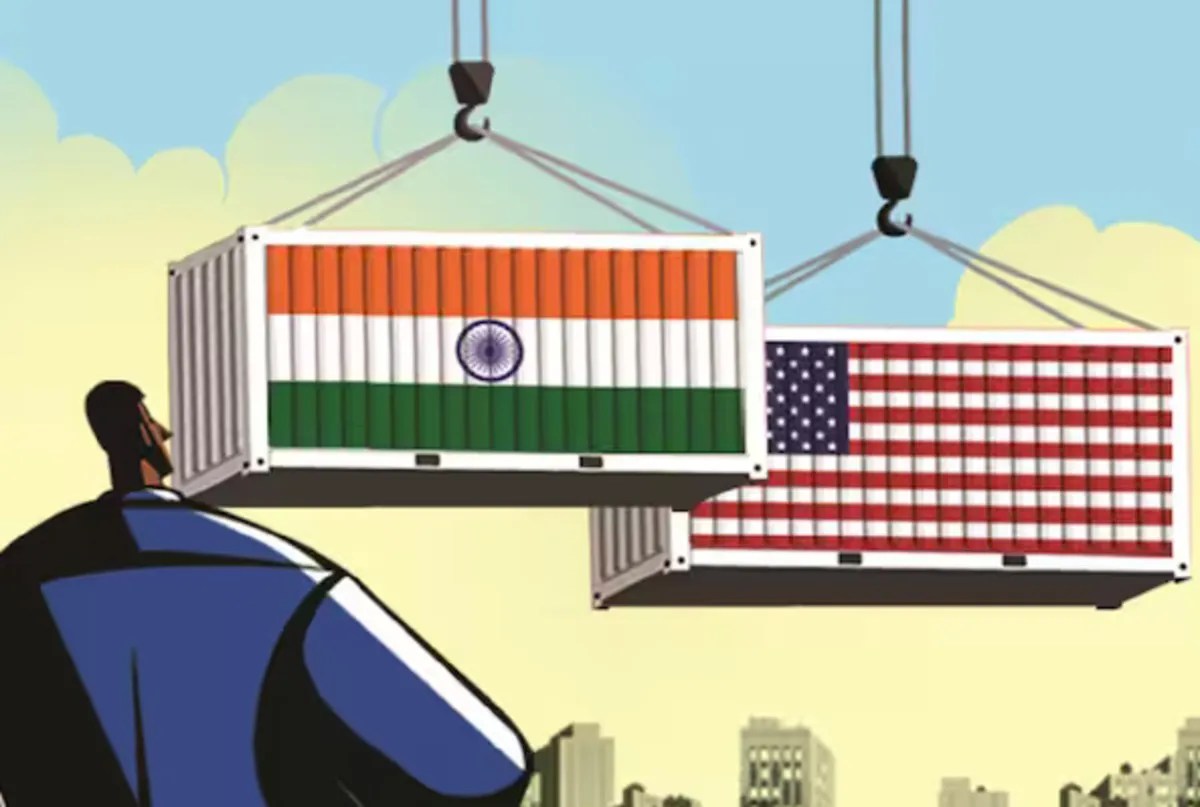
The mainstream media is eating right out of the hand of official press releases. When the headlines screamed that India denied walking away from a trade deal with the United States—labeling the reports of friction as "fake news" after a high-level nod between officials—the entire financial press nodded in unison. They bought the narrative. They assumed that because two high-ranking officials smiled for a camera and dismissed a rumor, the underlying economic friction magically vanished.
It did not.
To believe that trade negotiations between two hyper-nationalistic economies are sailing smoothly just because a press secretary issued a denial is peak economic naivety. The official narrative is a carefully constructed smoke screen. The reality is that the structural gridlock between Washington and New Delhi is worsening, and no amount of public relations spin can bridge the chasm.
The Myth of the "Fake News" Dismissal
Let's look at the mechanics of diplomatic denials. When a government official calls a report "fake news," they are rarely disputing the core friction. They are disputing the optics.
In trade diplomacy, admitting to a standstill is a tactical error. It panics domestic markets, gives leverage to political opponents, and signals weakness to the other side of the negotiating table. By calling reports of a breakdown "fake," officials buy themselves time.
I have spent over a decade analyzing trade corridors and watching bilateral negotiations stall behind closed doors. The script is always identical. Step one: a leak exposes deep disagreements over tariffs or market access. Step two: both governments issue a furious, synchronized denial to stabilize public perception. Step three: the actual negotiations quiet down to a crawl because neither side can afford to compromise on their domestic mandates.
The "lazy consensus" of the current reporting assumes that a trade deal is inevitable because both nations want a strategic counterweight to China. That is a massive analytical flaw. Geopolitical alignment does not equal economic integration. You can share a military objective while simultaneously engaging in a brutal, protectionist trade war.
The Unforgiving Math of Tariffs and IP
The media loves to focus on the chemistry between leaders. Let's look at the math instead, because numbers do not care about handshakes.
The core friction points between the US and India are structural, not circumstantial. They cannot be resolved by a friendly tweet or a joint statement.
1. The Agriculture Deadlock
The US wants deep cuts on dairy and poultry tariffs. India’s agricultural sector employs nearly half of its population. For New Delhi, slashing these tariffs to let cheap American agribusiness flood the domestic market is political suicide. No ruling party in India will sacrifice the voting power of its farmers for a headline-grabbing trade trophy.
2. Intellectual Property and Digital Protectionism
Washington demands stringent intellectual property protections, specifically for big pharma and tech. India prides itself on being the pharmacy of the developing world, relying heavily on generic manufacturing. Add to that India’s strict data localization laws—which force American tech giants to store data locally—and you have an ideological wall. The US views data localization as a trade barrier; India views it as national sovereignty.
3. The Tariffs Game
Let's look at the historical data. The US removed India from the Generalized System of Preferences (GSP) program years ago, citing lack of equitable market access. India retaliated with tariffs on American almonds, apples, and walnuts. While some retaliatory tariffs get tweaked for optics, the fundamental posture of both nations remains aggressively protectionist.
Imagine a scenario where a corporate merger is announced, but both companies refuse to share their IP, refuse to integrate their supply chains, and refuse to cut their internal costs. The merger exists only on paper. That is the current state of US-India trade relations.
Dismantling the Premise of Your Questions
When people look at this situation, they tend to ask the wrong questions. The public forum is flooded with flawed premises that need to be dismantled.
Flawed Question: When will India and the US sign a comprehensive Free Trade Agreement?
The Brutal Truth: Never. A comprehensive Free Trade Agreement (FTA) is an illusion. Neither nation’s current political climate supports it. The US has shifted away from massive multilateral or bilateral FTAs toward smaller, targeted economic frameworks that do not require congressional approval. India, meanwhile, has historically been cautious about FTAs, walking away from the Regional Comprehensive Economic Partnership (RCEP) at the eleventh hour because of domestic industry fears. Stop looking for a grand bargain. It isn't coming.
Flawed Question: Does the denial of a rift mean relations are at an all-time high?
The Brutal Truth: Absolutely not. A denial simply means both parties agree that public panic serves nobody. It is a maintenance tactic, not a growth metric. Look at what they do, not what they say. Watch the actual tariff structures and regulatory hurdles. If the regulatory compliance costs for American companies in India are rising, the trade deal is dying, regardless of what a press release claims.
The Cost of the Contrarian Take
To be fair, expecting total gridlock has its own blind spots. The downside to this cynical, mathematically grounded view is that it can underestimate the power of emergency pragmatism.
Sometimes, an external crisis—like a sudden supply chain collapse or a severe geopolitical escalation—can force leaders to sign a "mini-deal." These are hollow, superficial agreements that cut tariffs on a handful of niche products just so both sides can claim a victory.
But a mini-deal is not a trade triumph. It is a bandage on a fractured bone. It allows talking heads to celebrate a breakthrough while leaving the systemic issues—the data laws, the agricultural barriers, the IP disputes—completely untouched.
Stop Waiting for the Signing Ceremony
If you are a business leader, an investor, or a supply chain strategist waiting for a comprehensive US-India trade deal to unlock new margins, you are wasting valuable time.
The structural realities of both nations demand protectionism. The US is doubling down on domestic manufacturing and reshoring. India is fiercely executing its self-reliance models. These two ideologies are designed to compete, not to seamlessly blend.
Stop reading the lips of diplomats. Stop believing that a denial of a breakdown means progress is being made. The breakdown is already built into the system. Build your global strategy around the tariffs that exist today, because they are not going anywhere tomorrow.