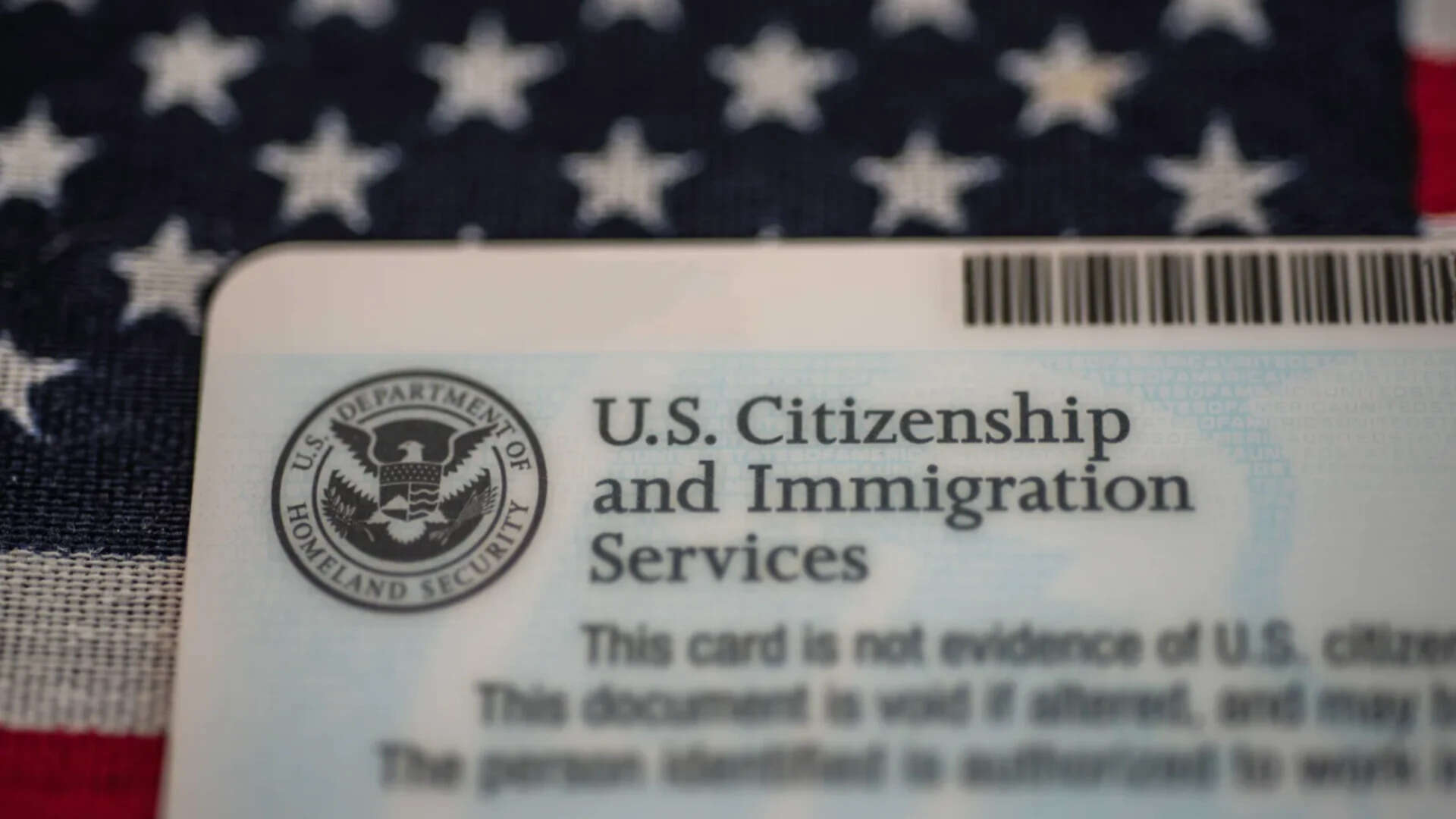
The media is having another collective meltdown over 17 pieces of paper.
When the Department of Justice announced its latest push to revoke the U.S. citizenship of 17 naturalized individuals, the headlines practically wrote themselves. Outrage merchants framed it as a "drastic escalation," an "unprecedented assault on immigrants," and a chilling degradation of the American dream. Activists immediately started weeping over the "sanctity of citizenship," claiming that a rogue administration is weaponizing a obscure legal mechanism to turn millions of legal immigrants into second-class citizens overnight.
It is a beautiful narrative. It is also completely wrong.
The lazy consensus surrounding denaturalization is built on an emotional fallacy: the idea that once the federal government stamps your passport, the transaction is closed forever, regardless of how you closed it. The mainstream commentary treats citizenship like an entry-level gym membership where you can lie about your age on the application form, but as long as you make it past the turnstile, the gym has no right to cancel your subscription.
Let's drop the sentimental theater. I have spent years analyzing the intersections of federal policy and corporate compliance, watching organizations blow millions of dollars trying to fix broken incentive structures. The core flaw is always the same: a refusal to police the integrity of the baseline asset.
The 17 individuals targeted in this round are not innocent families who made a typo on a tax document. We are talking about child sexual predators, human traffickers, international fraudsters, and a corporate schemer who systematically weaponized fraudulent H-1B visa petitions to exploit the system.
To argue that auditing these files is an attack on immigration is to argue that auditing a bank is an attack on wealth creation. Denaturalization isn't a threat to the integrity of American citizenship; it is the only thing left protecting it.
The Fraudulent Foundation of the Secular Saint Myth
The institutional panic over denaturalization relies on a historical baseline that was never sustainable. Commentators love to parrot the statistic that between 1990 and 2017, the Justice Department filed an average of just 11 denaturalization cases per year. They present this number as if it represents a golden era of judicial restraint and flawless administrative vetting.
It wasn't restraint. It was administrative laziness.
For nearly three decades, the federal government operated under a policy of willful blindness. Millions of paper-based fingerprint files sat deteriorating in warehouses while digital systems were built around them. The "average of 11 cases per year" did not exist because immigrants were universally honest; it existed because the government lacked the technological infrastructure to cross-reference legacy biometric data against modern databases.
When programs like Operation Janus finally began matching old ink-and-paper fingerprints of individuals facing deportation orders with newer digital records of naturalized citizens, the system found exactly what any data auditor would expect: thousands of systemic mismatches. People who were ordered deported under one name simply walked into a different office, applied under a different alias, and were handed a blue passport.
To insist that we must maintain the historical average of 11 cases per year is to demand that the state remain intentionally ignorant. Imagine a scenario where a financial institution discovers a legacy software glitch that allowed thousands of accounts to bypass anti-money laundering checks. If the compliance department decided to audit those accounts, no serious analyst would call it a "unprecedented assault on depositors." They would call it a fiduciary obligation.
Yet, when the asset is the most valuable legal status on earth—U.S. citizenship—the rules of basic logic are thrown out the window. The current administration's expansion of priorities to target systemic fraud is not a distortion of legal norms. It is the belated correction of a massive compliance backlog.
The Value Paradox: Why Total Security Makes Status Worthless
Basic economic theory dictates that when the cost of fraud approaches zero, the value of the underlying asset plummets.
If a naturalized citizen can secure their status through deliberate misrepresentation—whether by hiding a criminal past in their home country or fabricating corporate documents to secure an executive visa—and face zero risk of revocation once the oath is taken, then the legal value of that citizenship is fundamentally compromised for everyone else who obtained it honestly.
Consider the mechanics of the current case involving the Indian immigrant accused of filing fraudulent H-1B petitions. The standard corporate immigration pipeline is a brutal, expensive, and hyper-competitive lottery. Honest companies and highly skilled professionals spend hundreds of thousands of dollars and years of bureaucratic agony playing by the rules.
When a rogue actor uses a shell company network to flood the system with fake petitions, secure a green card, and eventually naturalize, they aren't just cheating the government. They are actively devaluing the labor, time, and sacrifice of every legitimate immigrant in the queue.
By refusing to aggressively denaturalize the fraudsters, the government effectively signals to the global market that cheating is a viable strategy with a permanent reward. The true anti-immigrant stance isn't policing the border of citizenship; it is allowing the title to be degraded by bad actors who view American law as an administrative suggestion.
The critique that this creates "fear and suspicion" among the 24 million naturalized citizens in the United States is an insult to the intelligence of the average immigrant. The vast majority of naturalized Americans did not use a fake identity, they did not commit war crimes, and they did not lie about being sexual predators. Telling a legitimate citizen that they should be terrified because a child abuser had his citizenship revoked is a cheap psychological operation designed to manufacture a collective victimhood that does not exist.
The Structural Illusion of "Irrevocable" Status
The core legal misunderstanding driving the current outrage is the belief that citizenship is a natural right that the state merely recognizes. It isn't. Naturalization is a conditional contract governed by federal statute.
Under Chapter 11 of the Immigration and Nationality Act, the statutory requirements are explicit: an applicant must show they are a person of "good moral character" during the statutory period leading up to the oath. If an individual committed an act during that window that statutorily barred them from establishing good moral character—and concealed it—the citizenship was never legally acquired in the first place.
The court does not "take away" their citizenship in the way the state takes property through eminent domain. The court issues a declaratory judgment stating that the citizenship was illegally procured. It was a legal nullity from the day the oath was taken.
+-----------------------------------------------------------------+
|                    THE DENATURALIZATION REALITY                 |
+-----------------------------------------------------------------+
|  MYTH:                                                          |
|  The government is stripping valid citizenship from Americans   |
|  as a political punishment.                                     |
+-----------------------------------------------------------------+
|  REALITY:                                                       |
|  The federal court confirms the status was legally void from    |
|  day one due to underlying fraud or material concealment.       |
+-----------------------------------------------------------------+
This is not a technicality; it is a fundamental pillar of contract law. If you secure a corporate merger by providing falsified financial statements, the discovery of that fraud doesn't mean the target company is "unfairly revoking" the acquisition. It means the transaction was built on a lie and is void ab initio.
The downside to this rigid approach is obvious, and it is one that contrarians must concede: the potential for administrative overreach is real. If the Department of Justice were to spend billions of dollars chasing down individuals for minor, non-material typographical errors made thirty years ago, the system would dissolve into a Kafkaesque nightmare.
But that isn't what is happening here. The files currently hitting federal dockets are a rogue's gallery of extreme offenses. The government is starting with the clear-cut, high-impact cases because they have the highest return on investment for public safety and system integrity. To halt the prosecution of international fraudsters because of a hypothetical future scenario where the government might target an innocent grandma is an abdication of executive authority.
Dismantling the Premium on Bureaucratic Incompetence
The real reason the institutional class hates denaturalization is that it exposes the structural incompetence of the immigration apparatus itself. Every single one of these 17 cases represents a failure of the initial vetting process. Someone at U.S. Citizenship and Immigration Services signed off on these files. Someone didn't run the background check correctly, missed a red flag, or lacked the tools to verify the applicant's claims.
The push for denaturalization forces accountability back onto a bureaucracy that prefers to operate without consequences. When a status is deemed permanent and unchangeable, the bureaucrats who grant it are absolved of long-term responsibility. If an agent approves a fraudulent file, it becomes a permanent line item in the demographic ledger, insulated from future scrutiny.
By turning denaturalization into an active, adequately resourced enforcement mechanism, the administration is introducing a basic market principle to the federal government: clawbacks.
In the financial sector, executive clawbacks ensure that if bonuses are paid out based on fraudulent numbers, the capital can be recovered years later. It keeps the system honest. Denaturalization is the ultimate geopolitical clawback. It strips the ill-gotten gains from individuals who leveraged deception to secure the ultimate legal shield.
Stop asking whether 17 people are too many or too few. Stop pretending that an administrative audit of documented criminals is the prelude to a mass deportation of legal citizens. The system isn't breaking; it is finally working. If you want American citizenship to retain its status as the world’s premier legal asset, you have to be willing to foreclose on the people who stole it.