Calls for unity after a bitter election cycle sound virtuous, but they misunderstand the foundational mechanics of democratic governance.
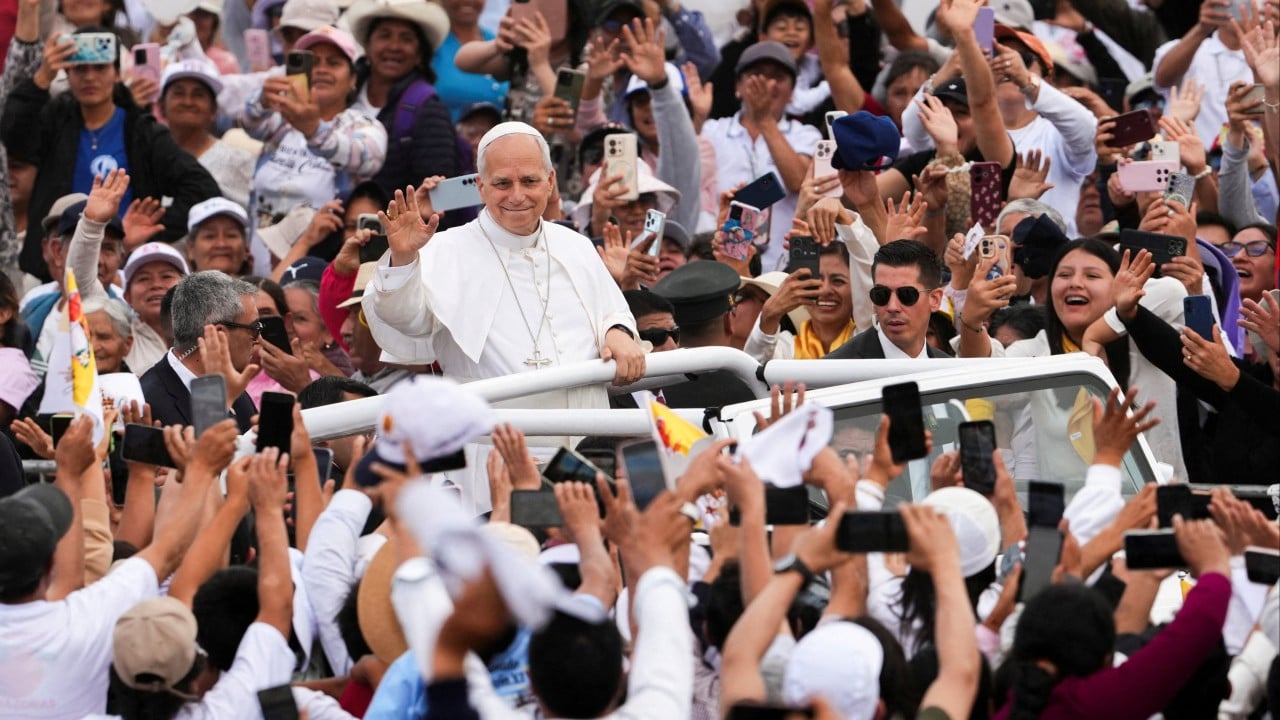
Following the 2026 United States midterm elections, Pope Leo issued a public appeal urging "less war, less division" across a fractured political environment. Mainstream news outlets covered the statement as a straightforward moral imperative—treating political polarization as a simple failure of civic manners that can be cured through collective goodwill and softer rhetoric. That framing represents a profound misreading of both American constitutional design and international conflict resolution.
Treating division as an automatic moral defect confuses healthy institutional friction with existential social collapse. In a constitutional republic, political division is not an accident to be smoothed over after the ballots are counted; it is the exact mechanism through which competing interests negotiate power without resorting to physical violence.
The Architecture of Institutional Friction
To understand why post-election appeals for harmony fall flat, look at the blueprints of the American political system. In Federalist No. 10, James Madison argued that faction is sown into the very nature of humanity. Trying to eliminate division by demanding that citizens adopt the same opinions or passions is, in Madison’s words, a remedy worse than the disease because it requires destroying the liberty essential to political life.
When religious or global leaders call for "less division" immediately after a midterm election, they often conflate two distinct concepts:
- Affective polarization: The emotional hostility and distrust citizens feel toward members of an opposing political party.
- Ideological divergence: Genuine, irreconcilable disagreements over tax policy, judicial appointments, bodily autonomy, energy production, and foreign intervention.
Media coverage routinely blurs these lines. Journalists and commentators treat a razor-thin congressional margin or a deadlocked legislative chamber as proof that the system is broken. Yet from a structural standpoint, divided government is the electorate exercising its veto power. Voters routinely split tickets or swing congressional control during midterms precisely because they want one branch of government to obstruct the unchecked ambitions of another.
Demanding that lawmakers drop their divisions after an election asks them to betray the explicit mandates of the constituencies that just hired them to fight.
Moral Appeals Versus Structural Incentives
I have spent years watching political campaigns, advocacy coalitions, and corporate public affairs teams burn through millions of dollars trying to message their way out of structural conflicts. Every cycle, well-funded organizations launch "unity initiatives" or bipartisan pledge campaigns under the assumption that polarization is a communications problem. It never works, because you cannot solve an incentive problem with a press release.
Consider the structural forces driving modern political division:
- Primary Election Mechanics: In districts drawn with safe partisan majorities, the real election happens in the party primary, where turnout is low and the most ideologically committed voters dominate. A representative who heeds a call for "less division" by compromising across the aisle faces an immediate primary challenge from their own flank.
- Media Economics: Digital news platforms and cable networks operate on attention-based revenue models. Outrage, moral certainty, and tribal conflict generate measurable engagement; nuanced legislative compromise generates clicks from almost nobody.
- Zero-Sum Executive Power: As Congress has delegated more regulatory and war-making authority to the executive branch over decades, the stakes of controlling the White House and federal agencies have skyrocketed. When a single administrative rule can reshape an entire industry, compromise feels like surrender.
Imagine a scenario where every member of Congress woke up tomorrow morning and genuinely took Pope Leo’s advice to heart, pledging to end partisan division immediately. Within forty-eight hours, fundamental questions would still require binary answers. Should corporate tax rates rise or fall? Should federal border enforcement expand or contract? Should military aid to foreign allies increase or stop? Goodwill does not balance a federal budget or resolve a constitutional dispute. Someone’s policy preference still wins, and someone else’s loses.
The Geopolitical Trap of "Less War"
Pairing "less division" at home with "less war" abroad creates a secondary analytical blind spot. From the perspective of the Holy See—an institution guided by Catholic social teaching, just war theory, and centuries of diplomatic neutrality—calling for peace is entirely consistent with its mission. Historically, papal diplomacy has operated as a moral counterweight to state-level militarism, from Pope Benedict XV condemning World War I as a "useless slaughter" to Pope John Paul II opposing the 2003 invasion of Iraq.
However, translating universal moral appeals into actionable foreign policy exposes severe trade-offs that mainstream commentary rarely acknowledges.
In international relations theory, realists like John Mearsheimer and Kenneth Waltz have long demonstrated that states operate in an anarchic global system where intentions cannot be verified and deterrence prevents aggression. When a global power projects an overwhelming desire to avoid conflict at all costs, rival states rarely respond by disarming. Instead, revisionist powers often interpret restraint as weakness, probing borders, testing alliances, and expanding spheres of influence.
Look at how "less war" functions in practice depending on where you sit:
| Policy Approach | Immediate Benefit | Unintended Consequence |
|---|---|---|
| Unconditional De-escalation | Halts immediate casualties and reduces defense spending | Rewards territorial aggression and erodes deterrence for smaller allies |
| Armed Deterrence | Raises the cost of aggression and stabilizes alliances | Increases arms races, defense budgets, and risks of accidental escalation |
| Negotiated Settlement | Creates formal diplomatic channels and temporary ceasefires | Often freezes conflicts in place without resolving core sovereignty disputes |
Advocating for peace without specifying the enforcement mechanism—who pays for it, who polices the border, and what happens when a signatory violates the treaty—leaves statesmen with an impossible burden.
What People Actually Ask—And Why the Questions Are Flawed
Whenever a major religious figure weighs in on domestic elections and global conflict, public discourse floods with predictable questions that miss the real mechanics at play.
Does the Pope’s message actually change how Americans vote or legislate?
No, and assuming it should misunderstands both American voters and Catholic political behavior. Data from the Pew Research Center consistently shows that American Catholics divide almost evenly between the Republican and Democratic parties, mirroring the broader national electorate rather than voting as a unified bloc directed from Rome. Voters prioritize economic conditions, healthcare, immigration, and judicial philosophy far above post-election commentary from international leaders.
Is political division at an all-time high in the United States?
Asking whether division is "worse than ever" ignores American history. The United States has survived a literal Civil War, the violent labor battles of the late nineteenth century, the McCarthy era, and the political assassinations and urban riots of 1968. Modern affective polarization is intense, amplified by algorithmic social media, yet it remains channelized through ballots, courts, and legislative procedure rather than widespread political insurgency.
Can bipartisan rhetoric heal a divided country?
Rhetoric follows reality; it rarely creates it. Periods of low partisan polarization in twentieth-century America—such as the 1950s—were not the product of unusually polite politicians. They were the byproduct of shared external threats like the Cold War, high post-war economic growth that eased distributional fights, and an era when both major parties contained overlapping liberal and conservative wings that blurred ideological boundaries.
The Honest Downside of Embracing Conflict
Rejecting calls for artificial unity carries real risks that cannot be brushed aside. If a society treats every policy disagreement as an existential war between good and evil, democratic norms eventually erode.
When citizens stop viewing political opponents as fellow participants in a shared constitutional project and start viewing them as enemies to be crushed, institutional guardrails fail. Election results lose legitimacy. Peaceful transfers of power become contested. Legislative compromise—even on basic operational necessities like funding the government or raising the debt ceiling—becomes politically toxic for elected officials.
History shows that democracies rarely die from having too many fierce debates; they die when losers refuse to accept the outcome of the vote and winners use state power to permanently silence the opposition.
How to Navigate a Divided System Without Falling for Clichés
If moral pleas for unity will not fix structural polarization, citizens, leaders, and institutions need a more grounded playbook for operating inside a permanently divided electorate.
- Separate civility from agreement. Demand basic procedural respect and adherence to the rule of law from elected officials, without expecting them to abandon the core policy principles they were elected to represent.
- Fix the primary bottleneck. Support structural reforms like open primaries, nonpartisan redistricting commissions, or ranked-choice voting that force candidates to appeal to a broad majority of voters rather than the most extreme ten percent of their party base.
- Rebuild local institutional power. National politics is inherently zero-sum because a single federal policy covers 330 million people with vastly different regional needs. Shifting regulatory and fiscal authority back to state and municipal governments allows different communities to govern themselves according to their own values, lowering the temperature of national elections.
- Audit your information diet. Recognize that algorithmic feeds profit from keeping you angry at caricatures of the opposing side. Reading primary legislative texts, court rulings, and long-form policy analysis strips away the manufactured outrage of cable punditry.
Moral leaders will always call for peace and harmony because that is their institutional role. Statesmen and citizens do not have the luxury of living in an idealized world where deep disagreements vanish on command. Democracy survives not when people stop arguing, but when they build institutions strong enough to handle the fight.