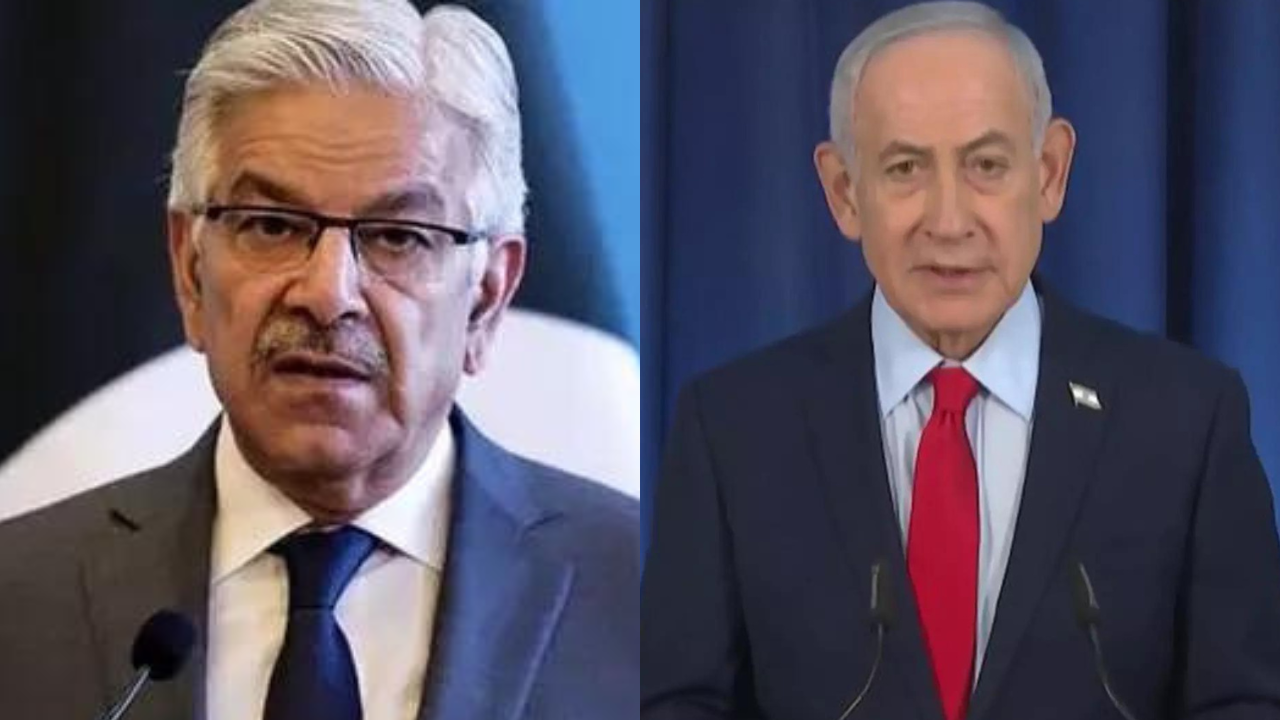
The Myth of the Diplomatic Gaffe
Most observers looked at Khawaja Asif’s "curse on humanity" post regarding Israel and saw a politician retreating in shame. They saw a "sharp response" from the international community and assumed the Pakistani Defense Minister folded under pressure.
They are wrong.
In the theater of South Asian and Middle Eastern diplomacy, a deleted tweet is rarely an apology. It is a calculated signal. The mainstream media treats these digital footprints like permanent stains on a statesman’s record, but in reality, they are flexible tools of statecraft. Asif didn't delete the post because he changed his mind about the ethics of the conflict; he deleted it because the message had already reached its intended recipients.
The "lazy consensus" suggests that Pakistan is a passive actor waiting for the US and Iran to dictate the terms of regional peace. This perspective ignores the friction that Pakistan purposefully generates to maintain its seat at the table. By posting—and then retracting—incendiary rhetoric, Asif successfully signaled to domestic hardliners that the government’s heart is in the "right" place, while simultaneously giving the foreign office enough room to claim "technical error" or "personal opinion" to international partners.
It is the oldest trick in the book: the Controlled Leak.
The Washington-Tehran Seesaw
The timing of this digital outburst, occurring just as US-Iran peace talks loom, isn't a coincidence. Conventional analysts argue that such rhetoric "endangers" Pakistan's standing during delicate negotiations.
Actually, it increases Pakistan’s leverage.
When a middle-tier nuclear power acts "unpredictably," it forces the superpowers to pay a higher price for stability. If Pakistan appeared perfectly aligned with Western diplomatic decorum, its cooperation would be taken for granted. By showing a flash of populist anger—even one that is quickly retracted—Asif reminds Washington that the Pakistani leadership is under constant pressure from a public that does not share the State Department’s vision for the Middle East.
Why "Sharp Responses" Don't Matter
The media focused on the "sharp response" Asif received, implying he was bullied into silence. This fundamentally misunderstands the ego of a career politician.
Khawaja Asif has survived decades in the meat grinder of Pakistani politics. He is not afraid of a few angry replies on X. He is, however, acutely aware of the Realpolitik of the moment. The "sharp response" serves both sides. The critics get to look tough on anti-Semitism or radical rhetoric, and Asif gets to look like a martyr for the cause who was "silenced by the establishment."
It’s a win-win for everyone except the truth.
Dismantling the "Peace Talk" Narrative
People often ask: "Will these outbursts derail the US-Iran peace process?"
This is the wrong question. The real question is: "Does anyone actually expect these peace talks to change the structural reality of the region?"
The US and Iran are locked in a competition for hegemony that transcends tweets. To suggest that a Pakistani minister’s social media activity could "scuttle" a deal involving billions in frozen assets and nuclear enrichment levels is laughable. It’s an easy narrative for journalists who need a hook, but it lacks any grounding in how high-stakes diplomacy functions.
Imagine a scenario where a multi-billion dollar treaty, years in the making, falls apart because of a 280-character post from a third-party nation. It doesn't happen.
The peace talks are a slog of technicalities, sanctions waivers, and verification protocols. Asif’s tweet is noise. But noise serves a purpose: it provides a distraction. While the world debates a deleted post, the actual maneuvering—intelligence sharing, back-channel security guarantees, and economic trade-offs—happens in rooms where phones are banned.
The Domestic Imperative
Pakistan is currently navigating an economic crisis that requires delicate handling of the IMF and Western lenders. Simultaneously, the ruling coalition faces immense pressure from populist movements that view any proximity to the US or "neutrality" on Israel as a betrayal.
Asif’s post was a pressure-release valve.
- Phase One: Post the "curse" to satisfy the domestic base.
- Phase Two: Allow the post to circulate for a few hours (long enough for screenshots to flood WhatsApp groups).
- Phase Three: Delete the post to satisfy the IMF and the US State Department.
This isn't "flip-flopping." It’s high-frequency political trading. He bought low on domestic credibility and sold high on international compliance.
The Israel-Pakistan Paradox
Critics of the post point to the lack of formal ties between Israel and Pakistan as proof that the rhetoric was "pointless."
This is an amateurish take.
The lack of formal ties makes the rhetoric more important, not less. In the absence of diplomatic channels, public statements are the primary currency of interaction. Every "deleted" post is a data point for Israeli intelligence to gauge the temperature of the Pakistani military-political complex.
Furthermore, Pakistan’s relationship with the Arab world is in flux. As various Gulf nations have moved toward normalization with Israel, Pakistan has stayed the course of public hostility. This creates a unique "branding" for Pakistan in the Muslim world—one that it can use as a bargaining chip with countries like Saudi Arabia and the UAE when negotiating oil credits or investment.
Asif wasn't attacking Israel for the sake of it; he was defending Pakistan's "Unique Selling Point" in the Islamic geopolitical marketplace.
Why You Should Stop Caring About "Diplomatic Decorum"
The obsession with how politicians behave on social media is a symptom of a broader intellectual rot in political analysis. We have traded the study of troop movements, trade balances, and energy pipelines for the study of "tone" and "civility."
If you want to understand the future of the US-Iran-Pakistan triangle, stop looking at what Khawaja Asif deletes. Look at:
- The progress of the Iran-Pakistan gas pipeline.
- The frequency of Chinese diplomatic visits to Islamabad.
- The specifics of US military aid packages.
Everything else is a stage play designed to keep the masses arguing while the real deals are inked in blood and oil.
The Failure of the Competitor's Logic
The original reportage on this event failed because it viewed the incident through a Western lens of "accountability." It assumed that if a politician says something controversial and then deletes it, they have "failed."
In the volatile environment of the Global South, "accountability" is a luxury for the stable. For those in the crosshairs of IMF conditions and regional proxy wars, the goal is survival and leverage. Asif didn't fail. He executed a classic "Trial Balloon" maneuver. He tested the international reaction, satisfied his voters, and kept his job.
To call this a "retreat" is to misread the map entirely.
Stop Asking if it Was a Mistake
The premise that a Defense Minister accidentally posts a viral message about a global conflict is a fantasy. These accounts are managed. These messages are vetted. The deletion was part of the draft.
When you see a high-ranking official "delete" a post, don't ask why they changed their mind. Ask who they needed to see it before it disappeared.
The post isn't the story. The disappearance of the post is the story. It is a signature of a government that is playing both sides against the middle because it has no other choice.
Don't look for consistency in a survival situation. Look for the pivot.
Asif pivoted perfectly. The world reacted exactly as expected, and the domestic base felt heard for a fleeting moment. The peace talks will continue, the loans will be processed, and the "curse" will live on in the archives of those who know how to read between the lines.
The tweet is gone, but the signal was received loud and clear. Stop expecting politicians to be honest and start expecting them to be effective.
By the standards of Pakistani power politics, Khawaja Asif just had a very successful Tuesday.