Marine archaeology has a dirty secret. Most high-profile discoveries announced with breathless press releases do not represent triumphs of scientific preservation. They represent salvage operations born of desperation against a rising tide of illegal looting.
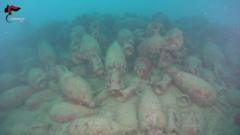
When researchers hauled amphorae and structural timbers from an ancient Roman shipwreck resting off the coast of Sicily, the public response focused entirely on the shiny veneer of antiquity. Gold coins, pristine ceramics, and the romantic tragedy of a sunken merchant vessel captured the headlines.
Nobody talked about the black market. Nobody talked about the commercial dive crews operating under the cover of night with unauthorized sonar units, tearing through stratigraphic layers just to fence a pristine jar to an illicit collector in Geneva.
This is the brutal reality of underwater cultural heritage in the Mediterranean. Every major find brings a fresh wave of anxiety for maritime preservationists who know their budgets are dwarfed by criminal syndicates.
The Logistics of Ancient Maritime Trade
To understand the wreck discovered near Sicily, look past the cargo and examine the vessel itself. Roman maritime commerce was not a casual affair of coastal island-hopping. It was a brutal, hyper-optimized logistics machine that moved millions of tons of grain, olive oil, and wine across treacherous open waters.
The ship resting off the Sicilian coast was likely a corbita, the heavy-duty cargo workhorse of the imperial fleet. These vessels possessed rounded hulls, high sterns, and a capacity that often exceeded three hundred tons.
They were built for volume, not speed. When a corbita went down, it meant an entire commercial venture vanished into the abyss, taking crew, cargo, and capital with it.
Navigating the Mediterranean during the height of the Roman Empire meant battling violent localized squalls like the gregale and the sirocco. Marine historians often romanticize ancient seamanship, but the historical record tells a story of terrifying attrition. Shipwrecks litter the Mediterranean basin because ancient captains lacked reliable instrumentation, relying instead on dead reckoning, coastal landmarks, and gut instinct.
When visibility dropped to zero and the wind shifted, survival came down to cutting the mainmast and praying the anchor held before the hull hit a submerged reef.
Why Sicily Remains the Epicenter of Underwater Crime
Sicily sits at the exact crossroads of ancient maritime traffic. It is the choke point of the Mediterranean. Consequently, the waters surrounding the island are a graveyard of international commerce spanning millennia, from Phoenician traders to Byzantine fleets.
This geographical blessing is also the region's greatest curse.
Underwater heritage protection in southern Italy faces systemic hurdles. The Italian Carabinieri command for the protection of cultural heritage does remarkable work, but the coastline is vast and enforcement resources are stretched impossibly thin.
A single patrol boat cannot monitor thousands of square kilometers of territorial waters. Illegal salvagers know this math. They use commercial-grade underwater metal detectors and robotic submersibles bought off-the-shelf to locate and strip wrecks before marine biologists even log the coordinates.
Consider the economics. A single intact Roman amphora can command tens of thousands of dollars on the gray market. For a fisherman or small-time operator in a coastal Sicilian town facing economic stagnation, the temptation to pull up a few artifacts overrides the abstract concept of cultural patrimony.
The state offers praise and nominal rewards for reported finds, but those programs cannot compete with cash-in-hand transactions brokered through encrypted messaging apps.
The Mechanics of Underwater Excavation
Recovering a wreck like the one found off Sicily requires military-grade precision and staggering financial backing. You cannot simply dive down with a crowbar and swim back up with a bronze statue.
Every single centimeter of sediment removed must be meticulously mapped using photogrammetry and acoustic positioning systems. The moment wood from a hull is exposed to oxygen and ambient water current without immediate chemical stabilization, it degrades into mush within days.
Conservation is where most archaeological budgets die. Pulling an artifact out of the water is the easy part. Stabilizing waterlogged timber through the painstaking process of replacing organic cellular water with synthetic waxes like polyethylene glycol takes years.
Museums rarely have the specialized conservation labs required to handle large-scale structural timber from a Roman wreck. As a result, many recovered items sit in dark crates in municipal basements, slowly deteriorating because the local ministry lacks the recurring funding to complete the preservation cycle.
This dynamic creates a perverse incentive structure. Governments rush to announce flashy discoveries to secure short-term tourism grants and political clout, while the long-term, unglamorous work of curation and site monitoring goes underfunded.
Shifting the Paradigm of Maritime Protection
Traditional policing models will never save the Mediterranean's sunken history. Locking down the sea is impossible. The solution requires radical decentralization and economic alignment.
Local coastal communities must become the primary financial beneficiaries of legal marine archaeology. When fishermen are transformed from potential looters into paid stewards and informants through cooperative monitoring programs, the underground market loses its logistical edge.
Furthermore, technological democratization cuts both ways. While criminals use cheap sonar, archaeological teams are beginning to deploy autonomous underwater vehicles equipped with machine learning algorithms capable of mapping miles of seabed in a fraction of the time it took human divers.
We can map the danger zones faster, preempt the illegal dive teams, and prioritize sites that face immediate threats from commercial dredging or unauthorized anchoring.
The shipwreck off the coast of Sicily is not just a window into the past. It is a stress test for the modern world's ability to protect its collective memory from greed and administrative neglect.
The amphorae resting in the silt survived two thousand years of storms, shifting tectonic plates, and corrosive saltwater. Whether they survive the next decade of human interference remains entirely an open question.