The Maldivian sun does not just shine. It blinds. It reflects off the Indian Ocean with a white-hot intensity that makes the water look like a sheet of polished glass. For decades, this specific shade of turquoise has acted as a siren song for adventurers, travelers, and those seeking to escape the mundane. They come for the pristine reefs, the manta rays, and the weightless freedom of the deep.
But freedom in the ocean is an illusion.
Every diver knows the unwritten contract they sign the moment they bite down on a regulator mouthpiece. You exchange your terrestrial security for a brief glimpse into an alien world. Usually, the contract is honored. The boat returns, the gear is washed, and stories are shared over cold drinks. Sometimes, though, the ocean tears up the contract without warning.
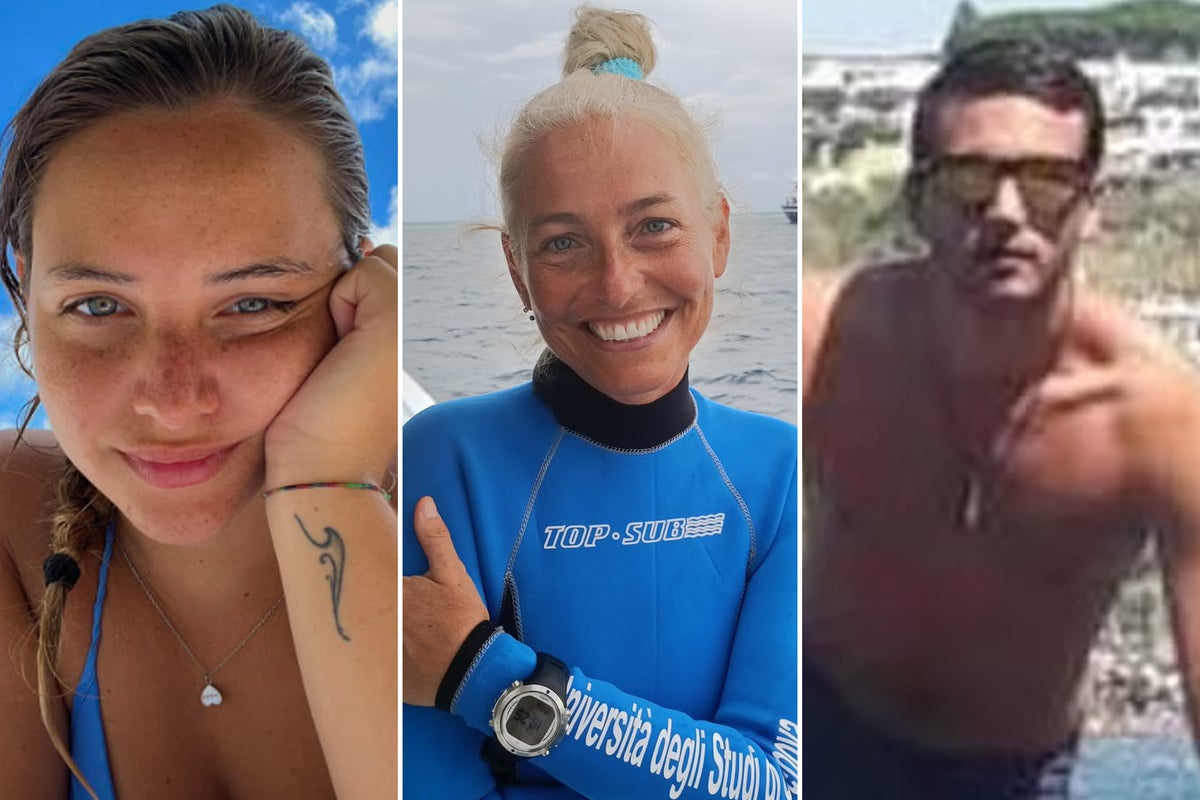
When two experienced Italian scuba divers vanished into the crystal-clear waters of a remote Maldivian atoll, they left behind no distress signals, no signs of panic, and no immediate answers. The water simply closed over them. It took months of painstaking investigation, forensic analysis, and the parsing of dive computer data for experts to reconstruct their final minutes. What they found turned a tragic accident into a haunting cautionary tale about the invisible physics that govern our survival beneath the waves.
To understand what happened to them, we have to look past the tropical postcards and dive headfirst into the silent, pressurized reality of the deep ocean.
The Chemistry of Deception
Nitrogen is a quiet companion. It makes up roughly 78 percent of the air we breathe on land, passing in and out of our lungs without causing a stir. But change the pressure, and that harmless gas transforms.
Think of a bottle of warm sparkling water. While the cap is screwed on tight, the liquid inside is perfectly clear. The gas is trapped under pressure, dissolved invisibly into the fluid. The moment you twist the cap open, the pressure drops instantly. Bubbles erupt. The liquid turns into a chaotic, fizzing foam.
The human body reacts exactly like that bottle of water.
As a diver descends, the immense weight of the ocean presses down on them. Every ten meters of depth adds another full atmosphere of pressure. Under this crushing force, the nitrogen a diver breathes from their tank doesn't just fill their lungs; it forces its way directly into their bloodstream and body tissues.
For the Italian divers, their descent was routine. They were seasoned. They knew the local currents, the geography of the reef, and the limits of their equipment. But experience can breed a dangerous comfort. At depths beyond thirty meters, nitrogen ceases to be a passive passenger in the blood. It becomes an intoxicant.
Diving community veterans call it the "rapture of the deep." Medical professionals call it nitrogen narcosis. The sensation is often compared to drinking several martinis on an empty stomach. Anxiety melts away. A dangerous euphoria takes its place. Divers have been known to offer their regulators to passing fish, completely unaware that they are suffocating themselves.
The data retrieved from the recovery efforts suggested a grim progression. At depth, under the influence of narcotic gases, judgment erodes. A minor problem becomes a puzzle. A puzzle becomes a trap.
The Fatal Calculation
In the pristine visibility of the Maldives, depth is notoriously difficult to judge. Without the murky green distortion found in colder waters, forty meters can look exactly like twenty. The bottom appears tantalizingly close, every coral formation rendered in sharp, vibrant detail.
Imagine walking along the edge of a cliff in a dense fog. You would step carefully, testing every inch of ground. Now imagine that same cliff edge on a perfectly clear day, but the air is filled with a mild sedative. The danger hasn't changed, but your perception of it has been entirely rewritten.
The investigative teams analyzing the tragedy focused heavily on the divers' profile—the digital footprint left behind by their wrist-mounted computers. These devices track depth, time, and the theoretical amount of gas dissolved in the body. They are the black boxes of the scuba world.
The records revealed a descent that breached the boundaries of recreational safety. It wasn't a sudden plunge, but rather a gradual, insidious drift downward, likely driven by a combination of strong downcurrents and the numbing effects of narcosis. They had stayed too deep, for too long.
When gas is absorbed into the body at that depth, the return journey to the surface cannot be a direct line. It must be a slow, calculated choreography. A diver must ascend in stages, pausing at specific depths to allow the trapped nitrogen to gently seep out of their tissues and be exhaled through their lungs.
Skip those stops, and the sparkling water bottle effect takes over.
If a diver panics and bolts for the surface, the rapid drop in pressure causes the nitrogen in their blood to expand into physical bubbles. These bubbles block blood flow, tear through delicate tissues, and rupture blood vessels. It is a condition known as decompression sickness, or "the bends." In its most severe forms, it is fatal within minutes.
The Invisible Currents of the Maldives
The Maldives is an archipelago of atolls, rings of coral reef that rise from the deep floor of the Indian Ocean. The channels between these islands act as massive funnels for the open sea. When the tide changes, millions of gallons of water are forced through these narrow gaps.
To a diver, these channels offer some of the most spectacular drift dives on Earth. You drop into the water and let the current carry you along the reef wall like a superhero flying through a canyon. It is exhilarating.
It is also incredibly volatile.
Beside the horizontal currents that push you along the reef, these channels create vertical currents. A downcurrent is a terrifying phenomenon. It is an invisible waterfall beneath the surface, a massive column of heavy, sinking water that catches a diver and drags them toward the abyss. Because there are no trees or structures to look at in the open blue, a diver caught in a downcurrent might not even realize they are sinking until they look at their depth gauge.
Experts theorize that a sudden, powerful shift in water movement caught the Italian pair off guard. Fighting a downcurrent requires immense physical exertion. It burns through breathing gas at an alarming rate. As adrenaline spikes, breathing quickens, and a tank that should have lasted an hour can be sucked dry in a fraction of that time.
The ocean removes your options one by one, quietly, until you are left with a single, impossible choice.
Redefining the Threshold of Safety
The tragedy sent shockwaves through the international diving community, specifically among European tourists who flock to the Maldives every winter. It forced a harsh re-examination of how dive operations manage deep excursions in highly unpredictable environments.
For years, the standard approach to recreational diving has relied heavily on digital automation. Divers trust their computers implicitly. If the screen doesn't flash a warning, they assume they are safe. But a computer only calculates math; it cannot calculate human frailty, the exact percentage of fat tissue in a specific body, or the subtle onset of dehydration after a long flight to a tropical paradise.
The emerging theories surrounding the Italian divers suggest that their equipment functioned perfectly. There was no catastrophic mechanical failure. The regulator valves delivered air when breathed. The buoyancy compensators inflated.
The failure occurred in the fragile space between human physiology and environmental physics.
Consider the sheer physical toll of a deep dive. At forty meters, the air a diver breathes is five times denser than it is at the surface. Every breath requires more effort from the respiratory muscles. The lungs work harder. Carbon dioxide builds up in the bloodstream. This buildup drastically amplifies the effects of nitrogen narcosis, creating a compounding loop of confusion and fatigue.
The investigation emphasized that safety margins in extreme environments cannot be treated as flexible guidelines. They are absolute borders. When those borders are crossed, even by a few meters or a few minutes, the window for survival shrinks to a razor-thin edge.
The Silence Left Behind
The boats still go out every morning from the Maldivian resorts. The diesel engines rumble, the dive guides give their briefings, and tourists look out over the flawless blue water with anticipation. The beauty of the place is real, but it is a beauty that demands an uncompromising, almost reverent respect.
The legacy of the lost Italian divers isn't found in a broken piece of equipment or a flawed dive map. It rests in the quiet realization that the ocean remains a wilderness. We visit it on its own terms, wrapped in steel and rubber, entirely dependent on a delicate balance of pressure, time, and clear thought.
The sun continues to beat down on the atolls, baking the white sand and illuminating the shallow reefs where the brightly colored fish dart between the coral. But just a few hundred yards out, past the edge of the reef wall, the bright turquoise fades into a deep, bruised indigo. That is where the bottom drops away into the dark, where the pressure mounts, and where the water holds its secrets close, far out of reach of the light.