Headline consumer price movements in mainland China frequently obscure underlying macroeconomic transmission mechanisms through an overreliance on aggregated indices. When the National Bureau of Statistics reports a directional shift in consumer price inflation—specifically a rebound driven by volatile food and energy inputs—observers often default to simplistic narratives of consumer demand recovery or supply-side shocks. This analytical approach fails to capture the operational reality of China's economic machinery. Dissecting the recent uptick requires shifting focus from surface-level percentage changes to the structural cost functions, supply chain bottlenecks, and policy transmission asymmetries that actually dictate price formation in the world's second-largest economy.
The Cost Function of Volatility: Food and Energy Transmission
The primary driver behind recent upward pressure on Chinese consumer prices stems from specific, localized supply shocks in the agricultural sector alongside global commodity price transmission. To understand this dynamic, we must separate the Consumer Price Index into its constituent components: core inflation, which strips out volatile food and energy, and headline inflation, which absorbs every supply-side tremor. If you liked this post, you should read: this related article.
When adverse weather events disrupt pork production cycles or horticultural output across key agricultural provinces, the immediate impact on the headline index is disproportionate. Pork carries a significant weighting within the Chinese consumer basket, creating a localized cyclical phenomenon historically known as the hog cycle. The recent upward movement mirrors a trough-to-peak transition in swine inventories, compounded by rising feed costs and strict environmental compliance mandates that have weeded out smaller, inefficient producers.
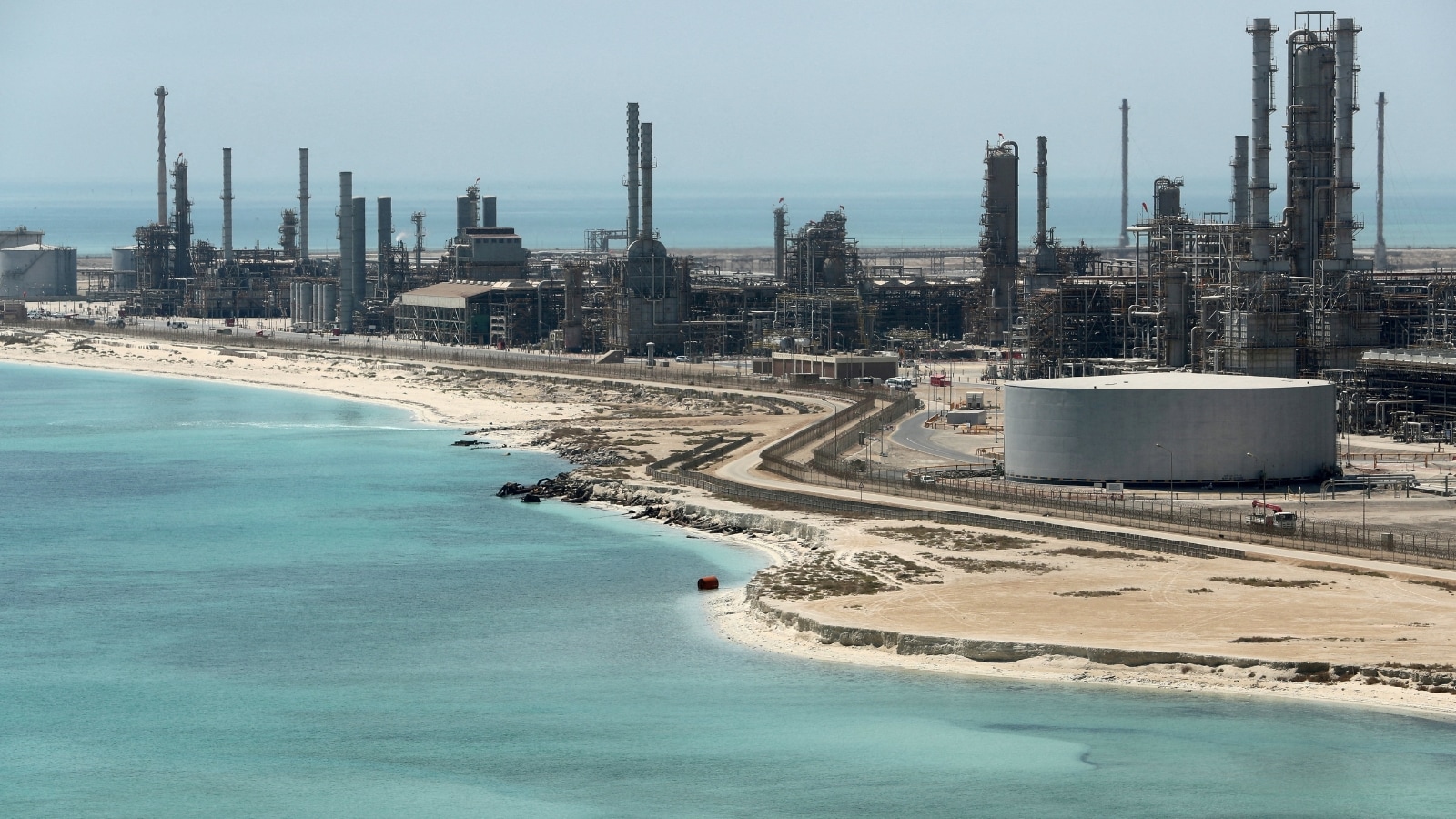
Simultaneously, energy price transmission operates through a different channel. As an economy heavily reliant on imported hydrocarbons for industrial processing and transport, domestic fuel prices directly reflect international Brent crude benchmarks and state-managed pricing adjustment mechanisms. When international energy futures climb, the cost function for domestic logistics shifts upward instantly. This creates a margin squeeze for downstream manufacturing and retail distribution, forcing firms to pass input cost inflation onto end-consumers. For another angle on this development, check out the latest coverage from Reuters Business.
However, this transmission is rarely uniform. State-owned energy giants absorb a portion of the price spikes through regulated pricing corridors, buffering households from the full brunt of global market volatility. Consequently, the observed inflation uptick represents only a filtered version of true external cost pressures.
The Demand Paradox: Weak Consumption Amid Rising Prices
A persistent analytical error in assessing China's inflation data involves conflating a rise in prices with a recovery in robust, broad-based consumer demand. In a functioning market economy driven by consumption, rising prices typically signal high capacity utilization, robust wage growth, and confident household spending. In China's current macroeconomic environment, the inverse or a decoupled relationship frequently applies.
The recent inflation increase occurs alongside a structurally constrained property sector, subdued consumer confidence, and a cautious savings rate among urban households. When consumers face uncertainty regarding employment stability and asset values, particularly within residential real estate, discretionary spending contracts. Therefore, an increase in food and fuel prices does not reflect a surge in consumer purchasing enthusiasm. Instead, it represents an unavoidable tax on household budgets.
Purchased necessities—food, heating, fuel—possess near-zero price elasticity. Households cannot easily substitute away from staple calories or commuting fuel when prices rise. When these essential expenditures absorb a larger share of disposable income, discretionary consumption contracts further. The inflation reading goes up, but aggregate economic vitality remains constrained. This dynamic creates a challenging environment for monetary policymakers, who must balance the risk of cost-push price pressures against an underlying deficiency in private-sector domestic demand.
Policy Transmission Asymmetries and Monetary Constraints
Navigating this environment requires examining the operational limits of monetary and fiscal intervention. The People's Bank of China operates within a complex matrix of structural objectives, balancing currency stability, debt containment in local government financing vehicles, and the need to stimulate credit creation in the real economy.
When headline inflation edges upward—even if driven strictly by supply-side food and energy factors—it complicates the central bank's easing calculus. Traditional economic models suggest lowering interest rates to combat weak domestic demand. However, if rising food and fuel prices push headline inflation above the tolerance threshold set by policymakers, aggressive monetary easing risks destabilizing inflation expectations or accelerating capital outflows by narrowing interest rate differentials with advanced economies.
This introduces a policy transmission bottleneck. Lowering reserve requirement ratios or cutting benchmark lending rates injects liquidity into the financial system, but if commercial banks remain risk-averse due to structural credit headwinds in the property and local government sectors, capital fails to reach productive private enterprises. The transmission mechanism breaks down between the banking sector and the real economy, leaving liquidity trapped in financial arbitrage rather than driving structural employment or wage growth.
Fiscal policy bears the burden of bridging this gap, yet local governments face severe budgetary constraints following years of reduced land sales revenue and elevated debt service obligations. Targeted subsidies for low-income households can temporarily offset the pain of rising food and fuel costs, but these measures treat symptoms rather than the structural root cause of asymmetrical price transmission.
Strategic Execution for Enterprise Risk Management
Firms operating within or exporting to the Chinese market must decouple their operational strategies from headline economic indicators. Relying on aggregate GDP growth or broad consumer price indices invites strategic miscalculation. Navigating this environment demands a granular focus on cost-structure resilience and margin protection.
Supply chain diversification serves as the first line of defense against localized agricultural shocks and energy volatility. Enterprises must map their Tier 2 and Tier 3 suppliers to identify single points of failure exposed to regional weather anomalies or localized energy rationing. Establishing multi-region sourcing corridors for key raw materials mitigates the risk of sudden input cost spikes.
Pricing architecture must transition from rigid annual models to dynamic, cost-indexed adjustment mechanisms. When input costs—particularly fuel-dependent logistics and agricultural derivatives—exhibit high volatility, long-term fixed-price contracts transfer unsustainable margin risk to the manufacturer. Building contractual flexibility into B2B agreements ensures that cost-push inflation can be absorbed or shared across the value chain before eroding operational solvency. Finally, capital expenditure must prioritize operational efficiency and automation over capacity expansion, focusing on margin preservation in a structurally lower-growth, higher-volatility pricing paradigm.