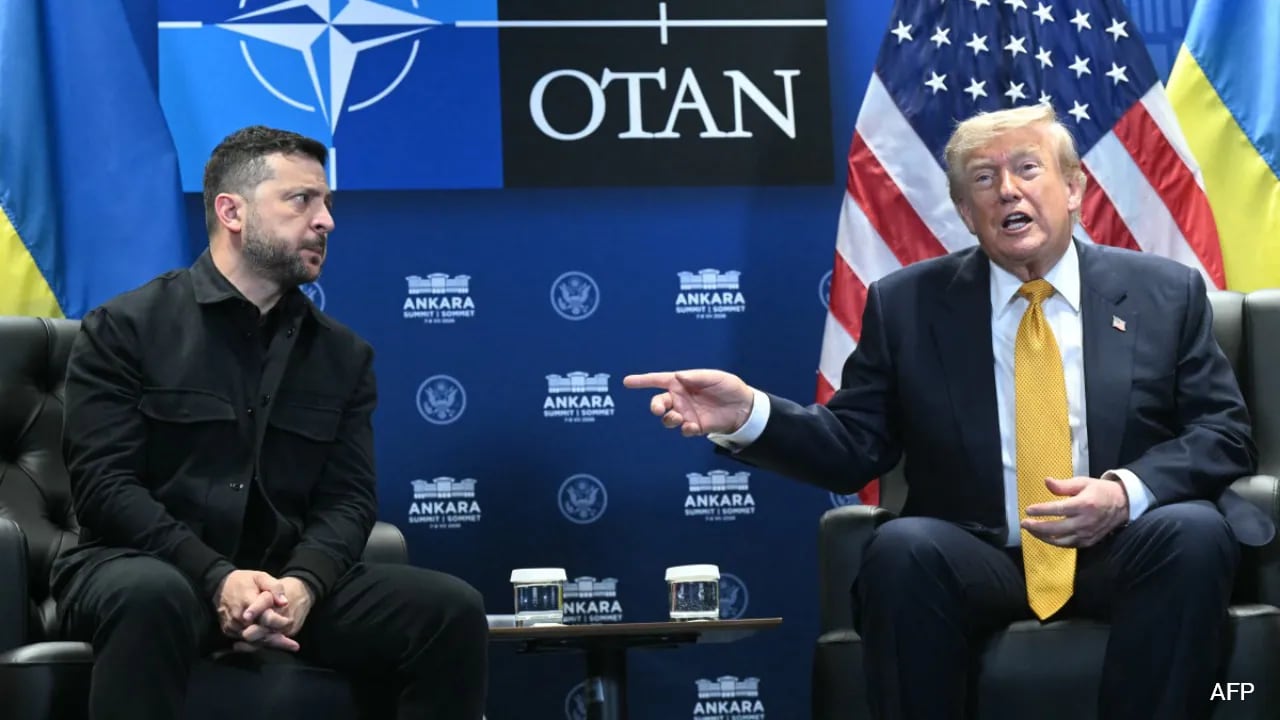
The intersection of sovereign statecraft and civil tort litigation produces an intractable friction point when executive declassification authority collides with intelligence protection protocols. When victims of the September 11 attacks and their surviving legal representatives press for the unredacted release of federal investigative archives, they are not merely seeking historical validation; they are attempting to pierce the veil of sovereign immunity through evidentiary disclosure. This dynamic exposes the core operating mechanism of modern state power: the institutional trade-off between absolute diplomatic stability and domestic legal transparency.
The Legislative Catalyst and the JASTA Shift
To understand the current pressure applied to the executive branch, one must examine the structural shift introduced by the Justice Against Sponsors of Terrorism Act (JASTA). Prior to JASTA's enactment, the Foreign Sovereign Immunities Act erected a formidable legal barrier, insulating foreign governments from civil liability in United States federal courts for acts of international terrorism committed outside domestic territory unless specific state-sponsor designations applied. JASTA fractured this doctrine by carving out an explicit exception for cases involving physical injury or death occurring within the United States as a result of international terrorism sponsored or supported by foreign states.
This legislative alteration fundamentally transformed the risk profile for foreign actors, most notably Saudi Arabia, which has continuously denied official government involvement despite the reality that fifteen of the nineteen hijackers were Saudi nationals. By opening the courthouse doors, JASTA created an immediate evidentiary dependency. Plaintiffs could no longer rely solely on public reports or congressional findings; they required primary-source documentation from federal investigative bodies, specifically the Federal Bureau of Investigation and the Central Intelligence Agency, to establish proximate cause and material support in court.
The Structural Friction of Discovery and Declassification
In complex federal litigation, access to primary intelligence files determines the viability of a claim. However, the federal government maintains extraordinary defensive mechanisms to withhold or redact information. The state secrets privilege allows the executive branch to refuse discovery of documents if disclosure would reasonably be expected to damage national security.
This creates a structural bottleneck characterized by asymmetric information control. The executive branch operates under a dual mandate: maintaining national security through intelligence partnerships and responding to domestic demands for transparency. When plaintiffs demand records compiled during extensive federal inquiries—such as Operation Encore, the secretive multi-year FBI investigation into potential logistical support networks operating within the United States—they run directly into the protective walls erected by intelligence agencies.
The mechanics of this information control are governed by executive orders regulating classified national security information. Declassification is not an automatic administrative function; it is a discretionary executive power that requires navigating complex interagency equities. When an intelligence record touches upon foreign liaison relationships, signals intelligence intercepts, or human source identifiers, multiple agencies hold veto power over its public release. Consequently, the legal discovery process in federal court is continuously truncated by assertions of privilege, leaving plaintiffs with heavily redacted records that obscure critical operational links.
The Three Pillars of Executive Retention
Why do federal agencies and successive presidential administrations resist total declassification? Deconstructing the institutional incentives reveals three distinct pillars supporting the retention of these files.
First, the protection of intelligence gathering methodologies and human assets constitutes a primary constraint. Intelligence agencies operate on the principle of source protection. Even decades after an event, the granular details of how intercepts were gathered, which foreign intelligence services cooperated, and who provided specific human intelligence can compromise contemporary operations. The fear within the intelligence community is that releasing unredacted files establishes a dangerous precedent for future investigations, potentially exposing allied intelligence networks to retaliatory leaks or operational degradation.
Second, diplomatic equilibrium management dictates cautious information release. Saudi Arabia remains a vital strategic node in Middle Eastern security architectures, energy markets, and diplomatic signaling. Total unvarnished transparency regarding past counterintelligence leads, unverified tips, and preliminary investigative leads that never ripened into formal indictments carries significant diplomatic collateral damage. From a realpolitik perspective, the executive branch must weigh the immediate domestic political cost of withholding documents against the long-term strategic cost of alienating a key regional partner over historical grievances.
Third, institutional risk aversion governs bureaucratic behavior. Federal law enforcement and intelligence bureaucracies inherently favor risk mitigation through over-classification. Classifying a document protects the agency from accountability for premature disclosures, misinterpretations, or errors made during high-pressure investigations. Opening the vault completely exposes internal analytical failures, dead-end theories, and bureaucratic friction points to public and legal scrutiny, creating reputational and political fallout for institutional leadership.
The Cost Function of Transparency Versus Ambiguity
Evaluating the demand for file releases requires analyzing the economic and political cost function governing executive decisions. For the victims' families, the marginal value of each declassified page is infinite; it represents potential corroboration for their legal claims and moral closure. For the executive branch, the marginal cost of release is measured in unpredictable diplomatic friction and potential legal precedents that could compel future declassifications across unrelated intelligence domains.
When executive leaders weigh these competing vectors, the outcome typically manifests as strategic ambiguity—partial releases, heavily redacted summaries, or selective disclosures timed to mitigate immediate political pressure without altering the underlying security posture. This approach minimizes short-term volatility while leaving the structural grievance unresolved. In game-theoretic terms, the executive branch maintains a dominant strategy of minimal disclosure, because the downside risks of full transparency—unforeseen diplomatic retaliation, compromise of foreign partnerships, and legal liability exposure—outweigh the localized political benefits of satisfying plaintiff demands.
Evidentiary Realities and the Limits of Documentation
A rigorous analytical approach must also address the limitations of the documents themselves. Decades of investigative work, including the findings of the bipartisan 9/11 Commission and subsequent FBI reviews, generated vast repositories of raw investigative data. Raw investigative files do not inherently equate to verified operational truth.
Federal investigative files contain unverified tips, confidential informant notes, speculative internal memos, and uncorroborated assertions. In the hands of skilled litigators, unredacted raw files can be weaponized to construct compelling narratives, yet they frequently lack the rigorous evidentiary verification required to establish state-sponsored culpability in a court of law. The risk of public misinterpretation is acute: unverified intelligence leads are often consumed by the public as definitive proof of wrongdoing, creating severe reputational fallout disconnected from verified judicial facts.
Furthermore, the Federal Rules of Evidence impose stringent admissibility standards that raw intelligence reports often fail to meet. Hearsay within confidential informant debriefings or unverified foreign intelligence cables cannot be introduced directly as substantive proof of liability in civil proceedings without corroborating testimony and evidentiary foundation. Therefore, the obsession with securing unredacted files often overestimates their legal utility while underestimating the procedural hurdles of trial introduction.
The Political Calculus of Presidential Intervention
When executive authority is directly invoked by constituents during commemorative events or public lobbying campaigns, the political calculus shifts. Presidents operate within a framework where public symbolism and moral alignment with victims carry immediate electoral weight. Pledging to "look into" or consider declassifying records functions as an immediate mechanism to absorb political pressure and signal empathy.
However, the operational translation of a presidential directive into actual document release is mediated by inter-agency review processes. The Interagency Security Classification Appeals Panel and the respective intelligence agencies conduct line-by-line reviews to ensure that declassification does not violate statutory intelligence protections. Consequently, the distance between presidential rhetoric and physical document delivery is governed by bureaucratic inertia and statutory national security safeguards. A presidential statement of intent must overcome institutional resistance from agencies whose organizational mandate prioritizes secrecy over public transparency.
Systemic Forecast and Strategic Execution
The ongoing battle over 9/11 investigative archives illustrates the permanent tension between the democratic demand for historical accounting and the autocratic imperatives of national security preservation. As legal battles persist and political actors navigate the intersection of public accountability and diplomatic management, the ultimate trajectory points toward incremental, highly contested disclosures rather than wholesale transparency. The executive branch will continue to calibrate its release threshold based on the intensity of domestic litigation pressure weighed against the shifting calculus of regional alliances.
To resolve the impasse without compromising operational security, the strategic path forward requires the establishment of a specialized, congressionally mandated declassification review board with bipartisan oversight and secure judicial access. Such an entity could review withheld documents under seal, permitting plaintiffs' cleared counsel to assess evidentiary value without triggering broad intelligence exposures. Absent such a structural innovation, the cycle of appeals, partial redactions, and political appeals will remain the permanent operating reality of post-crisis accountability.
9/11 families address President Trump regarding classified files
This video is relevant because it captures families of victims directly addressing the president at memorial events to demand the release of these specific records.