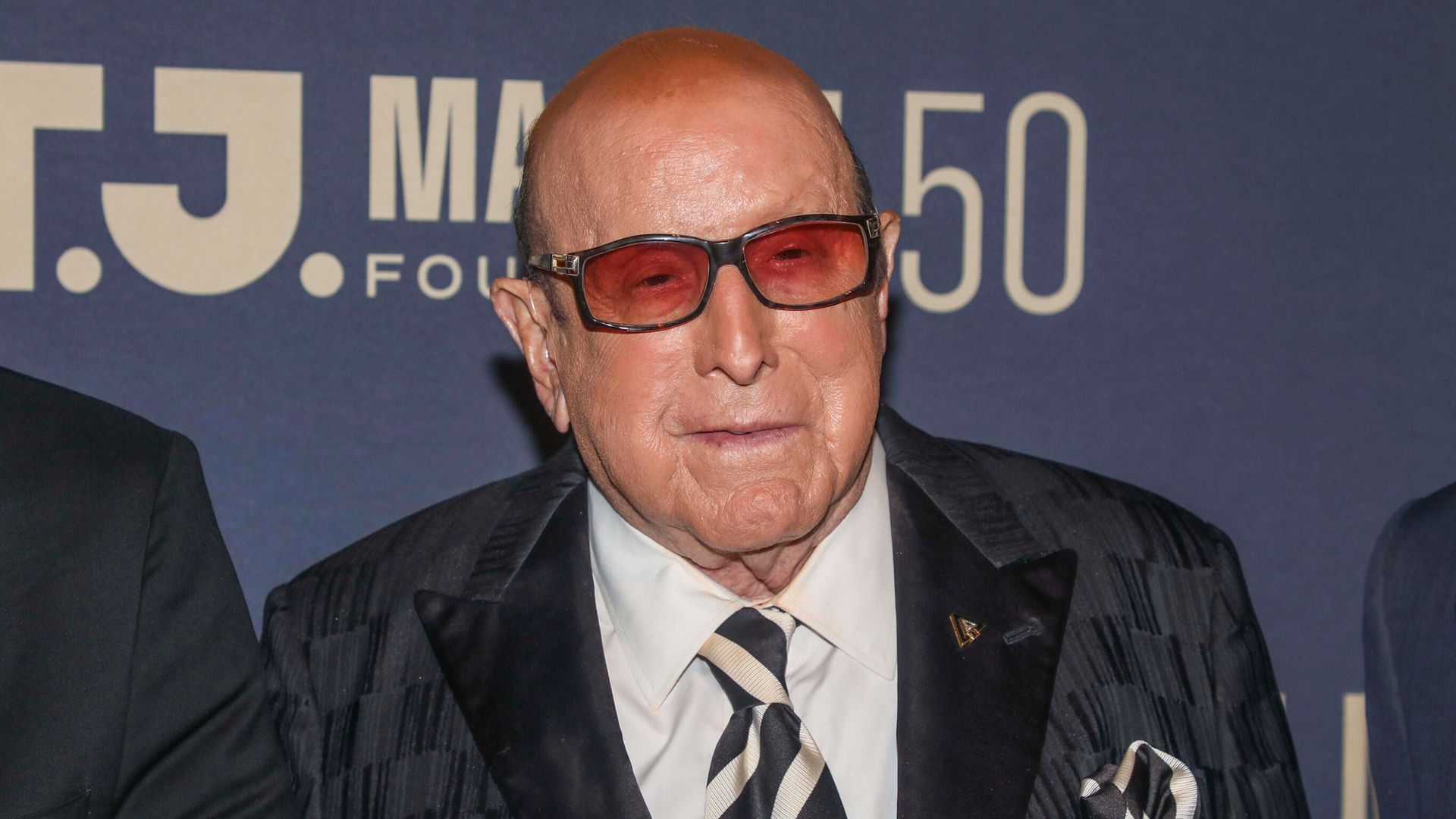
Clive Davis, the definitive architect of modern American pop music, has died at his home in Manhattan at the age of 94. His passing, confirmed by his family on June 22, 2026, marks the final expiration of the "golden ears" period of the music business, an era where single individuals relied on gut instinct rather than data analytics to dictate global culture. From his corporate ascent at Columbia Records to his founding of Arista, J Records, and his joint ventures with the heavyweights of hip-hop and R&B, Davis did not merely find talent. He engineered the machinery that made them inescapable.
The industry he leaves behind is unrecognizable from the one he conquered. Today, algorithms analyze track skip rates within the first thirty seconds to determine playlist placement. Davis operated on an entirely different frequency. He sat in small rooms, closed his eyes, and listened for a hook that could cross over from a niche subculture to mainstream radio. His death is not just an obituary for a man; it is a closing statement on the executive as a cultural dictator. If you liked this article, you should read: this related article.
The Harvard Lawyer Who Stumbled Into Sound
Unlike the talent scouts who grew up in indie labels or recording booths, Davis approached the music industry through the side door of corporate law. A destitute kid from Crown Heights, Brooklyn, who lost both parents as a teenager, he carved his way through New York University and Harvard Law School on pure academic sweat. When he took a job as an in-house attorney for Columbia Records in 1960, he had no musical training and little interest in the burgeoning rock revolution.
That changed entirely in the summer of 1967 at the Monterey International Pop Festival. For another angle on this event, see the recent coverage from GQ.
Columbia Records was a conservative institution at the time, built on the polite, clean-cut pop of Mitch Miller and Andy Williams. Davis, newly appointed as president, stood in the California dirt and watched Janis Joplin shred her vocal cords with Big Brother and the Holding Company. He saw the future. He signed her immediately, breaking the institutional resistance to counterculture rock.
What followed was a historic run of signings that defined the commercial limits of rock, fusion, and pop. He brought Bruce Springsteen, Billy Joel, Santana, Aerosmith, and Earth, Wind & Fire to Columbia. He understood a fundamental truth about the music business that modern algorithmic streaming platforms often ignore. True superstars are not discovered by aggregating existing tastes; they are created by forces that compel the public to adjust its taste to the artist.
The Arista Resurrection and the Masterclass in Crossover
In 1973, Davis was abruptly fired from Columbia amid accusations of mismanaging corporate funds—charges he denied, though he later paid a fine for tax complications. To any ordinary executive, it would have been a career-ending public execution. For Davis, it was a prelude. By 1974, he had launched Arista Records, using a Barry Manilow track called "Mandy" to establish immediate commercial viability.
The true genius of Davis, however, lay in his execution of the crossover strategy. He recognized that the highest financial yields in the music industry occurred when an artist could bridge the gap between regional or genre-specific charts and the global pop Hot 100.
His most profound achievement in this arena was Whitney Houston. Discovered singing back-up for her mother, Cissy Houston, in a New York club, Whitney became Davis’s ultimate canvas. He hand-picked her songs, matched her with veteran producers like Narada Michael Walden, and carefully guarded her image. The result was an unprecedented string of seven consecutive number-one hits.
Yet, this obsessive control highlighted the inherent friction of the golden ears approach. Davis was often criticized by purists for smoothing over the raw, authentic edges of his artists to make them palatable to suburban radio. He forced rock icon Patti Smith into pop studios and pushed a mature Aretha Franklin into slick, synthesized eighties production. It was a brutal, unsentimental philosophy. If a song could not be hummed by a commuter in Ohio, it was not a Clive Davis record.
The Silent Architect of Black Music Infrastructure
While mainstream obituaries focus heavily on pop royalty like Houston or Barry Manilow, Davis’s most enduring legacy may be his financial backing of the modern urban music ecosystem. He understood that as a white executive from Brooklyn, he could not authentically master the rapid evolutions of hip-hop and contemporary R&B on his own.
Instead of trying to dictate the trends, he bought into them.
Through Arista, he financed and distributed LaFace Records, founded by L.A. Reid and Babyface, which launched Usher, TLC, and Outkast. He did the same with Sean "Diddy" Combs and Bad Boy Records, providing the infrastructure that allowed The Notorious B.I.G. to rewrite the rules of East Coast rap. Davis openly admitted he did not fully understand hip-hop culture, but he understood market momentum. By securing a fifty-percent stake in these boutique labels, he guaranteed that his corporate empire remained dominant even as pop tastes shifted away from traditional ballads.
The Cost of the Machine
The traditional record industry structure that Davis epitomized was built on a lopsided trade-off. Labels took immense financial risks, funding expensive studio sessions, manufacturing physical discs, and paying off radio program directors. In exchange, they demanded total control over the artist's output and ownership of their master recordings.
Davis was notoriously demanding. He would reject entire albums if he did not hear a clear lead single. For some artists, this guidance rescued their careers—such as Carlos Santana, whose 1999 album Supernatural was engineered by Davis to become a multi-platinum, multi-Grammy-winning phenomenon. For others, the pressure to conform to the Davis hit formula felt like a creative prison.
The modern digital landscape has democratized distribution, allowing an independent artist to upload a track directly to millions of listeners without a gatekeeper like Davis checking their charts. But this autonomy has come at a steep price. Without the massive marketing budgets and single-minded focus of an executive willing to force a song down the throat of global media, the monoculture has fractured. We have more music than ever, but fewer monumental, cross-generational stars.
The Final Tracks
Even after being forced out of Arista in 2000 due to corporate age politics, Davis refused to fade into retirement. He immediately formed J Records, proved his critics wrong by launching Alicia Keys, and eventually took over as chief creative officer of Sony Music. His annual pre-Grammy gala remained the most exclusive ticket in the entertainment industry, a room where billionaires, tech titans, and teenage pop stars had to audition for his approval.
His death from age-related illness ends a ninety-four-year narrative that was entirely intertwined with the rise and fall of the traditional entertainment economy. The structures he built are mostly gone, replaced by automated recommendation engines and viral social media trends. The music business will continue to generate billions of streams, but it will do so through data optimization, not human obsession. The era of the omnipotent record man is officially over.