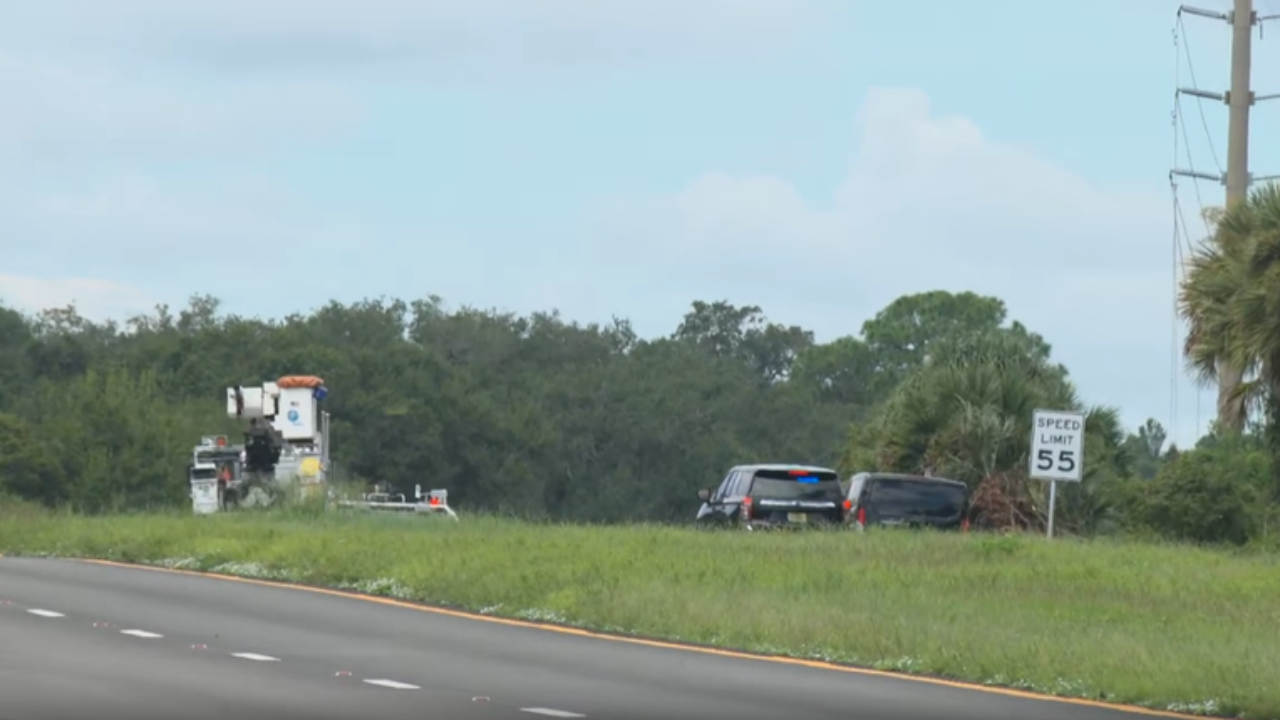
A lone pilot climbed into a classic Mooney M20F at Space Coast Regional Airport in Titusville, Florida, taxied to the active runway, and thrust the throttle forward. Within moments of liftoff, the engine sputtered and died. What followed was a tragic re-enactment of aviation history's most lethal reflex. The pilot attempted an immediate 180-degree turn to salvage the aircraft and return to the tarmac, clipped a string of powerlines and a barrier of trees along Columbia Boulevard, and slammed into the pavement in an explosive fireball. The pilot was pronounced dead at the scene, leaving behind a charred wreckage and a closed state road.
Every seasoned flight instructor knows the phrase, but countless aviators fail to respect it when adrenaline floods the cockpit. It is called the impossible turn. When a single-engine aircraft loses power shortly after takeoff, human instinct screams to fly back to the exact runway you just left. Physics, however, dictates an entirely different, unforgiving outcome.
The Aerodynamics of the Trap
To understand why a routine engine failure transforms into a fatal spin, you have to look at the math of turning a low-speed airplane close to the ground. When an aircraft takes off, it is operating at a relatively high angle of attack, traveling at a speed just above stall velocity, and climbing against gravity.
If the engine quits at three hundred feet of altitude, the pilot faces an acute crisis. Turning back requires a bank angle of forty-five degrees or steeper to reverse direction within a tight radius. Banking an aircraft drastically increases its stall speed. At a steep bank angle, the stalling speed of a Mooney M20F shoots up significantly, meaning the aircraft can lose lift and drop a wing before the pilot completes the turnaround.
Add a panicked, rushed control input to the mix, and the aircraft enters an accelerated stall or a spin from which recovery is mathematically impossible at low altitude. The ground comes up too fast. The trees and powerlines along Columbia Boulevard near Space Coast Regional Airport did not cause this accident; they merely served as the terminal obstacle for an aerodynamic trap that springs shut in seconds.
The Psychology of Ownership and Loss
There is another insidious force at play in accidents like the one in Titusville, and it has nothing to do with aerodynamics. It has everything to do with human psychology. Private aircraft ownership is a deeply personal, financially punishing endeavor. A vintage Mooney is a fast, sleek cross-country machine, highly prized by owners who take immense pride in maintaining them.
When an engine fails right after takeoff, the pilot is instantly confronted with a terrifying financial and emotional loss. The subconscious mind tries desperately to save the machine. Landing straight ahead into a dark stretch of unfamiliar brush, a swamp, or a suburban neighborhood means destroying the landing gear, bending the fuselage, and facing massive insurance claims or total loss. Returning to the airport feels like a way to save the day.
That microsecond of hesitation, that mental friction where the pilot weighs saving the airplane against saving their own life, eats up precious altitude. By the time the decision to turn is executed, the aircraft is already out of energy. Aviation safety boards have studied this phenomenon for decades. Pilots routinely fly damaged or failing aircraft into impossible turn scenarios because the runway represents safety, civilization, and control, while the dark brush underneath represents the unknown.
The Forgotten Alternative
The standard emergency briefing taught to every student pilot is brutally simple. If the engine fails on takeoff, land straight ahead. If obstacles loom directly in your path, use the flight controls to make minor heading adjustments of thirty degrees left or right to thread the needle between buildings or power poles, but never attempt to reverse course.
The aviation industry calls this controlled flight into a suboptimal surface. It sounds unappealing because it forces a pilot to fly a perfectly functional airplane directly into a patch of trees, a fence, or a field. Yet, modern cabins and seatbelt harnesses are engineered precisely to absorb forward-facing kinetic energy. A pilot who lands straight ahead in a controlled skid through brush often survives with bruised ribs and a totaled airframe. A pilot who tries the 180-degree turn routinely experiences an unrecoverable stall-spin into the vertical plane, resulting in zero survivors.
The National Transportation Safety Board will spend months analyzing the fuel samples, tearing down the four-cylinder Lycoming engine, and examining the magneto timing of the wreckage hauled off Columbia Boulevard. They will file a comprehensive report detailing whether mechanical fatigue, fuel contamination, or component failure silenced the powerplant that morning in Titusville.
Yet, the mechanical failure is only part of the story. The true hazard was written into the laws of physics long before that Mooney M20F ever cleared the trees. Until the aviation community cures the psychological compulsion to turn back toward a runway that is too far away, these fires will continue to burn at the end of the asphalt.