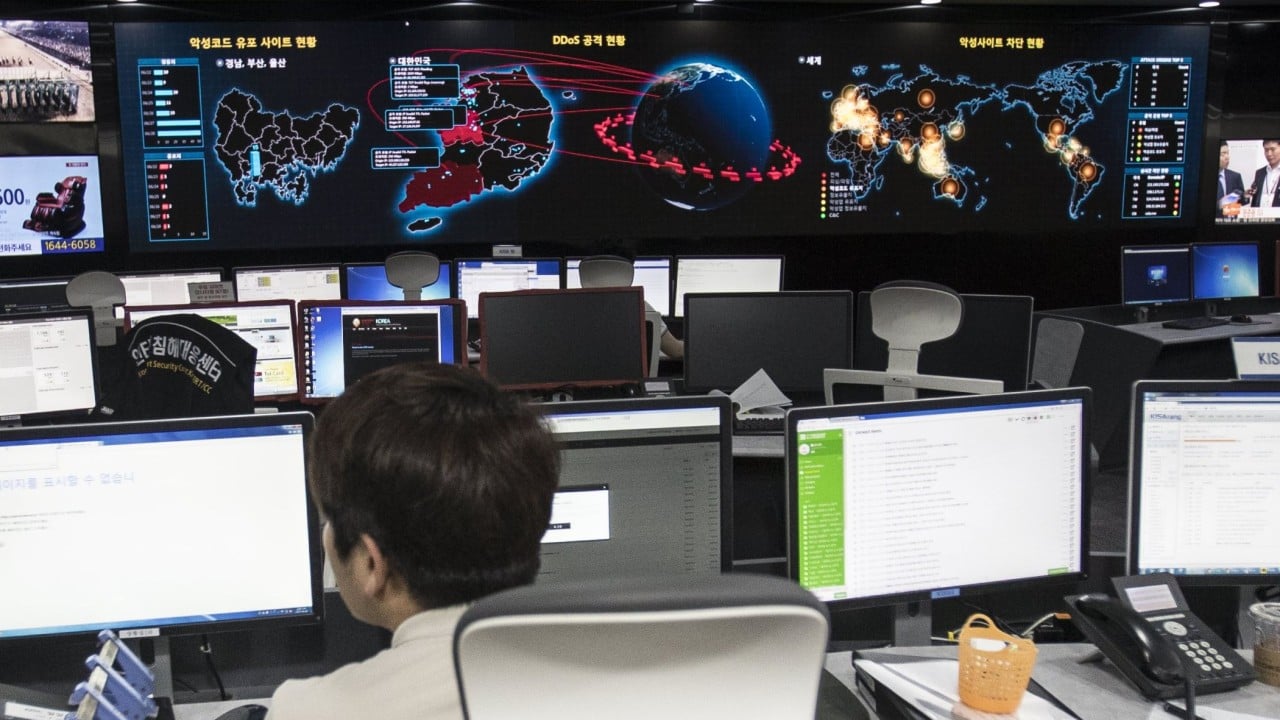
The air inside a tier-four data center is cold enough to make your teeth chatter. It smells of industrial air conditioning, static electricity, and the faint, metallic tang of hot copper. At 4:20 AM on a freezing Wednesday in July, the only sound inside Telstra’s Melbourne facility is the relentless, high-pitched hum of thousands of server fans.
Let us imagine a technician. We will call him David. David is tired. He is staring at a terminal, finishing a routine maintenance task on a network time synchronization unit. It is the kind of task performed hundreds of times a year. A quick software restart. A blinking green light. A sip of lukewarm coffee.
David presses enter. The screen flickers.
In the subterranean heart of the network, a tiny piece of silicon, no larger than a matchbox, wakes up from its reboot. It looks up at the sky, queries a satellite, and makes a catastrophic calculation.
Suddenly, for this critical piece of infrastructure, it is no longer July 8, 2026.
It is November 2006.
The machine has traveled twenty years into the past. And like a drop of ink falling into a glass of pure water, this chronological lie begins to spread. It does not crash the network with a dramatic bang. Instead, it ripples. It drifts. It slowly, silently poison-pillures the digital nervous system of an entire continent.
The Invisible Symphony of Nanoseconds
We do not think about time. Not really. We glance at our wrists, or our dashboard clocks, and we see minutes. But telecommunications networks do not live in the world of minutes. They live in the world of nanoseconds.
To understand why a country’s transport, commerce, and emergency services can vanish in an instant, we have to understand the invisible orchestra that keeps our digital lives afloat.
Imagine a stadium filled with millions of people, all trying to speak to one another at the exact same time. If they all shout at once, the result is deafening, useless noise. To solve this, a mobile network assigns every single phone call and data packet a microscopic, hyper-precise window of time to transmit. Your phone speaks for a fraction of a millisecond, then silences itself so your neighbor’s phone can speak, and so on, millions of times a second.
This requires an almost divine level of coordination.
Engineers use a hierarchy called the Network Time Protocol. At the top sit the gods of time: Stratum 0. These are atomic clocks, buried deep in government laboratories, or drifting on GPS satellites, keeping time so accurately they lose only a second every few million years.
Below them are Stratum 1 servers, which talk directly to the atomic clocks. Then Stratum 2, which listen to Stratum 1, and Stratum 3, which listen to Stratum 2. It is a digital feudal system, built on unquestioning trust.
But trust is a dangerous vulnerability.
Months before that cold July morning, a silent change was made in Melbourne. A specific timing unit—a Symmetricom SSU-2000—had been struggling to talk to its superior Stratum 2 servers. It was a minor irritation. To bypass the issue, an engineer made a quick, undocumented configuration change. They promoted the unit to Stratum 1. They told it to stop listening to the network and instead rely entirely on its own internal GPS card.
It was a band-aid. It solved the immediate problem.
But it also turned a subordinate machine into an absolute authority. The unit was no longer a student; it was now the teacher. And nobody wrote down that the curriculum had been altered.
The Ghost in the Satellite
The sky holds its own traps.
Deep inside the GPS satellite system, time is measured in weeks. Because of the way older computer chips were designed, the counter that tracks these weeks can only count up to 1,023. Once it hits week 1,024, the counter rolls over back to zero.
It is the digital equivalent of an odometer on an old car rolling over from 999,999 miles to 000,000.
This "week rollover" happens roughly every nineteen and a half years. In January, the manufacturer of the timing device, Microchip Technology, sent out a stark warning to telecommunications carriers worldwide. They warned that certain older, discontinued hardware models would fail when this rollover event occurred. The internal GPS engine would roll back in time by 1,024 weeks. The systems would remain locked to the satellites, but they would tell the world it was 2006.
No alarms would sound. The machine would believe its own lie.
Other carriers received the warning and quietly swapped out their aging hardware or applied the necessary software patches.
Telstra did not.
The warning sat in inboxes. The outdated software remained unpatched. The undocumented configuration change slept quietly in the Melbourne server rack, waiting.
The Great Disconnect
When the Melbourne unit restarted at 4:20 AM, it looked at the GPS rollover data and confidently declared the year to be 2006.
Because it had been promoted to a Stratum 1 authority, the surrounding network did not question it. The lie began to cascade. It rippled through the routing systems, jumping from Melbourne to Sydney, whispering to thousands of servers that the future had not yet happened.
Consider what happens next.
Modern digital security relies entirely on cryptography and security certificates. When your phone connects to a tower, or when a server talks to another server, they exchange digital handshakes. These handshakes are stamped with an expiration date.
When the network time suddenly plummeted back to 2006, the security systems looked at the security certificates—which were stamped with a 2026 creation date—and panicked.
To a server living in 2006, a certificate from 2026 is an impossible document from a science-fiction future. It is a forgery.
Instantly, security systems did what they were programmed to do: they shut the gates. They revoked access. They locked out the data sessions.
Across Australia, millions of screens went dark.
- Forty-five percent of all mobile calls and data sessions vanished into the ether.
- Eighty thousand businesses found their payment terminals frozen, unable to process transactions.
- Regional train networks in Victoria and New South Wales ground to a halt, their vital safety and tracking systems paralyzed because they could no longer verify where the trains actually were.
People woke up to a silent world. No morning news feeds. No train schedules. No way to tap a card for a morning coffee.
But the real crisis was far more terrifying than a missed latte or a delayed commute.
The Fifty-Eight Thousand and the Silent Six Hundred
We live under the comforting assumption that certain systems are absolute. We believe that if we dial triple zero, someone will answer.
During the outage, fifty-eight thousand emergency calls went through. The backup systems, designed to shunt failed calls onto rival networks, worked for the vast majority of people.
But networks are complex, shifting beasts. The temporal rot created a secondary, intermittent glitch. Some callers did not get shunted to other networks. They were met with a flat, digital error message.
Six hundred and four times, someone in Australia dialed for help and got nothing but static.
Imagine being the parent of an infant struggling to breathe in a remote regional town, staring at a phone with full bars that refuses to connect. Imagine the rising tide of panic as you press redial, again and again, wondering if the air is failing your child or if the world has simply ended.
To their credit, Telstra’s automated systems recognized these failed connections and triggered welfare checks. Police officers were dispatched to knock on doors. In 144 cases, officers had to physically drive to homes to ensure the residents were still breathing.
A grandmother in a regional hospital died during the chaos. Her family had tried frantically to call an ambulance, their calls failing before they finally found a working phone. Investigators later scrambled to determine if the minutes lost to the network's time-travel experiment had cost a life.
It is in these silent, terrifying gaps that the true cost of neglected infrastructure is measured. Not in stock prices or regulatory fines. In heartbeats.
The Illusion of Complexity
When the network finally stabilized around 4:00 PM, after nearly twelve hours of paralysis, the corporate apologies began. There were promises of investigations. There were assurances that "lessons would be learned."
But the lesson is already clear, and it is one we keep refusing to memorize.
We have built a world of astonishing complexity, yet we treat it with the casual disregard of a homeowner who never looks at their foundations. We pile software on top of software, layer upon layer, until no single human being truly understands how the entire apparatus fits together. We make quick fixes on late shifts, write no notes, and walk away, assuming the machine will heal itself.
We are told that these systems are robust, that they are built with redundant layers to protect us from catastrophe.
But redundancy is a myth if the underlying assumption of the system is flawed. If you build three backup engines, but they all consult the same broken clock, they will all fail in perfect, synchronized harmony.
The Melbourne server did not fail because of a sophisticated cyberattack or a bolt of lightning. It failed because of a simple human oversight. A warning ignored. A shortcut undocumented. A tiny, quiet lie about what year it was, left to fester in the dark.
The next time you look at your phone, look past the sleek glass and the colorful icons. Think of the cold room in Melbourne. Think of the silent tick of the atomic clock, and how easily we can all be cast back into the dark by a handful of missing nanoseconds.