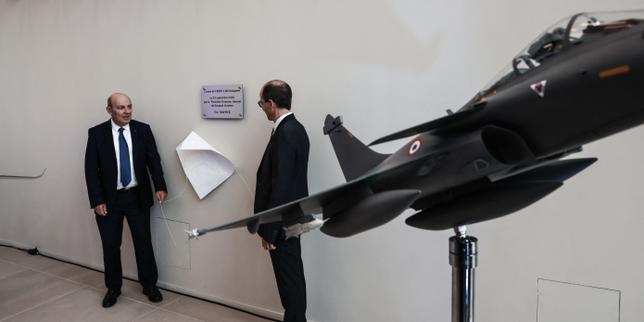
The defense analysis community is suffering from a collective bout of Stockholm syndrome. For months, the prevailing consensus across European think tanks and industrial journals has been wrapped in a blanket of mourning over the collapse of the Future Combat Air System (FCAS). The narrative is predictable: by walking away from the joint Franco-German-Spanish next-generation fighter program, Dassault Aviation has somehow isolated itself, traded a massive European market for national pride, and left France vulnerable to the industrial might of the US or a unified Euro-British alternative.
This view is not just wrong. It is financially and operationally illiterate.
The conventional wisdom assumes that defense procurement is a game of scale, that sharing a bill among three nations makes the end product cheaper, and that international cooperation guarantees interoperability. Anyone who has actually spent time inside the procurement meat-grinder knows the opposite is true.
Dassault did not lose by escaping the FCAS quagmire. They escaped a slow-motion industrial suicide pact.
The Myth of the "Cost-Sharing" Panacea
Let's dismantle the foundational lie of European defense collaboration: that joint programs save money.
The defense analyst's favorite equation is simple math. You take a €100 billion development cost, divide it by three nations, and assume everyone saves 66%. It looks beautiful on a PowerPoint slide in Brussels.
In the real world, the math of joint defense projects operates on an entirely different set of physics. Every time you add a state partner to a complex aerospace program, you introduce a geometric explosion of conflicting requirements, national industrial caveats, and bureaucratic vetoes.
Consider the historical precedent of the Eurofighter Typhoon. It was plagued by decades of delays and bitter disputes over workshare between the UK, Germany, Italy, and Spain. By the time the aircraft reached operational maturity, the global threat profile had shifted entirely.
The Cost of Compromise
When France broke away from the early stages of that very same European combat aircraft project in the 1980s to build the Rafale solo, the critics used the exact same talking points we hear today. They predicted ruin. They claimed France could never amortize the development costs alone.
Instead, Dassault delivered an aircraft that was not only operational years ahead of the Typhoon, but became a dominant export powerhouse from India to the UAE. Why? Because it was designed with a single, uncompromised operational vision.
[State Partner A: Requires Long-Range Interception]
                 \
                  --> [The Joint Program Compromise] --> An Overweight, Delayed,
                 /                                        Franken-Jet
[State Partner B: Requires Carrier Capability]
When you force engineers from Airbus Defense and Space in Germany and Dassault in France to split the flight control systems down the middle to satisfy political quotas rather than technical competence, you don't get a superior aircraft. You get an expensive, delayed, underperforming compromise. Dassault’s refusal to surrender the flight control architecture and the prime contractor leadership of the Next Generation Weapon System (NGWS) wasn't arrogance. It was a calculated defense of engineering sanity.
The Sovereignty Trap: Why Germany and France Were Never Aligned
The collapse of the FCAS framework was inevitable because the strategic doctrines of Paris and Berlin are fundamentally irreconcilable. No amount of diplomatic hand-wringing or joint press conferences could paper over the structural cracks.
France operates a sovereign, independent nuclear deterrent. Its air force demands a fighter capable of delivering the ASMP-A (and its hypersonic successors) deep into hostile territory without relying on external permissive codes or foreign permission. Furthermore, the French Navy requires a carrier-capable platform to fly off the successor to the Charles de Gaulle.
Germany has entirely different priorities:
- Nuclear Sharing: Berlin relies on the American B61 bomb via NATO sharing arrangements, which requires US-certified platforms (hence their purchase of the F-35).
- Export Restrictions: The German Bundestag maintains a strict, often volatile veto over defense exports to non-NATO countries, driven by domestic political shifts.
- Operational Focus: Berlin’s doctrine is traditionally centered on continental air defense and collective NATO Baltic policing, not global power projection.
Imagine a scenario where Dassault tied its entire industrial future to a tri-national jet, only for a future German coalition government to block a vital export sale to a Middle Eastern or Asian partner over a domestic political dispute. That isn’t a hypothetical risk; it’s exactly what happened with Eurofighter sales to Saudi Arabia.
By reclaiming total autonomy over its next-generation roadmap, Dassault ensures that French export policy remains in Paris, and that the aircraft can be sold to global partners without a committee in Berlin holding the keys to the factory floor.
People Also Ask: Won't France Get Crushed by the Scale of US and Chinese R&D?
This is the most common critique leveled by traditionalist analysts. They point to the hundreds of billions flowing into the US Next Generation Air Dominance (NGAD) program or China's rapid iteration of J-20 and J-35 platforms, arguing that a medium-sized power like France simply cannot compete in total capital expenditure.
The flaw in this argument is the assumption that dollar-for-dollar spending correlates directly to operational efficacy.
The US defense acquisition system is notoriously bloated. Billions are consumed by multi-layered oversight committees, industrial lobbying, and programs that are canceled after consuming vast sums of capital without ever fielding a combat-ready asset.
Dassault’s competitive advantage has always been lean, agile iteration.
The Evolution, Not Revolution, Principle
France does not need to match the total R&D budget of the Pentagon because it does not build gold-plated, single-use platforms from scratch every two decades. It builds adaptable architectures.
The Rafale of today is structurally similar to the Rafale of twenty years ago, but internally, through successive software and hardware standards (F1 through the upcoming F4 and F5 standards), it is an entirely different beast. The F4 standard brought advanced collaborative combat capabilities, while the upcoming F5 standard will integrate a dedicated combat drone wingman, effectively transforming the platform into a sixth-generation system under a sovereign French banner.
Rafale F1 (Basic Air Defense)
   --> Rafale F3-R (Omnirole, ASMP-A Nuclear Capability)
      --> Rafale F4 (Network-Centric Warfare, Advanced Sensors)
         --> Rafale F5 (Collaborative Combat, Loyal Wingman Drone Integration)
By focusing its national budget on upgrading a highly capable, existing airframe and pairing it with an unmanned ecosystem, France achieves 90% of the operational capability of an entirely clean-sheet tri-national fighter at a fraction of the financial and temporal cost.
The Real Winner in the Collaborative Drone Era
The nature of aerial warfare has shifted fundamentally while the FCAS bureaucrats were arguing over workshare percentages. The future of air dominance is no longer defined solely by the manned stealth fighter. It is defined by the combat cloud, distributed sensor networks, and low-cost, attritable unmanned aerial vehicles (UAVs).
In this new reality, the heavy, manned fighter is less a traditional dogfighter and more an airborne command post—a quarterback in the sky.
Dassault’s unilateral path allows them to pivot to this reality instantly. They already hold the intellectual property and flight data from the nEUROn program, Europe’s most successful stealth combat drone demonstrator. While Airbus and Spain's Indra are stuck trying to figure out which country gets to manufacture the landing gear of a hypothetical joint fighter, Dassault is already integrating the "Loyal Wingman" drone architecture directly into the French Rafale F5 roadmap.
The Downside of Freedom
To be fair, this contrarian path does carry real risks. Going solo means France absorbs 100% of the financial shock if a major technical failure occurs during development. It means the domestic market is limited to the French Air and Space Force and the French Navy, putting immense pressure on the export market to achieve true economies of scale. If an economic crisis hits Paris, there are no international partners to help steady the financial ship.
But that risk is preferable to the certain failure of industrial paralysis.
Stop Romanticizing European Defense Unity
The European defense market is not a homogenous entity, and treating it as one is a recipe for strategic irrelevance. The nations that succeed in the coming decades will not be those that spent fifteen years negotiating workshare percentages in hotel conference rooms in Brussels. They will be the nations that can iterate software at the speed of relevance, maintain uncompromised export control, and deploy operational capabilities while their neighbors are still drafting memoranda of understanding.
Dassault didn’t lose a crown jewel when FCAS stalled. They shed a ball and chain.
The defense community needs to stop weeping over the dream of a unified European sky and start looking at the reality of the global market. The future belongs to the agile, the unencumbered, and the sovereign. By stepping away from a broken collective paradigm, Dassault didn’t isolate itself; it ensured it remains the master of its own destiny.