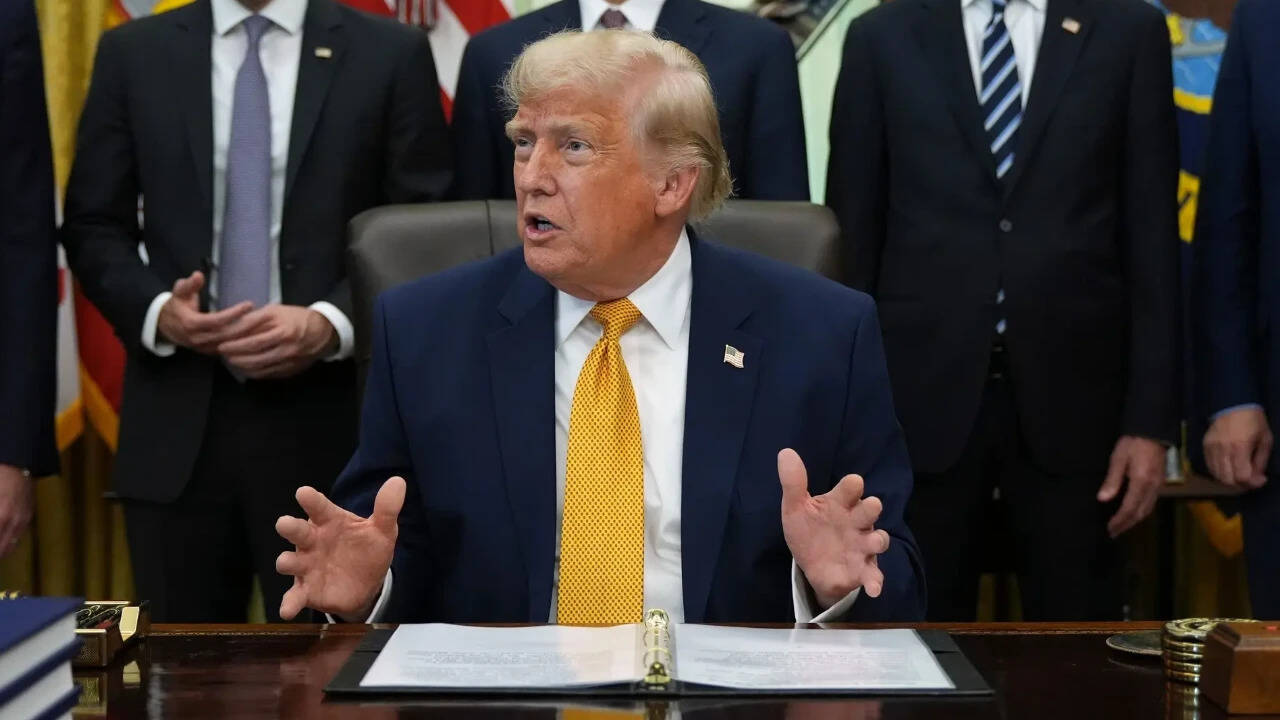
The media is currently obsessing over a semantic shouting match between Washington and Tehran. Vice President JD Vance stands on a tarmac in Switzerland declaring a "major milestone" because Iran allegedly invited International Atomic Energy Agency (IAEA) inspectors back to its facilities. Hours later, Iranian Foreign Ministry spokesperson Esmaeil Baghaei flatly contradicts him, claiming the nuclear issue was barely touched. Donald Trump takes to social media to proclaim that everyone knows Iran will submit to major weapons inspections to ensure "nuclear honesty."
This entire debate is built on a flawed premise. The mainstream press is treating this like a standard diplomatic dispute—a question of who is lying and who is telling the truth.
They are missing the point entirely. The debate over whether Iran "agreed" to inspections is completely irrelevant because the traditional inspection regime is dead. The physical reality on the ground has rendered the old verification frameworks completely useless. What we are witnessing is not a nuclear non-proliferation negotiation. It is a highly coordinated piece of political theater where both sides are using the ghost of the IAEA to mask a brutal, transactional economic truce.
The Rubble Problem and the Failure of Verification
To understand why the current commentary is so detached from reality, you have to look at the physical state of Iran's nuclear infrastructure. Mainstream journalists write about "inspections" as if UN officials are simply going to walk into pristine laboratories in Natanz, Fordow, or Esfahan, look at some digital readouts, and check a seal on a centrifuge cascade.
I have spent years analyzing satellite imagery and technical data from these sites. Last year's military strikes didn't just halt enrichment; they physically collapsed the underground facilities, mixing highly enriched uranium with concrete, twisted steel, and soil.
When a facility containing uranium enriched to 60% is pulverized by kinetic bombardment, you do not have a neatly cataloged stockpile anymore. You have an environmental and forensic nightmare. The IAEA has had zero physical access to these bombed locations since the conflict began.
If inspectors walk into Natanz tomorrow, what exactly are they inspecting? They cannot run standard destructive analysis on pulverized debris without months of excavation. They cannot verify the chain of custody of material that is currently buried under twenty meters of reinforced concrete rubble.
The mathematical reality of tracking nuclear material under these conditions is governed by material unaccounted for (MUF). In standard facilities, MUF is calculated using a straightforward mass balance equation:
$$\text{MUF} = (I_B + P - S) - I_E$$
Where $I_B$ is the beginning inventory, $P$ is production, $S$ is shipments, and $I_E$ is the ending inventory. In a pristine facility, if $\text{MUF}$ deviates significantly from zero, it signals a diversion of material.
In a bombed facility, $I_E$ is an unknown variable that cannot be physically measured. The uncertainty parameter ($\sigma_{\text{MUF}}$) becomes so massive that the entire equation breaks down. When the measurement error exceeds the quantity of material required to construct a nuclear device, the inspection protocol becomes mathematically useless. Trump's phrase "nuclear honesty" is a political slogan, not a technical possibility. You cannot verify honesty in a cloud of radioactive dust.
The Hidden Transaction: Soybeans for Sanctions
If the nuclear inspections are technically unfeasible in the short term, why are Vance and Trump pushing the narrative so aggressively? The answer lies in the domestic economic concessions hidden in the fine print of the Switzerland talks.
This is not a grand geopolitical realignment. This is a commodity swap disguised as a peace treaty.
The Western press focuses on the geopolitical macro-narrative—the Strait of Hormuz, regional proxy networks, and the balance of power in the Middle East. But look at the actual mechanisms Vance laid out. The United States is preparing a 60-day waiver to lift secondary sanctions on Iranian oil exports, primarily clearing the path for Tehran to sell crude to China without friction. In return, Iran’s frozen assets in Qatari banks are not being sent back to Tehran to fund its military. They are being routed directly to US agricultural hubs.
Iran is being forced to spend its unfrozen capital on American agricultural exports, specifically soybeans and corn produced by Midwestern farmers.
This is a brilliant piece of domestic political transactionalism. The administration gets to tell American farmers that it secured a massive new export market, while simultaneously claiming it achieved the "permanent denuclearization" of Iran. Tehran gets to tell its domestic audience that it broke the American sanctions regime, rescued its central bank, and stabilized its runaway domestic inflation without making a single new formal concession on its nuclear sovereignty.
Every player gets exactly what they need for domestic consumption:
- The White House claims a historic foreign policy victory and secures economic relief for its domestic agricultural base.
- The Iranian Regime satisfies its hardline factions by publicly denying any submission to Western dictates while secretly securing the financial lifeline it needs to prevent domestic collapse.
- China secures an uninterrupted flow of discounted Iranian crude oil.
The actual presence of IAEA inspectors is merely the political cover required to make this transaction palatable to the public.
The Myth of the 60-Day Roadmap
The mediators from Pakistan and Qatar have loudly trumpeted a 60-day roadmap to reach a comprehensive agreement. This timeline is an illusion designed to project urgency and momentum.
In international diplomacy, short timelines are rarely used to solve complex technical problems. They are used to create artificial windows of stability. A 60-day waiver allows Iran to dump millions of barrels of oil onto the global market, lowering energy prices. It allows the US to de-escalate maritime tensions in the Strait of Hormuz without looking weak.
But solving the actual technical hurdles of down-blending 440 kilograms of 60% enriched uranium inside a war zone takes years, not weeks. The process of converting uranium hexafluoride ($UF_6$) back into a stable oxide form or blending it down to low-enriched levels requires functional chemical transformation plants. If those plants are offline or damaged, the material must either be shipped out of the country—which Iran’s parliament has historically blocked—or handled under highly unstable field conditions.
Let's look at the basic isotopic blending physics. To down-blend highly enriched material ($m_H$ at enrichment fraction $x_H$) with a diluent ($m_D$ at enrichment fraction $x_D$) to achieve a target lower enrichment ($m_T$ at fraction $x_T$), the mass balance requires:
$$m_H x_H + m_D x_D = (m_H + m_D) x_T$$
Solving for the required mass of the diluent:
$$m_D = m_H \frac{x_H - x_T}{x_T - x_D}$$
Executing this mathematical formula safely at scale requires thousands of hours of uninterrupted engineering work, rigorous verification of isotopic ratios at every stage, and stable electrical grids. None of these conditions exist in a region currently managing active kinetic friction. The 60-day roadmap will expire, the waivers will be renewed, and the "technical talks" will be extended indefinitely because the alternative is a return to a war that neither side can afford to finance.
Why the Traditional Non-Proliferation Model is Obsolete
The fatal flaw in the competitor's analysis is the belief that we can return to the status quo ante—the era of the Joint Comprehensive Plan of Action (JCPOA) or standard NPT safeguards. That world is gone.
Once a state demonstrates the technical capacity to enrich uranium to near-weapons grade, hides its knowledge base across decentralized academic institutions, and survives a direct kinetic assault on its physical infrastructure, traditional non-proliferation tools fail. You cannot bomb knowledge out of existence. You cannot inspect a nation that has realized that the threat of a breakout is the only leverage keeping its regime alive.
Iran's strategy is not to build a bomb today. Their strategy is to maintain a permanent state of nuclear latency—remaining exactly one screwdriver turn away from a weapon while using that proximity to extract economic concessions from the West.
The United States understands this perfectly. The insistence on "nuclear honesty" is not a strategy to achieve zero enrichment; it is a strategy to manage the optics of Iranian latency. By placing a few inspectors back at visible, non-sensitive sites like the Bushehr nuclear power plant, Washington can claim the situation is under control. Iran can keep its subterranean capabilities intact, and the global oil trade can continue uninterrupted.
Stop looking at the conflicting statements from Washington and Tehran as a sign of failing talks. The public disagreement is the very mechanism that makes the private deal possible. The moment you stop listening to the rhetoric and start tracking the flow of oil and agriculture, the true nature of modern geopolitical statecraft becomes blindingly clear.

/https://tf-cmsv2-smithsonianmag-media.s3.amazonaws.com/filer/c6/97/c697b065-e0bd-4970-81ea-819779296b91/u765404inp.jpg)
