The media wants you to believe Dan Driscoll walking away from the Army secretary job is just another messy Washington turf war. They frame it as a petty personality clash with Defense Secretary Pete Hegseth, a routine casualty of bureaucratic elbows thrown inside the Pentagon.
That narrative is comfortable. It lets you digest the news as standard political theater.
It is also completely wrong.
Driscoll did not leave because he could not get along with coworkers. He left because the institutional antibodies of the military-industrial complex successfully rejected a foreign body trying to modernize a dinosaur. When you attempt to pivot a multi-trillion-dollar apparatus away from legacy procurement and toward asymmetric drone warfare at lightning speed, you do not lose a paperwork battle. You get pushed out by generals and political appointees who prefer comfortable stagnation over actual lethality.
The Myth Of The Washington Personality Clash
Look past the anonymous leaks about hurt feelings and un-deferential behavior. The lazy consensus is that Driscoll and Hegseth simply had incompatible management styles.
Let us look at the actual mechanics. Over the past year, the Pentagon hierarchy systematically ousted top-tier uniformed leadership who were championing radical transformations. When Gen. Randy George was forced out, it sent a clear signal to anyone trying to drag the ground forces into the twenty-first century. Innovation requires institutional backing. When you systematically remove the innovators, you are not cleaning house; you are ensuring compliance through mediocrity.
I have watched corporate boards and government agencies use the "personality conflict" excuse for decades to mask ideological turf wars over spending. Whenever a reformer threatens legacy programs—those multi-billion-dollar vanity projects that keep defense contractors happy—the machine labels them difficult to work with.
Driscoll was pushing hard on cheap drone defense and structural agility. Those priorities threaten traditional procurement streams. When the Army's acting chief of staff promptly pulls the plug on a championed drone modernization program the minute a reformer leaves, you stop looking at this as a personality dispute and start looking at it as a policy rollback.
Why Adam Telle Is A Symptom, Not A Solution
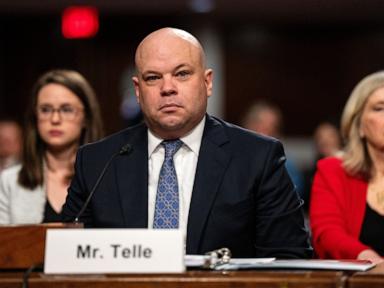
President Trump tapped Adam Telle, the former assistant secretary of the Army for civil works and a seasoned Capitol Hill insider, to step in as the acting secretary. The establishment is breathing a collective sigh of relief. Telle knows how Congress works. He has deep ties to the appropriations committees.
Translation: He speaks fluent bureaucratic compromise.
Choosing a civil works specialist with heavy legislative liaison experience over a disruptive transformation agent tells you everything you need to know about where the Pentagon's priorities are heading. They want calm waters. They want the legislative budget process to glide through without a fight. They want to stop rocking the boat.
Imagine a scenario where a defense department actually prioritizes rapid technological adaptation over congressional comfort. In that world, an outsider like Driscoll—backed by a direct line to the White House through Vice President JD Vance—is an asset precisely because he does not care about institutional etiquette. By replacing him with a master of traditional Hill navigation, the administration is trading velocity for institutional quiet.
The Cost Of A Hollowed-Out Command
We are currently running military operations in the Middle East while the top civilian and uniformed layers of the Army and Navy lack Senate-confirmed permanence. The Navy is run on an acting basis. The Army is now run on an acting basis.
Critics wring their hands about a "leadership void", but they are focusing on the wrong metric. A title confirmation does not equal competence. The real danger is not that these positions are held by acting officials; the danger is that the institutional incentives punish anyone who tries to break the mold.
When structural reformers are shown the door, the message to every colonel and major down the chain of command is brutally clear: keep your head down, do not question legacy weapon systems, and never try to outpace the bureaucracy.
Stop asking whether Driscoll and Hegseth could share a room. Start asking why the system is structurally incapable of tolerating anyone who wants to win future wars instead of past ones.
The machinery of war has outgrown civilian control not through a coup, but through exhaustion. They simply wait you out until you resign, write a polite departure statement, and let the old guard back in to count their rivets.
Drop the illusion that this is about team chemistry. This is about institutional survival, and the dinosaurs just won another round.
US President Trump Names Adam Telle Acting US Army Secretary
This video provides an overview of the official announcement regarding Adam Telle stepping into the role of acting Army secretary following Dan Driscoll's departure.
http://googleusercontent.com/youtube_content/1