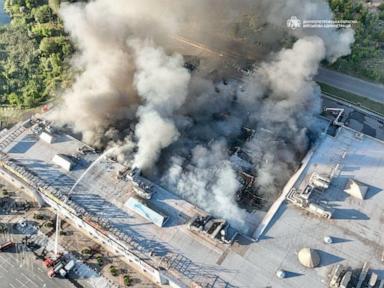
The standard news cycle feeds on body counts. Every single morning, the headlines roll out identical equations of misery: a shopping mall struck here, a retaliatory drone swarm there, a neat, digestible tally of five dead, ten injured, routine tragedy packaged for breakfast consumption.
It is lazy journalism, and worse, it is strategic illiteracy.
When we focus solely on the daily ticker of civilian casualties and tactical strikes, we miss the structural war entirely. The lazy consensus among mainstream analysts is that this conflict is decided purely by the attrition of the frontlines, measured in meters gained and lives lost per day. That view is dangerously wrong. It treats a complex industrial, economic, and logistical collision like a street fight, focusing on the bruises while ignoring the structural integrity of the skeleton.
I have spent years analyzing modern state conflicts and watching commentators obsess over tactical blips while missing the macroeconomic and demographic tidal waves underneath. If you want to understand where this war is heading, stop reading the daily strike logs. They are noise designed to trigger emotional exhaustion rather than clarity.
The Attrition Fallacy
Let us dismantle the core premise driving mainstream coverage: the idea that the side with the higher tolerance for casualties will automatically win.
This is a simplistic reading of military history. Modern war is not won by how many bodies a nation can throw into the blender; it is won by the velocity of adaptation and the sustainability of the industrial base supporting the front. When a headline highlights five deaths following a shopping mall drone strike, it registers on the human empathy scale, but it tells you precisely zero about the trajectory of the campaign.
Tactical terror is a symptom of operational stagnation. When armies cannot break entrenched lines, they resort to long-range harassment. It horrific, yes, but strategically it is often an admission of a stalemate.
Focus on the logistics, not the casualty metrics. A nation can absorb tactical losses indefinitely if its economic architecture holds, and conversely, a frontline can collapse overnight despite low casualties if supply lines and currency reserves implode.
Consider the role of autonomous systems and drone warfare. The mainstream narrative treats drones as magic bullets changing the face of combat. They are not. They are artillery democratized. They replace expensive shells with cheap optics and explosives, but they do not alter the fundamental law of strategy: logistics dictate outcomes.
The Economic Misdirection
Another persistent myth is that sanctions and daily infrastructural strikes are slowly bleeding the adversary to death in a predictable linear fashion.
Economies at war do not behave like quarterly corporate balance sheets. They pivot to command-and-control models that can absorb staggering inefficiencies for years longer than Western pundits predict. When you read about the latest energy grid attack or retail center bombing, ask yourself what institutional change it actually forces. Does it disrupt command structures, or does it merely harden public resolve while shifting resources around?
History shows that external strikes on civilian infrastructure rarely achieve their intended political effect of breaking morale. Instead, they produce the opposite effect, creating a bunker mentality that insulates leadership from domestic dissent. Analysts who project peacetime political logic onto wartime populations consistently miscalculate human resilience.
The Real Metrics That Matter
If the daily casualty count is a distraction, what should we be tracking?
- Manufacturing Output of Critical Components: Not just steel or oil, but microelectronics, guidance systems, and propellant chemistry.
- Technological Adaptation Cycles: How fast are electronic warfare countermeasures deployed to neutralize off-the-shelf consumer drones?
- Demographic Drain vs. Workforce Integration: How are warring states replacing skilled labor while keeping critical industries functioning?
- Financial Substitution Channels: How are sanctioned economies routing capital and acquiring dual-use tech through third-party intermediaries?
These metrics lack the emotional punch of a burning shopping mall, which is precisely why they are ignored by headline writers. But wars are won and lost in the gray spaces of supply chains and engineering labs, not in the immediate aftermath of a localized blast.
The Danger of Emotional Reporting
The media's obsession with daily human tragedy creates a distorted policy feedback loop. When the public consumes a steady diet of atrocity reporting without systemic context, the political pressure shifts toward emotional reactions rather than long-term strategic coherence.
We see calls for reactive escalation or short-sighted aid packages that respond to the news of the day rather than the realities of the theater. Good strategy requires emotional detachment. It requires looking past the smoke of today's drone strike to calculate where the industrial capacity of both sides will stand eighteen months from now.
Stop consuming the war as a daily true-crime podcast. The next time a headline screams about a fresh toll of dead and wounded, recognize it for what it is: a tactical footnote in a grinding war of systems.
The side that adapts its industrial base fastest wins. Everything else is just noise.