Silence.
In a British courtroom, silence does not merely happen; it settles like dust over oak paneling that has absorbed centuries of human wreckage, a heavy, suffocating quiet broken only by the scratch of a stenographer's keys and the faint, rhythmic hum of fluorescent lighting overhead.
For decades, Russell Brand was the antithesis of silence. He was velocity. He was a whirlpool of Victorian vocabulary, velvet waistcoats, wild hair, and relentless, intoxicating charm that could bend a room—or an entire television network—to his specific gravity. Yet, when the verdict came down in a UK court, finding the comedian and actor guilty of serious sexual offenses, the noise stopped. The velvet curtain dropped. What remained in the harsh daylight of the British justice system was not a mythic rogue or a misunderstood guru, but a defendant standing in a wooden dock, stripped of the stage lights that had shielded him for twenty years.
To understand what happened inside that courtroom, you have to look past the headlines that treat a guilty verdict like a sporting score. A conviction is not an ending. It is a forensic reckoning with how we allow charisma to act as an invisibility cloak.
The Architecture of Unquestioned Access
Consider a hypothetical scenario, one built from the documented patterns of the entertainment industry in the mid-2000s. Picture a twenty-two-year-old runner—let’s call her Clara—working a twelve-hour shift behind the scenes of a late-night broadcast in London. She holds a clipboard, a headset, and the desperate ambition that makes young people tolerate unpaid overtime and bruised egos. Her job is simple: keep the talent happy. Make sure the dressing room has the right sparkling water. Ensure the car is waiting at the stage door. Never, under any circumstances, be the person who slows down production.
Now, place an electric, towering star in that hallway. He is the reason the advertisers are paying. He is the reason the producers are getting promoted. When he crosses a boundary—when a joke curdles into a threat, or a locked door clicks shut—Clara does not just face a man. She faces an entire ecosystem designed to protect him.
Who does she tell? The producer whose career depends on the star’s ratings? The human resources department that exists to shield the corporation from liability? The publicist who spends every waking hour spinning the star’s wildness as adorable eccentricity?
That is the invisible stake at the heart of the Russell Brand case. When a UK jury weighed the evidence, they were not merely evaluating isolated incidents from the height of his fame between 2006 and 2013—years when he dominated BBC Radio 2, hosted Big Brother’s Big Mouth, and crossed the Atlantic to star in Hollywood comedies like Forgetting Sarah Marshall. They were examining a culture that mistook predation for performance art.
I have sat in enough newsrooms and media offices over the last fifteen years to recognize the specific odor of institutional complicity. It smells like lukewarm coffee and nervous laughter. You hear it in the way executives talk about "difficult geniuses" or "wild cards." Back in 2008, when Brand and Jonathan Ross left obscene voicemails on actor Andrew Sachs’s answering machine—a scandal known as "Sachsgate" that forced Brand to resign from the BBC—the public outrage focused on bad taste and disrespecting an elderly television icon. We laughed or we gasped at the vulgarity, and then we moved on. Nobody asked what was happening in the dressing rooms when the microphones were off.
How the British Justice System Stripped Away the Myth
The road to a conviction in the United Kingdom is notoriously unforgiving, particularly in cases involving historical sexual offenses. Unlike the fast-moving, algorithm-driven court of public opinion—where a viral video or a slickly produced YouTube monologue can shift sentiment in an afternoon—the Crown Court operates at a glacial, methodical pace.
When the joint investigation by The Times, The Sunday Times, and Channel 4’s Dispatches first broke the allegations open in September 2023, the immediate reaction followed a predictable modern script. Brand took to his digital platforms, where he had reinvented himself as a wellness commentator and anti-establishment crusader to millions of subscribers. He denied the accusations vehemently, framing them as a coordinated attack by legacy media and powerful institutions trying to silence his voice.
For a while, that narrative worked. It created a fog of doubt, turning a question of criminal conduct into a culture-war skirmish.
But a courtroom has no algorithm. You cannot monetize a cross-examination.
During the trial, the defense relied heavily on the passage of time, the absence of immediate forensic evidence, and the argument that encounters from over a decade ago were consensual, messy, or misremembered. In British law, the burden of proof rests entirely on the prosecution: the jury must be "sure" of guilt, a standard that has historically resulted in notoriously low conviction rates for sexual offenses across England and Wales. According to Ministry of Justice data, fewer than three percent of reported rapes in the UK even reach the stage of a criminal charge, let alone a trial.
So when a jury returns a guilty verdict after weeks of grueling testimony, it means something extraordinary happened in that room. It means the story survived the fire.
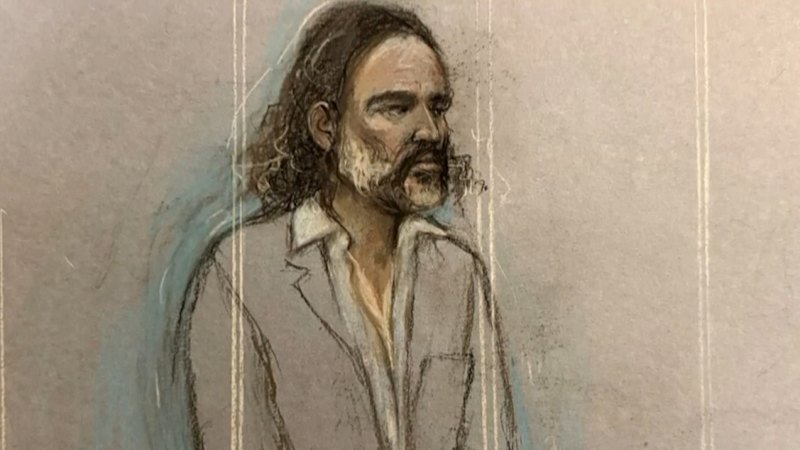
Think about what it requires for a complainant to walk into a witness box years after an assault. They must relive the worst moments of their lives in front of twelve strangers, a judge in a horsehair wig, a gallery of sketch artists and reporters, and the accused himself sitting just yards away. Every text message, every diary entry, every medical record, and every therapy note from the intervening decade is subpoenaed, dissected, and weaponized to find a single inconsistency. If they hesitated to report it at the time, the defense asks why. If they stayed in touch afterward out of fear or confusion, the defense waves those messages like a trophy.
The prosecution’s case did not hinge on Brand’s public persona, nor on the salacious tabloid headlines that once chronicled his sex addiction. Instead, it relied on corroboration—the chillingly consistent patterns described by women who did not know each other, operating in different cities and different circles, yet describing the exact same mechanics of coercion. Same tactics. Same isolation. Same aftermath.
The Anatomy of a Second Act
Perhaps the most unsettling aspect of this saga is not what happened in the dark corners of television studios twenty years ago, but how easily Brand built a fortress out of reinvention.
We love a redemption arc. It is one of the oldest stories we tell ourselves: the broken addict finds sobriety, sheds his shallow Hollywood skin, embraces spirituality, and emerges as a truth-teller speaking for the forgotten. Brand mastered this transformation with breathtaking precision. He traded the leather trousers for linen shirts, swapped tabloid gossip for critiques of Big Pharma and corporate media, and built a fiercely loyal audience that viewed every criticism of him as proof of his righteousness.
By the time the Metropolitan Police began interviewing complainants and compiling the file for the Crown Prosecution Service, Brand had effectively insulated himself inside an echo chamber. If you questioned him, you were a pawn of the establishment. If you investigated him, you were part of a conspiracy.
This is where the legal reality collided with the digital illusion. You can convince millions of viewers on a screen that you are a prophet, but you cannot persuade a jury that a contemporaneous text message sent by a weeping young woman in the back of a cab in 2007 was part of a deep-state plot in 2023.
The gap between those two worlds—the curated digital persona and the raw, unedited pain preserved in police evidence bags—is where the case was won and lost.
What the Verdict Changes—and What It Doesn't
The immediate aftermath of a high-profile conviction always triggers a familiar wave of institutional soul-searching. Broadcasters launch internal reviews. Production companies issue solemn statements about updated safeguarding policies, anonymous whistleblowing hotlines, and zero-tolerance workplaces.
It is easy to write a policy. It is much harder to dismantle the power dynamic that makes young workers terrified to use it.
Consider what happens next on a film set or in a radio studio tomorrow morning. A new crop of twenty-somethings will walk through the doors, eager to prove they are tough enough to survive in a brutal, glamorous business. They will be told, implicitly or explicitly, that complaining makes you "difficult," and being difficult makes you unemployable. Meanwhile, the next charismatic star—the one whose ratings keep the lights on—will walk down the corridor surrounded by an entourage whose livelihoods depend on keeping him happy.
Does a guilty verdict in London solve that? No. Not by itself.
Yet, dismissing the verdict as mere symbolism misses its true weight. For the women who stood in that witness box, enduring the glare of global media and the vitriol of online mobs, the court's decision offers something that no corporate apology or documentary ever could: official, irreversible validation. In the eyes of the state, they were believed. The narrative that they were vindictive, confused, or chasing clout has been dismantled under the strictest evidentiary standards the law possesses.
And for the broader public, the conviction serves as a stark reminder about the mechanics of celebrity. We have a habit of confusing volume with honesty, and wit with virtue. When someone makes us laugh, or when they articulate our frustrations with the modern world, we grant them a moral credit line they have never earned. We look at the dazzling exterior and assume the foundation is sound.
The courtroom stripped away the lighting, silenced the applause track, and forced everyone to look at the wreckage behind the stage. Outside the court building, as cameras flashed and reporters shouted questions into the crisp British air, the contrast was absolute: a man who spent his life mastering the art of being seen, finally caught in a light he could not control.