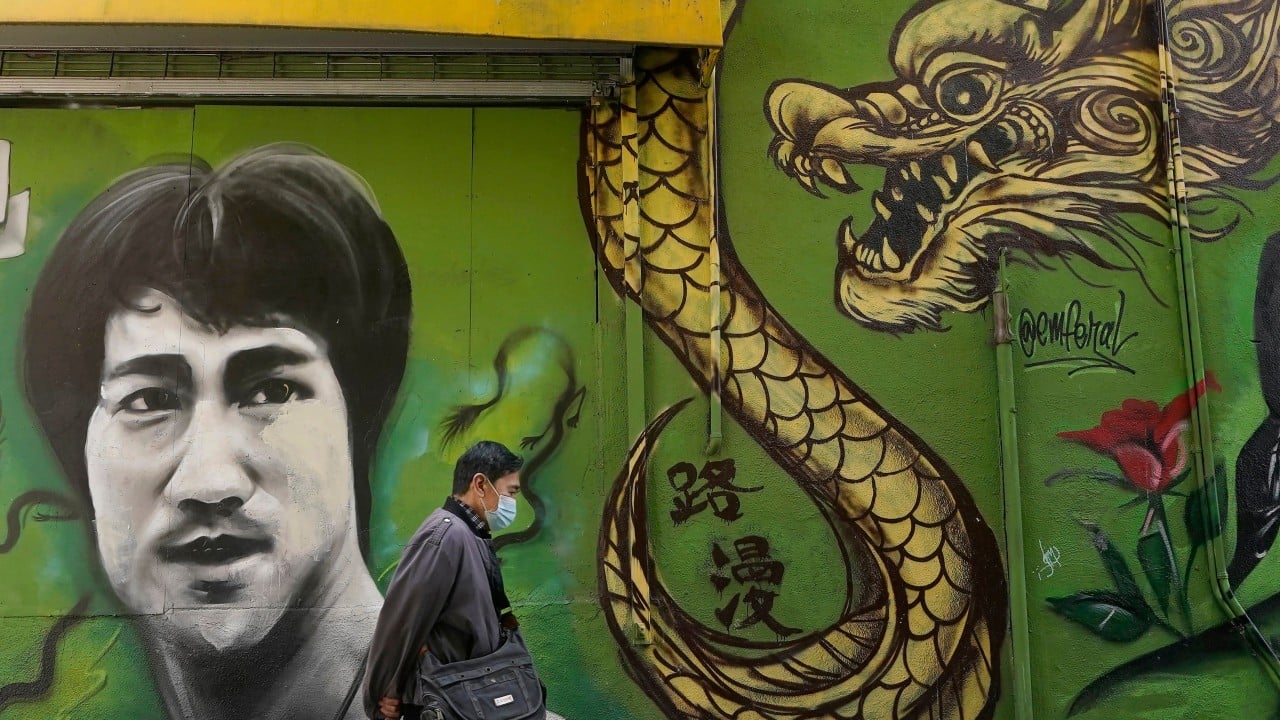
California Assembly Bill 2455, signed into law by Governor Gavin Newsom, establishes May 17 as Bruce Lee Day. This legislative action marks the first time the state has codified an annual namesake day for a Chinese American. While mass media framing treats this event as a symbolic gesture of cultural representation, an objective policy evaluation reveals it acts as an intentional distribution of cultural capital designed to alter institutional narratives within public education and civic spaces.
The mechanism relies on voluntary civic frameworks rather than mandatory state outlays. By examining the structural components of AB 2455, the underlying historical data, and the socioeconomic dynamics of minority representation, we can map the true utility of this legislative milestone. For a more detailed analysis into this area, we suggest: this related article.
The Structural Design of AB 2455
The operational core of Assembly Bill 2455 functions through a non-fiscal incentive model. State-sanctioned commemorative days typically fall into two distinct legal categories: paid state holidays which incur direct fiscal obligations through employee compensation, and commemorative observances which utilize existing institutional frameworks without direct budgetary expansions. AB 2455 operates strictly within the latter category.
The institutional delivery mechanism targets three primary sectors: To get more information on the matter, detailed reporting can also be found at Al Jazeera.
- Public K-12 Education: The law authorizes and encourages school districts to integrate historical curricula regarding Chinese American contributions into standard instructional hours.
- Civic and Museum Infrastructure: Publicly funded institutions receive a statutory mandate of endorsement, lowering the bureaucratic friction required to secure permits and venues for cultural exhibits.
- Community-Led Public Programming: Local municipal frameworks are adjusted to expedite community-organized events specifically synchronized with the May 17 calendar date.
Choosing May 17 isolates a specific inflection point in immigration data. On May 17, 1959, an 18-year-old Bruce Lee returned to San Francisco to claim his birthright citizenship after spending his formative childhood years in Hong Kong. By anchoring the law to this specific date, the state elevates the legal framework of birthright citizenship and the physical act of reverse migration, contrasting standard historical narratives that focus exclusively on westward arrivals.
The Economics of Media Representation and Stereotyping
The legislative intent behind AB 2455 explicitly notes the requirement to counter historical screen stereotypes. Quantifying the impact of media representation requires assessing the economic and social barriers encountered by Asian American actors during the mid-20th century. During the 1960s production cycle of television series like The Green Hornet, systemic wage dispersion and rigid casting frameworks depressed market values for non-white talent.
The operational bottleneck for minority performers in that era can be modeled through a two-tiered constraint system:
[Systemic Production Constraints]
       │
       ├──► Wage Dispersion (Lower baseline compensation vs. white counterparts)
       │
       └──► Typecasting Filters (Restricted to caricature or secondary archetypes)
Lee’s subsequent departure from the Hollywood studio system to the Hong Kong cinema ecosystem represents a strategic optimization shift. By migrating to a market where he held primary creative control, he established an independent distribution channel for martial arts cinema. This shift forced Hollywood studios to modify their licensing models, leading to the co-production of Enter the Dragon in 1973. The financial success of that venture demonstrated the global viability of Asian-led intellectual property, fundamentally altering the risk assessment models used by American theatrical distributors.
Curricular Integration and Institutional Transmission
The long-term efficacy of AB 2455 depends on how effectively local educational agencies adopt its voluntary provisions. Because California utilizes a decentralized model for curriculum implementation via local school boards, the state level designation does not guarantee uniform adoption. Instead, it provides a standardized legal baseline that removes political friction from local curriculum battles.
Integrating this history into public education targets a specific structural omission. Standard historical curricula frequently treat Asian American history through a framework of state-sponsored exclusion or victimization, focusing primarily on the Chinese Exclusion Act of 1882 or Executive Order 9066. While these historical touchstones are necessary for an accurate structural understanding of American policy, they present an incomplete view of minority agency.
Introducing a framework focused on cultural innovation and cross-cultural philosophical synthesis alters the educational baseline. The curriculum supported by the Bruce Lee Foundation emphasizes a system of kinetic discipline and philosophical adaptability, explicitly utilizing Lee's core tenet: "Be like water making its way through cracks." In an educational setting, this shift moves the pedagogical narrative from passive historical subjects to active philosophical and structural innovators.
Strategic Risk Mitigation and Policy Limits
A rigorous policy analysis must account for the structural limitations inherent in non-fiscal commemorative legislation. The primary vulnerability of AB 2455 lies in its voluntary execution model. Without mandatory funding mechanisms or strict reporting requirements for school districts, the transmission of this cultural capital is highly dependent on the localized density of community advocacy groups.
The second limitation is the risk of commodification. Stripping a historical figure's radical critiques of systemic racism and industry wage discrimination to fit a sanitized, state-approved commemorative day can dilute the educational utility of the policy. If public schools reduce the observance to superficial athletic demonstrations rather than analyzing the structural barriers Lee navigated, the policy fails to achieve its stated goals of systemic educational correction.
The ultimate value of California Assembly Bill 2455 is not found in the creation of a civic holiday, but in the statutory precedent it establishes. By encoding the legacy of a Chinese American icon into state law, California provides a scalable blueprint for other municipalities to diversify their institutional histories. Organizations looking to maximize this policy shift must pivot from purely symbolic celebrations toward establishing permanent endowments, localized curriculum standards, and structured media production pipelines that leverage this newly legitimized cultural capital.