The press is currently obsessed with the optics of a spy chief sitting across from a dictator’s grandson. They call it "unprecedented diplomacy" or "a strategic opening." They are wrong. This wasn't a masterstroke of American intelligence. It was a masterclass in Cuban survival.
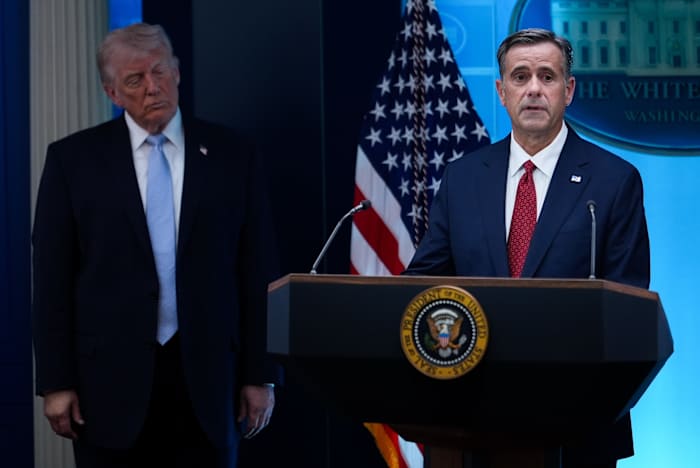
When CIA Director John Ratcliffe touched down in Havana to meet with Raúl Castro’s grandson—the influential Raulito—the media narrative immediately pivoted to a high-stakes chess match. The reality? Washington just walked into a trap that Havana has been setting for sixty years. We aren't breaking new ground. We are validating a dynasty that was on the verge of irrelevance. For a closer look into this area, we recommend: this related article.
The Myth of the New Messenger
The "lazy consensus" suggests that by bypassng formal diplomatic channels and speaking directly to the Castro bloodline, the U.S. is getting to the "real" power. This assumes that the Cuban state is a monolithic block waiting for a whisper from Langley to change its ways.
I have spent decades watching these back-channel flirtations go sideways. In 2014, the Obama administration thought it could "nudge" the regime toward capitalism through cruises and wifi. The regime took the money, built a military-run tourism monopoly, and tightened the screws on dissidents. This meeting with "El Cangrejo" (The Crab), as Raulito is known, isn't an evolution. It’s a rebranding. For additional background on this issue, extensive coverage is available on The Washington Post.
By meeting with the grandson, the CIA isn't disrupting the succession plan; they are officiating it. We are telling the Cuban people—and the aging hardliners in the Communist Party—that the U.S. recognizes the Castro family as the permanent owners of the island.
Intelligence or Indulgence?
The CIA’s job is to gather information, not to play kingmaker in a failing Caribbean state. When a Director-level official engages in this kind of theater, it signals desperation, not strength.
Why now? The mainstream take is that we are worried about Russian or Chinese influence on the island.
- The Russian Ghost: Moscow doesn't have the cash to keep Cuba afloat.
- The Chinese Debt: Beijing is tired of writing checks that Havana never cashes.
The real threat isn't a foreign base; it's the total collapse of the Cuban power grid and economy. The U.S. is terrified of a mass migration event. So, we send the top spy to cut a deal with the only people who know how to keep the population suppressed. This isn't "national security." It’s "instability insurance" paid to the very thugs who caused the instability.
Breaking Down the Power Dynamics
To understand why this meeting is a failure of tradecraft, you have to look at the math of Cuban internal politics.
- GAESA Control: The military conglomerate (GAESA) controls roughly 80% of the Cuban economy. Raulito isn't just a grandson; he is a key gatekeeper for this money.
- The Legitimacy Gap: The puppet presidency of Miguel Díaz-Canel is failing. By meeting with the Castros directly, the U.S. guts whatever shred of authority the "civilian" government had.
- The Leverage Illusion: We think we have leverage because Cuba is starving. We forget that the regime has survived sixty years of starvation by blaming us.
Imagine a scenario where a CEO goes to a competitor’s intern to discuss a merger because the intern’s grandfather founded the company. It’s an insult to the current board and a signal that you don’t trust the formal structure. That is what Ratcliffe just did. He bypassed the state to talk to the family business.
The Intelligence Community’s Fatal Flaw
The CIA has a long, documented history of falling in love with "their guys." We saw it in Iran with the Shah. We saw it in South Vietnam. We are doing it again in Havana. We are looking for a "moderate" within a totalitarian family tree.
There are no moderates in the GAESA boardrooms. There are only survivors. Raulito doesn't want a democratic transition; he wants to be the billionaire heir to a Caribbean Singapore without the pesky human rights or rule of law. By giving him a sit-down with the CIA Director, we just gave him the ultimate status symbol to show his internal rivals. We just told every other colonel in Cuba: "If you want to talk to the Americans, you go through the kid."
Dismantling the "Stability" Argument
People ask: "Isn't it better to talk than to have another Mariel boatlift?"
This is the wrong question. The right question is: "Does talking to the Castros prevent a boatlift, or does it give them the resources to manufacture one whenever they want more concessions?"
History shows that Havana uses the threat of mass migration as a tactical weapon. When the U.S. engages in these high-level secret meetings, it validates the effectiveness of that weapon. We aren't solving a crisis; we are paying the ransom.
The Real Cost of Secret Diplomacy
- Moral Hazard: We abandon the internal opposition (the San Isidro movement, the 11J protesters) for the sake of a "stable" transition.
- Intelligence Leakage: You think the CIA is getting "deep insights" into the regime? Every word spoken in that room was scripted by Cuban Intelligence (DI) weeks in advance.
- Regional Signals: What does this tell Venezuela or Nicaragua? It tells them that if you hold out long enough and threaten enough chaos, the CIA will eventually come to your house and ask for your terms.
The Superior Strategy
If the U.S. actually wanted to disrupt the Cuban status quo, we wouldn't send a Director to have mojitos with the "Princeling."
We would ignore the family and aggressively engage with the mid-level officers and bureaucrats who are actually doing the work and seeing no reward. We would make the Castros irrelevant by making them unnecessary. Instead, we’ve made them the indispensable middleman.
The CIA’s insistence on "man-to-man" diplomacy with autocrats is a relic of the 1950s. It’s an ego trip for officials who want to feel like they are in a Le Carré novel. In the real world, this meeting just bought the Castro dynasty another decade of life.
We went to Havana looking for an exit strategy. All we did was renovate the cage.
The Cuban regime is a house of cards. The wind was blowing. And the United States just walked in and shut the window.