Four suspects sit in detention in North Macedonia over an alleged Iran-backed assassination plot in Greece, and almost every wire report treats it like an isolated Balkan crime blotter. They're missing the real story. When North Macedonian intelligence dismantled this cell in November 2026, they didn't just stop a hit across the southern border. They exposed how Tehran's intelligence apparatus has outsourced lethal operations to Balkan street criminals to keep its own fingerprints off European soil.
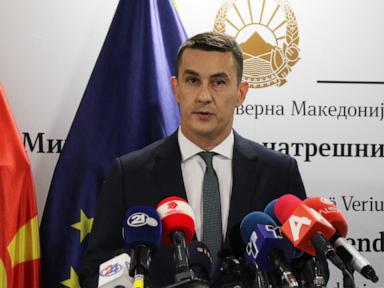
Look at the basic facts announced in Skopje on November 17, 2026. Bojan Hristovski, director of North Macedonia's Agency for National Security (ANB), and Aleksandar Janev, head of the Interior Ministry's Bureau of Public Security, laid out the results of a joint investigation with Greek intelligence that started in early 2026. Four North Macedonian nationals were detained inside the country. A fifth suspect was picked up in Greece and extradited back to North Macedonia on November 12. A sixth suspect—part of a group aged between 22 and 73 from Skopje and neighboring areas—remained at large when officials went public.
Standard news summaries stop right there. They repeat the headline number—four detained—and move on. If you actually want to understand why European counterterrorism officials are losing sleep over this case, you have to look at who ran the network, why North Macedonia was chosen as a staging ground, and what investigators found when they kicked down the doors.
Why the Arrests in North Macedonia Matter Beyond the Balkans
Most readers assume foreign intelligence services send trained agents across borders to carry out high-profile hits. That's old-school thinking. Sending Iranian operatives into Athens or Thessaloniki carries massive diplomatic blowback and leaves an obvious trail for Western counterintelligence.
Hiring local Balkan underworld figures solves both problems at once.
During the Skopje press briefing, Hristovski stated plainly that the suspects were embedded in North Macedonia's criminal underground and acted on direct instructions from an Iranian handler to prepare a terrorist assassination against a specific individual in Greece. North Macedonia's ANB identified that coordinator as Iranian national Edris Jahangiri Mavaneh, describing him as a collaborator of Naji Sharifi Zindashti.
If the name Zindashti sounds familiar, it should. He's a notorious Iranian narcotics trafficker and organized crime boss already sanctioned by Western authorities for running kidnapping and assassination-for-hire networks on behalf of Iran's Ministry of Intelligence and Security.
Think about what that connection means in practice:
- Plausible deniability for Tehran. If a local Balkan crew gets caught scouting a target in Greece, Iranian diplomats can shrug and claim they have zero connection to small-time smugglers or armed thugs.
- Built-in smuggling infrastructure. Criminal syndicates operating between Skopje and northern Greece already know how to move unregistered firearms, cash, and burner phones across borders without triggering customs alerts.
- Cheap, expendable labor. Proxy recruits rarely know the full geopolitical picture. They take cash for surveillance, logistics, or a pull of the trigger, making them easy to cut loose if police close in.
I've watched security analysts debate whether these criminal-proxy networks are actually competent enough to pull off complex hits. Honestly, their amateur mistakes often get them caught—just like what happened here. Yet competence isn't the point. Volume and deniability are. Even a clumsy cell forces Greek and Balkan intelligence services to burn thousands of hours tracking cross-border movements.
Inside the Investigation That Broke the Cell
The operational timeline shows just how long this plot simmered before the handcuffs came out. According to Hristovski, North Macedonian intelligence opened the file in early 2026 and worked closely with Greece's National Intelligence Service (EYP) and other international partners to map the network.
Notice the patience involved. Security agencies didn't swoop in the moment a suspicious message crossed a border. They watched the cell build its logistics chain across two countries so they could identify the coordinator, trace the financing, and catch the operatives in both jurisdictions.
When police finally raided properties tied to the suspects, the physical evidence confirmed this wasn't idle chatter. Investigators seized unregistered firearms, ammunition, handwritten notes, and a physical map. Janev confirmed that all seized weapons are undergoing forensic testing to check whether they were used in prior crimes or trafficked through regional arms routes.
Who Was the Intended Target in Greece
Official statements from Skopje and Athens stayed tight-lipped about the target's identity. Hristovski would only confirm that the cell had conducted preparatory and logistical work aimed at assassinating a "previously identified individual located in Greece".
Multiple media outlets and security sources, however, reported that the intended victim was an Israeli business executive based in Greece. Because neither Greek courts nor North Macedonian prosecutors have released the target's name in public indictments yet, treating that detail as an attributed intelligence claim rather than a settled courtroom fact is the only responsible way to read it.
Either way, the geographic logic holds up. Greece sits right next door to North Macedonia, sharing a porous land border and heavy daily commercial traffic. For an Iranian handler coordinating via encrypted channels, recruiting a cell in Skopje to strike a target a few hours south in Greece makes cold operational sense.
The Bigger Pattern of Iran Using Criminal Proxies in Europe
Anyone framing the November 2026 arrests in North Macedonia as a one-off event isn't paying attention to European security trends over the last few years. Intelligence agencies from Stockholm and Berlin to London and Athens have repeatedly flagged the exact same playbook.
Instead of deploying Islamic Revolutionary Guard Corps (IRGC) officers directly into European capitals, Iranian handlers recruit from local gangs, drug networks, and prison alumni. Look at how consistent the blueprint has become:
- Initial recruitment through underworld brokers. Middlemen tied to figures like Naji Sharifi Zindashti tap existing criminal contacts in Europe or neighboring transit states.
- Compartmentalized tasking. One group acquires weapons and maps, another handles cross-border transport, and a separate shooter is lined up for the final phase.
- Remote command and control. Handlers like Edris Jahangiri Mavaneh issue instructions from outside the target country, keeping state officials insulated from the physical crime scene.
Greece has seen versions of this before. In 2023, Greek police busted a Pakistani-origin network directed from Iran that was planning attacks against an Israeli-owned restaurant and Jewish targets in central Athens. The 2026 North Macedonia-Greece case shows the model evolving—using Balkan nationals with seamless regional mobility rather than operatives who stand out at border checkpoints.
What makes the Balkans especially vulnerable right now? Decades of legacy weapons stockpiles, entrenched smuggling corridors, and tight-knit local criminal crews give foreign intelligence handlers a ready-made marketplace. You don't need to smuggle a handgun from Tehran to Athens when a local contact in Skopje can source one in an afternoon.
Common Misconceptions About This Case
When breaking news headlines drop numbers like "4 detained" in one report and "5 arrested" in another, confusion spreads fast. Let's clear up the three biggest misunderstandings circulating around this story:
- Why do some headlines say four suspects and others say five or six? All three numbers are accurate depending on which part of the timeline you look at. Four suspects were detained inside North Macedonia during the main sweep, a fifth suspect was arrested in Greece and handed over to Skopje on November 12, and a sixth member of the suspected network was still being sought by police at the time of the November 17 briefing.
- Did the attack happen? No. Joint surveillance between North Macedonian and Greek intelligence disrupted the plot during its preparatory and logistical stages before any strike took place.
- Was this purely a domestic crime bust? No. While the suspects had ties to local criminal circles and face weapons charges, North Macedonia's top domestic intelligence agency explicitly classified the operation as a foiled, foreign-directed terrorist assassination plot.
How to Follow Verified Updates as the Case Moves to Court
Intelligence briefings only give you the opening chapter. Once suspects enter pre-trial detention in Skopje, the real evidentiary test begins in court—where prosecutors have to prove links to Edris Jahangiri Mavaneh beyond intelligence assessments.
If you're tracking this story for security analysis, regional risk, or news verification, focus on three concrete steps rather than viral social media rumors:
- Watch formal indictments from North Macedonia's Public Prosecutor's Office for Organized Crime and Corruption. Press conferences outline intelligence findings; formal indictments reveal whether prosecutors are charging the suspects under terrorism statutes or strictly illegal weapons possession.
- Track extradition and arrest updates on the sixth suspect. Confirming where that remaining individual is captured will show how far the network's logistical footprint stretched outside Skopje and northern Greece.
- Monitor cross-border security advisories from Athens and Skopje. Pay attention to joint announcements from Greece's EYP and North Macedonia's ANB, as follow-up raids frequently target the arms suppliers who provided the seized weapons.
Check the Associated Press coverage of the Skopje briefing for primary wire updates as forensic testing on the seized weapons wraps up and pre-trial hearings begin.
You can also watch Al Arabiya's report on the North Macedonia terror plot for a concise video summary of the official announcement in Skopje.


