Ten thousand cases. That number sounds like a sudden catastrophe, yet anyone who tracks infectious disease responses in Central Africa knows it's actually the symptom of a much deeper, slower-moving failure. When health authorities announce that Congo's Ebola outbreak has surged past 10,000 cases while neighboring countries scramble to lock down borders, the headlines usually focus on the raw panic of viral spread. They miss the ground reality.
I've spent years analyzing outbreak logistics and public health communication across sub-Saharan Africa. If you only look at case counts, you completely misunderstand why Ebola keeps finding footholds in the Democratic Republic of Congo (DRC) and why regional containment is so brutally difficult. It isn't just a medical problem. It's a trust problem, a geography problem, and a financing problem colliding in real time.
The Reality Behind the 10,000 Case Milestone
Let's get the facts straight first. When public health tracking crosses a threshold like 10,000 cases—whether you're looking at cumulative regional tallies across recent flare-ups or an acute surge in a single prolonged transmission chain—the headline number rarely tells the whole story.
In the DRC, surveillance teams from the Ministry of Health and the World Health Organization (WHO) routinely deal with massive underreporting in the early weeks of a cluster. Rural clinics in provinces like North Kivu, Ituri, and Equateur often lack rapid diagnostic equipment. A fever looks like malaria. Gastrointestinal distress looks like typhoid or cholera. By the time a blood sample reaches a reference lab in Kinshasa or Goma, a single infected patient may have already attended a crowded market, visited a traditional healer, or been buried in a community funeral where dozens of relatives touched the body.
So when the official tally hits 10,000, epidemiologists know the true footprint is wider.
Here is what drives that explosive multiplication:
- Delayed case detection in areas where armed conflict prevents contact tracers from entering villages safely.
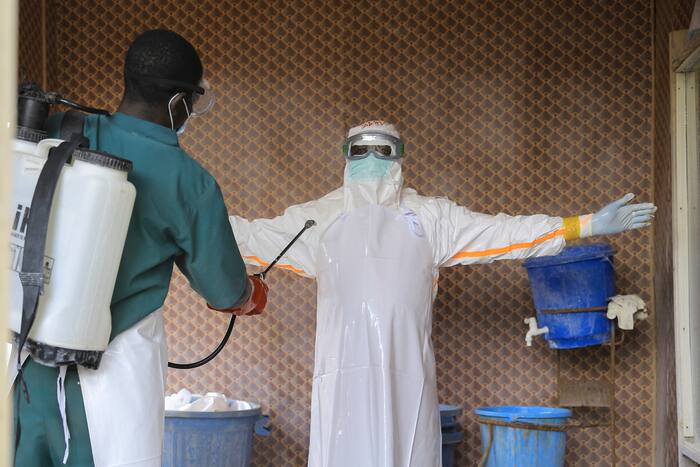
- Nosocomial transmission, which is a clinical way of saying people catch the virus inside under-equipped local health centers that lack basic personal protective equipment.
- High cross-border mobility along river networks and informal trade routes connecting the DRC to Uganda, Rwanda, Burundi, and the Republic of Congo.
- Community resistance fueled by years of political neglect and misinformation about foreign medical teams.
Honestly, the virus itself hasn't mutated into some unstoppable airborne monster. Zaire ebolavirus—the species responsible for the deadliest outbreaks in Central Africa—still requires direct contact with infected bodily fluids. We know how to stop it. The tragedy is that knowing how and actually doing it in a conflict zone are two entirely different things.
Why Border Screenings Alone Won't Stop Regional Spread
Every time case numbers spike in Congo, neighboring governments immediately roll out temperature checks at official border crossings and airports. Television cameras love this. You see health workers in full Tyvek suits pointing infrared thermometers at travelers in Entebbe, Kigali, or Brazzaville.
It looks decisive. It's also mostly theater.
Infrared thermometers miss anyone in the incubation period, which lasts anywhere from 2 to 21 days for Ebola. A trader can cross from Beni into western Uganda feeling completely fine, develop a fever four days later, and expose an entire household before realizing they're sick. Worse, heavy-handed policing at official checkpoints pushes travelers onto unmonitored forest paths and informal river ferries across the Congo and Ubangi rivers. Once people bypass official crossings to avoid quarantine, health ministries lose visibility completely.
Real cross-border containment doesn't happen at passport control. It happens when Ministries of Health share real-time epidemiological data across borders, harmonize contact-tracing databases, and deploy mobile vaccination rings to high-traffic border markets before a single case crosses the line.
The Ring Vaccination Bottleneck
We actually have effective vaccines now. Merck's rVSV-ZEBOV (Ervebo) and the two-dose Johnson & Johnson regimen have radically changed what's possible during an outbreak. In clinical trials and field deployments during the 2018–2020 Kivu epidemic, Ervebo showed roughly 97.5% efficacy among people vaccinated at least ten days before exposure.
So why are authorities still racing to slow the spread?
Because ring vaccination—vaccinating the contacts of a confirmed patient, and the contacts of those contacts—only works if you can find the contacts. If a family hides a sick relative because they're terrified of being taken to an Ebola Treatment Center (ETC) where people go in and rarely seem to come out alive, the ring breaks. You can have a million doses sitting in ultra-cold freezers at -70°C, and they won't stop a single transmission chain if local communities refuse the needle.
What Most People Get Wrong About Community Resistance
Western media often portrays local resistance to Ebola response teams as simple ignorance or superstition. That's lazy reporting, and it's flat-out wrong.
If you live in eastern Congo, you've likely survived decades of militia violence, state abandonment, and resource extraction while international agencies largely ignored your daily struggles with measles, malaria, and malnutrition. Then, suddenly, white SUVs roll into your village. Strangers in space suits demand to take your sick mother away behind opaque plastic walls where you can't see her, and if she dies, they bury her in a plastic body bag without the traditional washing rituals your culture requires for the dead to rest peacefully.
Wouldn't you be suspicious?
When response teams treat communities like biological hazards instead of partners, people fight back. Treatment centers get burned. Contact tracers get threatened. The outbreaks that spiral past thousands of cases are almost always the ones where international responders forgot that anthropologists and local religious leaders are just as critical to containment as virologists.
Where authorities have shifted strategy—hiring local youth as contact tracers, building transparent windows into treatment centers so families can see their relatives receiving care, and introducing "safe and dignified burials" that allow relatives to observe the process and pray—transmission rates drop fast.
The Financial Hangover Nobody Wants to Fund
There is another uncomfortable truth behind why Congo's outbreak response feels perpetually behind the curve. Global health funding operates on a boom-and-bust cycle of panic and neglect.
When an outbreak hits a major milestone or threatens to spill over into international travel hubs, donor nations pledge tens of millions of dollars. Emergency response teams fly in. Supply chains spin up. Then, the moment case numbers dip, funding dries up. Clinics strip back down to bare concrete walls, surveillance networks go dark, and the underlying vulnerabilities—unsafe water, broken healthcare infrastructure, unpaid local nurses—remain untouched until the next spillover event from wildlife happens.
And it will happen again. Fruit bats (specifically species in the Pteropodidae family) serve as natural reservoirs for the virus across the Congo Basin. As deforestation, mining, and bushmeat hunting push human populations deeper into previously undisturbed forest habitats, human-wildlife contact increases. You can't eradicate a virus that lives harmlessly in wild bat populations. You can only build health systems strong enough to catch the first human case before it becomes ten thousand.
How to Read Outbreak Numbers Without Falling for Hype
If you're following updates from the WHO, the Africa Centres for Disease Control and Prevention (Africa CDC), or Congo's Ministry of Health over the coming weeks, pay attention to specific metrics rather than just the cumulative case headline. Total case counts only ever go up—they don't tell you whether an outbreak is accelerating or burning out.
Look at three numbers instead:
- The proportion of new cases already listed as known contacts. If 85% or more of newly confirmed patients were already under active monitoring by contact tracers before they developed symptoms, authorities are winning. If most new cases pop up out of nowhere in the community, transmission is out of control.
- Community deaths versus ETC deaths. When people die of Ebola at home rather than inside a specialized treatment center, the risk of secondary infection during burial skyrockets. A dropping rate of community deaths means public trust is improving.
- Time from symptom onset to isolation. Every day an infected person stays in the community after developing a fever increases viral load and transmission risk. Getting that window under 48 hours is the benchmark for breaking an epidemic curve.
If you want to track reliable, unfiltered data directly from the field, skip sensationalist news aggregators and bookmark the Africa CDC Weekly Outbreak Briefs and the WHO Disease Outbreak News (DONs) portal. Support frontline medical organizations with permanent footprints in Central Africa—groups like Médecins Sans Frontières (Doctors Without Borders) and ALIMA (The Alliance for International Medical Action)—who don't pack up and leave when the cameras turn off.