The refrigerator hums. It is a low, comforting vibration that most of us only notice when it suddenly stops. For decades, that sound was the baseline of American domestic stability. You flipped a switch, the bulb glowed, and you paid a predictable, modest sum at the end of the month. Electricity was treated less like a luxury product and more like the air we breathe—ubiquitous, necessary, and managed by entities that felt more like dull government bureaus than Wall Street darlings.
Lately, that hum sounds expensive.
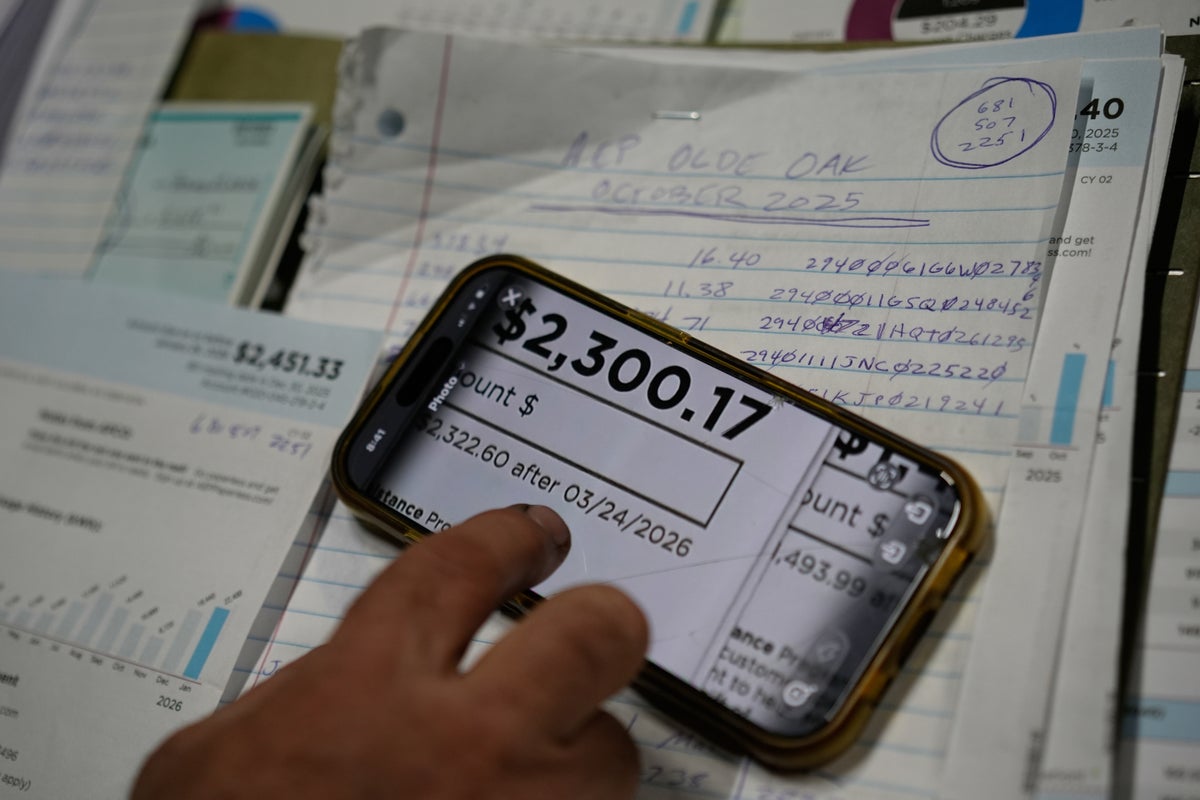
Step inside the kitchen of a hypothetical but entirely representative American named Sarah. She lives in a drafty Midwestern suburb, the kind of place where winters linger too long and summers arrive with heavy, suffocating humidity. Last month, Sarah opened her utility bill, looked at the total, and felt a familiar, cold spike of adrenaline. The number was $340. Two years ago, it was $210. Her usage had not changed. She had not bought a hot tub or started mining cryptocurrency in her basement. She had simply tried to keep her kids warm.
To absorb the blow, Sarah did what millions of Americans are doing. She dialed back the thermostat, bought heavy socks, and started making quiet, agonizing trade-offs at the grocery store. Less fresh meat, more generic pasta.
Now, shift the scene a thousand miles away to a glass-walled conference room. The atmosphere here is entirely different. Polished mahogany tables, expensive suits, and digital slideshows displaying upward-trending graphs. This is the quarterly earnings call of a major investor-owned utility company. The executives are smiling. They are announcing record-breaking net income, a bumped-up dividend for shareholders, and a glowing forecast for the next fiscal year.
These two realities are unfolding simultaneously across the country. As household budgets crack under the weight of skyrocketing energy costs, the monopoly utilities providing that energy are pocketing some of the highest profits in their corporate histories.
It feels like a betrayal of a fundamental American contract. But to understand how we trapped ourselves in this system, we have to look at the bizarre, inverted capitalism that governs how we power our lives.
The Monopoly Playground
Most businesses operate on a simple premise: if you want to make more money, you have to sell more things, innovate faster, or cut your operational costs. If a local bakery raises the price of a loaf of bread to twenty dollars, customers walk across the street to a competitor. The market disciplines greed.
Electric utilities do not live in that world. They are legally sanctioned monopolies. You cannot choose a different wire to run into your house. Because they have a captive audience, states regulate them through Public Utility Commissions—panels of officials tasked with balancing the company’s financial health against the public's right to affordable power.
Decades ago, a regulatory framework was built to incentivize these monopolies to build out our massive national grid. It dictated that utilities cannot make a profit on the actual electricity they sell. If they buy coal, gas, or wind power for five cents, they must pass that exact cost along to Sarah without a markup.
Instead, utilities are allowed to make a guaranteed profit margin—usually around 9% to 10%—on "capital investments."
Think about what that means. Capital investments are physical things. Steel in the ground. High-voltage transmission lines. New natural gas plants. Giant concrete substations. The more money a utility spends on building massive infrastructure projects, the more profit it is legally guaranteed to rake in from its customers.
Let that sink in. The system does not reward efficiency. It rewards spending.
Imagine hiring a contractor to remodel your kitchen, but instead of negotiating a flat fee, you agree to pay him a guaranteed 10% profit on top of whatever he spends. If he buys a $1,000 refrigerator, he makes $100. If he convinces you that you absolutely need a $10,000 commercial-grade walk-in freezer, he makes $1,000. That contractor has a powerful, systemic incentive to make your kitchen as bloated, expensive, and over-engineered as humanly possible.
That is the American utility model.
The Trillion-Dollar Upgrade Bill
To be fair, our energy infrastructure is aging. The grid is a fragile, sprawling web built for the 20th century, currently facing the chaotic realities of the 21st. We are experiencing more severe weather events—supercharged hurricanes, brutal ice storms, and historic heatwaves—that snap old wooden poles like toothpicks. At the same time, we are trying to transition away from fossil fuels toward renewable energy, which requires thousands of miles of new transmission lines to connect remote wind farms and solar arrays to major cities.
Data centers are exploding across the landscape, driven by the insatiable energy demands of artificial intelligence. We need more power, and we need a stronger grid to carry it.
No one disputes that upgrades are necessary. The friction lies in who pays for them, how much they actually cost, and who gets rich during the construction.
Because utilities make their fortunes on building things, they have turned the necessary green energy transition into a gold rush. They are aggressively shutting down older, fully depreciated power plants—plants that are cheap to operate because the construction loans have already been paid off—and replacing them with glittering, multi-billion-dollar new facilities.
When a utility builds a three-billion-dollar gas or solar plant, that entire cost, plus that sweet 10% guaranteed return, is baked directly into Sarah’s monthly bill for the next thirty years.
Regulators are supposed to act as the gatekeepers, protecting consumers from golden-toilet infrastructure projects. But the gatekeepers are wildly outmatched. A state utility commission is often a small, underfunded agency with a handful of analysts and lawyers. On the other side of the table sits a multi-billion-dollar corporate titan backed by armies of lobbyists, elite corporate attorneys, and public relations firms.
It is a heavyweight fight where one fighter is malnourished and the other has a blank check drawn from the opponent's bank account.
The Capture of the Guard
In state capitols across the nation, the political clout of these companies is legendary. They are frequently the largest campaign donors in their respective states. They fund charitable galas, sponsor little league teams, and seat their executives on the boards of powerful universities and hospitals. They weave themselves into the fabric of local power until they become virtually untouchable.
Consider what happens when that power goes unchecked. In Ohio, a massive federal bribery investigation revealed that a major utility funneled sixty million dollars in dark money to state politicians to secure a billion-dollar public bailout for aging nuclear and coal plants. In Illinois, another utility giant paid millions in fines after admitting to a years-long bribery scheme aimed at currying favor with the state's powerful House Speaker.
These are not isolated instances of a few bad apples. They are the predictable symptoms of a system where corporate profits are directly decoupled from public well-being.
When utilities wield this much influence, the regulatory process becomes a theater performance. Rate cases—the formal legal proceedings where utilities ask permission to raise your bills—stretch on for months, buried under thousands of pages of dense, mind-numbing financial jargon. The average citizen has no idea what is happening until the new rates hit their mailbox.
By then, the decisions have already been made in backroom compromises. The utility might ask for a $500 million increase, knowing it is an inflated number. The commission will "toughly" negotiate them down to $350 million. The utility executives walk away popping champagne corks, the regulators claim a victory for the consumer, and Sarah opens her mail and cries.
The Breaking Point
We are approaching an existential threshold. Access to affordable electricity is not like buying a smartphone or choosing to dine out. It is a baseline requirement for modern human survival.
When a heatwave hits Arizona, air conditioning is medical equipment. When a polar vortex grips New England, heat is life.
When utility bills rise faster than wages, the consequences are visceral. People engage in a dangerous dance with their own health. They turn off their cooling units in July, risking heatstroke. They use dangerous, unvented kerosene heaters indoors in January. They skimp on insulin to pay the electric company, because they know that if the power gets cut off, the insulin spoils in the warm fridge anyway.
The utilities argue that these rate hikes are the inevitable cost of a cleaner, more reliable future. They wrap themselves in the language of environmental stewardship and technological progress.
But their financial statements tell a different story. If these hikes were purely about covering the raw costs of building a cleaner grid, the companies' profit margins would remain flat. Instead, those margins are expanding. Wall Street analysts openly recommend utility stocks as safe, high-yield havens during economic uncertainty. The money leaving Sarah’s kitchen table isn't just buying solar panels or stronger wires; it is directly padding the investment portfolios of institutional funds and wealthy shareholders.
Rewriting the Social Contract
A few states are beginning to wake up to the absurdity of the current dynamic. Lawmakers and consumer advocates are starting to ask a fundamental question: why are we guaranteeing high profits to companies for performing a basic public service with zero market risk?
Some states are pushing for "performance-based regulation." Under this model, a utility’s profits are tied to actual outcomes, not just how much money they manage to spend. If they reduce the number of blackouts, they make money. If they keep customer bills low, they get a bonus. If they fail to meet carbon reduction goals or if customer satisfaction plummets, their profits are cut.
It sounds like common sense, but utilities fight these reforms with everything they have. They claim that tinkering with their guaranteed returns will scare away Wall Street investors, making it impossible to raise the capital needed to fix the grid. It is an effective form of corporate blackmail: let us keep our high profits, or we will let the lights go out.
Other communities are looking at an even more radical solution: firing the corporations entirely.
Publicly owned utilities—municipal electric systems owned by the cities they serve—already power millions of American homes. Because they do not have shareholders, they do not need to generate a profit margin. Every dollar collected from customers goes directly back into operating and maintaining the system. Study after study shows that customers of publicly owned utilities pay significantly lower rates and enjoy more reliable service than those served by investor-owned giants.
Taking back the grid is an uphill, multi-year battle. The corporate monopolies will spend tens of millions of dollars on disinformation campaigns to protect their turf. They will tell you that public power is inefficient, that it will lead to government incompetence, that the current system is the only thing standing between you and darkness.
But the next time you hear the low, steady hum of your refrigerator, remember that the sound does not belong to a corporate boardroom. The wires running into your home were built to serve communities, to keep families safe, and to fuel human potential. Somewhere along the way, we allowed a vital public life-support system to be transformed into a relentless wealth-extraction machine.
The machine is working exactly as it was designed to. It is time to change the design.