The blue light of the monitor flickers against the mahogany panels of a basement office. Upstairs, the weight of the free world hangs on a cadence, a pause, a breath drawn at precisely the right millisecond. Down here, the operator watches the text scroll. Green letters on a dark screen. Line by line. Word by word.
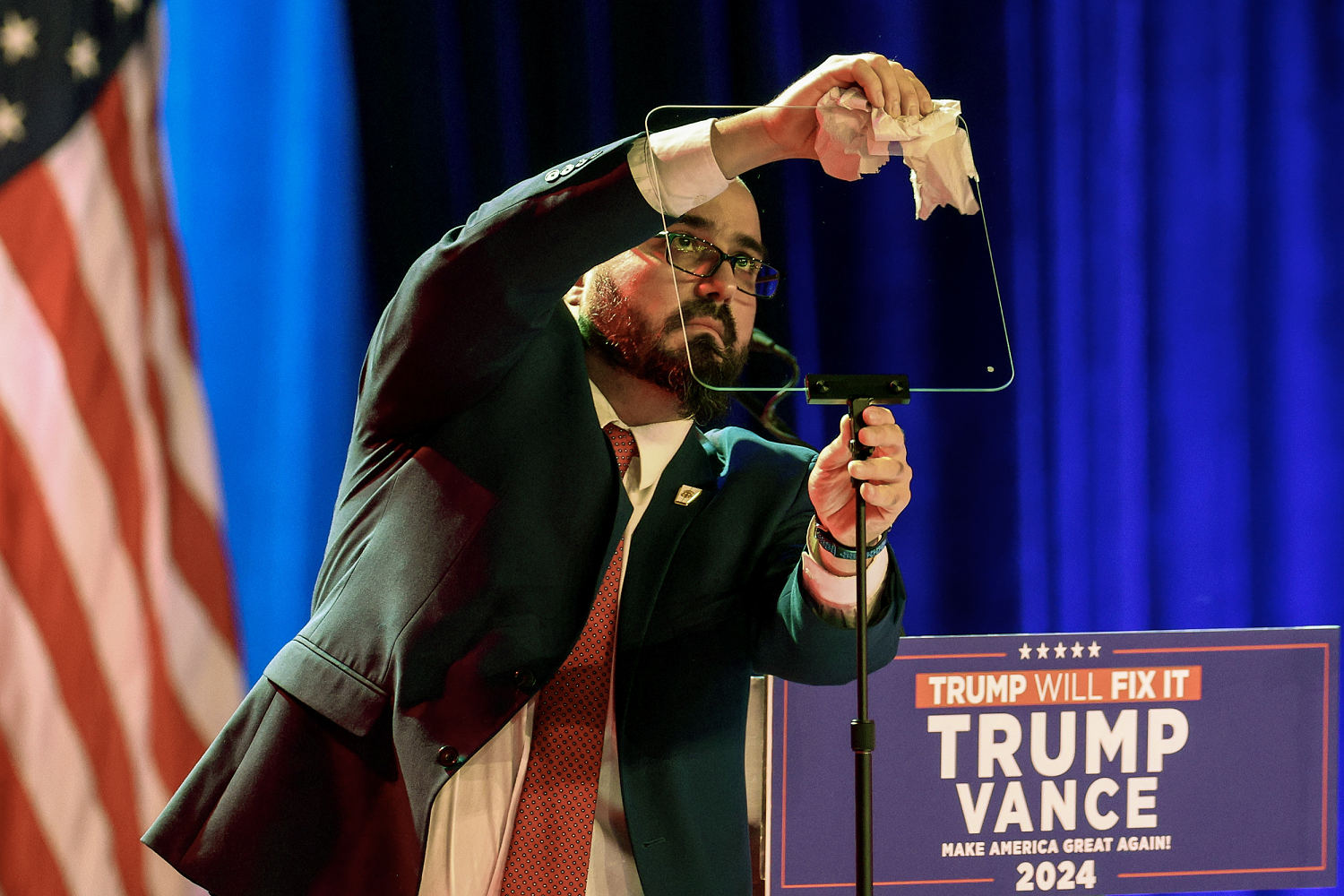
Most people never think about the person behind the glass. To the public, a speech just happens. A leader steps to a podium, looks out across a sea of cameras, and speaks with absolute conviction. But conviction is a manufactured art form. It requires timing. It requires a quiet hand turning the scroll wheel, matching the speaker's cadence syllable by syllable, ensuring that history never trips over an unexpected pause.
Then, there are moments when the operator looks at the speech not as a historical artifact, but as a wager.
Picture the room. The hum of cooling fans. The faint smell of stale coffee and printer paper. On the screen, a major address is being loaded. Numbers flash in the operator's mind. Not the rhetorical numbers—not the polling percentages or the budget deficits—but odds. Wagers. Financial stakes placed on the invisible architecture of political theater.
It sounds absurd. Almost cinematic. A minor bureaucrat risking everything on the roll of a digital dice, betting on the exact contours of an upcoming public address. Yet, life is rarely subtle when it collides with human impulse.
The penalty arrived not with a whisper, but with the heavy thud of accountability. A hundred and seventy-two thousand dollars.
Think about that figure. It is not just a fine. It is an astronomical monument to poor judgment. It represents a staggering miscalculation of risk, born from the strange isolation that happens when you spend your life hovering just behind the curtain of power. When you stand close enough to history to touch it, it is dangerously easy to forget that you are standing on very thin ice.
Let us be entirely clear about the mechanics of this breach. This is a hypothetical reconstruction based on the verified facts of the case, but consider how the mind of an insider drifts. (Note: The following scenario illustrates the psychological trap of insider proximity, not a verified minute-by-minute transcript). You sit in the room where decisions are finalized. You see the phrasing before the world hears it. You know the tone before the press corps reacts. To someone detached from the gravity of their position, it stops looking like public service and starts looking like an inside track.
That is the quiet rot of proximity.
Power has a strange gravity. It draws people in, makes them feel invincible, makes them believe that the rules governing ordinary citizens are merely guidelines for the uninitiated. The teleprompter operator—a technician whose entire job is to render themselves invisible, to be the silent vehicle of someone else's voice—suddenly tried to make themselves the star of their own private gamble.
They lost.
The federal penalties handed down in the wake of the incident laid bare a stark reality. Oversight does not sleep just because you are close to the center. Financial integrity units look at anomalies. They trace patterns. They find the invisible threads connecting a routine bureaucratic job to unauthorized financial speculation.
And suddenly, the scroll stops.
The screen goes blank.
What drives a person to risk a stable career, a front-row seat to history, and financial ruin for a gamble? Boredom? Greed? Or perhaps that intoxicating, dangerous delusion that because you hold the text, you somehow control the outcome?
We have all felt that small itch of temptation. The desire to shortcut the system, to use what we know to bypass what we earn. Most of us pull back. We remember the stakes. We look at the people depending on us, or we simply respect the line between participation and exploitation.
This operator stepped right over that line.
Now, the fine stands as a harsh reminder of what happens when the invisible hand of a technician reaches out to grab something it was never meant to touch. The text scrolls on, of course. New operators sit at the consoles. New speeches are loaded into the system. The machine does not care about the person who fell; it only demands that the words keep moving.
History rolls forward, one line of green text at a time, leaving behind only the echoing cost of a terrible bet.