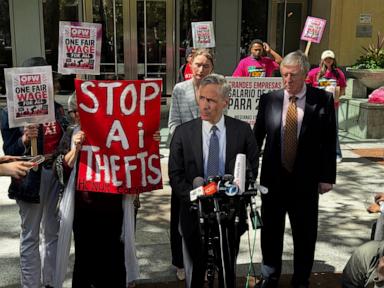
The unanimous dismissal of Elon Musk’s lawsuit against Sam Altman and OpenAI by an Oakland federal jury isolates a fundamental friction point in technology economics: the structural incompatibility between capital-intensive frontier artificial intelligence development and traditional non-profit governance. While public discourse frames the litigation as a personal philosophical feud, a rigorous corporate analysis reveals it as a battle over structural control, capital allocation velocity, and the institutional mechanisms required to fund Artificial General Intelligence (AGI).
The court’s decision to throw out the case based on the statute of limitations exposes the strategic miscalculations in Musk’s legal positioning, while simultaneously clearing the operational runway for OpenAI’s transition into a commercial entity valued at an estimated $852 billion, positioning it for a potential $1 trillion initial public offering (IPO).
The Structural Inflection Point: Capital Intensity vs. Non-Profit Governance
To evaluate the merits and the ultimate failure of Musk’s litigation, one must map the financial realities of frontier model training against the legal constraints of a 501(c)(3) public charity. The underlying friction that led to the 2019 creation of OpenAI’s capped-profit subsidiary—and the subsequent 2025 reorganization into OpenAI Group PBC—is driven by an exponential cost curve.
The cost function of developing state-of-the-art foundation models scales according to empirical laws where compute requirements grow multiplicatively with parameter size and dataset volume. A non-profit structure relying on philanthropic donations faces a hard capitalization ceiling.
Philanthropic capital operates at an order of magnitude insufficient for the procurement of specialized hardware infrastructure, such as tens of thousands of Nvidia discrete graphics processing units (GPUs), and the real estate and energy infrastructure required to operate hyper-scale data centers.
The Three Pillars of Capital Restructuring at OpenAI
The evolution of OpenAI's corporate architecture from a pure non-profit to a complex hybrid model can be broken down into three distinct structural phases:
- The 2015 Pure Non-Profit Foundation: Operating solely on initial seed commitments of approximately $1 billion (of which Musk contributed $38 million), designed to distribute open-source research without commercial incentives.
- The 2019 Capped-Profit Hybrid Engine: The introduction of OpenAI LP, a subsidiary allowing outside equity investors to earn a return capped at a specific multiple (e.g., 100x for early investors), with any excess value reverting to the non-profit board. This mechanism enabled the initial $1 billion cash and compute partnership with Microsoft.
- The 2025 Public Benefit Corporation (PBC) Realignment: The consolidation into OpenAI Group PBC, where the original non-profit retains a 26 percent equity stake and Microsoft holds a 27 percent stake. This structural optimization aligns the organization with standard Delaware corporate governance, mitigating fiduciary confusion while preserving a statutory mandate to consider public benefit alongside shareholder value.
Legal Mechanics and the Statute of Limitations Bottleneck
Musk's legal strategy failed not because the court rejected his core premise that OpenAI abandoned its founding mission, but because his legal team ran into a fatal procedural barrier: the statute of limitations. In federal and California state jurisprudence, claims involving fraud, breach of oral contract, or breach of charitable trust carry strict statutory look-back limitations, typically ranging from two to four years.
+-------------------------------------------------------------------------+
|                      CHRONOLOGY OF DISCOVERY                          |
+-------------------------------------------------------------------------+
|                                                                         |
|  2019: OpenAI creates capped-profit subsidiary OpenAI LP                |
|  ▲                                                                      |
|  └─ Start of Potential Constructive Notice Window                       |
|                                                                         |
|  2021 (August): Boundary of the 3-Year Statute of Limitations           |
|                                                                         |
|  2022: Microsoft multi-billion dollar investment talks emerge           |
|  ▲                                                                      |
|  └─ Musk claims actual discovery of "bait and switch"                  |
|                                                                         |
|  2024 (February): Musk files initial lawsuit                           |
|                                                                         |
|  2026 (May): Jury delivers unanimous verdict barred by statutory time   |
+-------------------------------------------------------------------------+
The advisory jury took less than two hours to determine that Musk possessed constructive notice of OpenAI’s structural pivot long before the critical August 2021 threshold. Evidence presented at trial demonstrated that Musk participated in internal discussions regarding a commercial transition as early as 2018, even suggesting at one point that the lab be folded into Tesla Inc. to leverage its revenue generation capabilities.
Musk’s argument focused on the doctrine of delayed discovery, asserting that Altman and OpenAI President Greg Brockman intentionally concealed the extent of their commercial ambitions until the scope of the Microsoft partnership became fully public in late 2022.
The defense successfully dismantled this thesis by demonstrating that the formation of the capped-profit entity in 2019 was a highly publicized corporate event. Consequently, the court ruled that an investor of Musk's sophistication should have reasonably identified any potential breach of trust or fraudulent inducement at the moment the corporate assets were transferred to the for-profit subsidiary.
The Geopolitical and Competitive Valuation Engine
The resolution of this litigation removes a systemic discount on OpenAI's implied valuation. Regulatory and legal uncertainty behaves as a drag on private equity pricing and complicates institutional capital calls. With the threat of an asset freeze, board restructuring, or a forced reversion to a pure non-profit status eliminated, OpenAI’s balance sheet can be evaluated purely on enterprise metrics:
- Valuation Disconnect: The gap between the $44 million total capital contributed by Musk and the current internal valuation of $852 billion demonstrates a massive accumulation of intellectual property value that occurred long after Musk’s capital contributions ceased.
- Asset Allocation Efficiency: Expert testimony during the trial by corporate finance practitioners indicated that the commercial spin-off generated synthetic value for the underlying non-profit foundation, with its residual 26 percent stake now valued on paper in the native range of $200 billion.
This economic reality directly refutes the claim of pure asset stripping. Instead, it highlights a corporate maneuvering tactic where a non-profit leverages a commercial vehicle to scale the value of its mission-critical research assets.
The competitive landscape further illuminates the strategic intent behind the litigation. Musk’s launch of xAI in 2023—a purely commercial venture structured as a for-profit enterprise—created an inherent conflict of interest in his positioning as an altruistic defender of non-profit research.
OpenAI’s legal team capitalized on this by framing the lawsuit as an anti-competitive intervention designed to disrupt a market rival’s capital acquisition timeline. By forcing OpenAI to litigate its corporate structure, xAI could theoretically compress the operational lead time OpenAI holds in multi-modal model development and enterprise API distribution.
Operational and Governance Risks of the Post-Verdict Era
Despite securing a clean legal victory, OpenAI faces residual structural vulnerabilities created by the transition to a market-driven corporate structure. The trial exposed significant internal governance friction, particularly surrounding the November 2023 board crisis where Altman was briefly terminated for a lack of candor.
Amicus briefs filed by former researchers during the pre-trial motions highlighted an ongoing cultural rift: the tension between safety-oriented alignment research and the commercial pressure to deploy iterations of generative software to satisfy top-line revenue requirements for institutional investors.
Furthermore, the transition to a Public Benefit Corporation does not fully insulate the entity from state regulatory oversight. The California Attorney General retains broad statutory authority to police modifications to charitable trusts.
While the state declined to join Musk’s private civil suit, the restructuring agreement that distributes equity among the OpenAI Foundation, Microsoft, and early institutional backers remains subject to regulatory review to ensure that the charitable assets originally allocated to the 501(c)(3) entity were not undervalued during the asset transfer.
Strategic Playbook for Market Integration
With the legal hurdle cleared, OpenAI's corporate strategy must pivot toward institutional stabilization and the execution of its liquidity event. The definitive roadmap for the entity involves three distinct maneuvers:
First, OpenAI must formalize its transition to a Delaware Public Benefit Corporation by completing the final asset-transfer audits. This architecture allows the firm to codify its commitment to developing safe AGI as a statutory public benefit, providing a legal shield against shareholder derivative suits that might otherwise demand the maximization of short-term quarterly profits at the expense of safety protocols.
Second, the company must execute a transparent equity distribution framework for its scientific staff. The trial revealed that top-tier machine learning talent demands predictable equity compensation structures that are incompatible with non-profit vehicles or opaque profit-sharing units. Transitioning to standard Restricted Stock Units (RSUs) backed by a liquid public market will stabilize retention metrics against aggressive poaching cycles from xAI, Google, and Meta.
Finally, OpenAI must structure its upcoming IPO prospectus around a dual-class share architecture. This governance mechanism, standard among founder-led technology firms, will consolidate super-voting control within the public benefit board or a ring-fenced governance committee. This design ensures that even as tens of billions of dollars in public market capital enter the capitalization table, the core decisions regarding the definition, achievement, and safety verification of AGI remain insulated from speculative market forces. Musk’s promised appeal to the US Court of Appeals for the Ninth Circuit will likely focus on narrow technical applications of tolling agreements, but from an operational and investment standpoint, the precedent is set: OpenAI has successfully decoupled its capitalization strategy from philanthropic constraints.