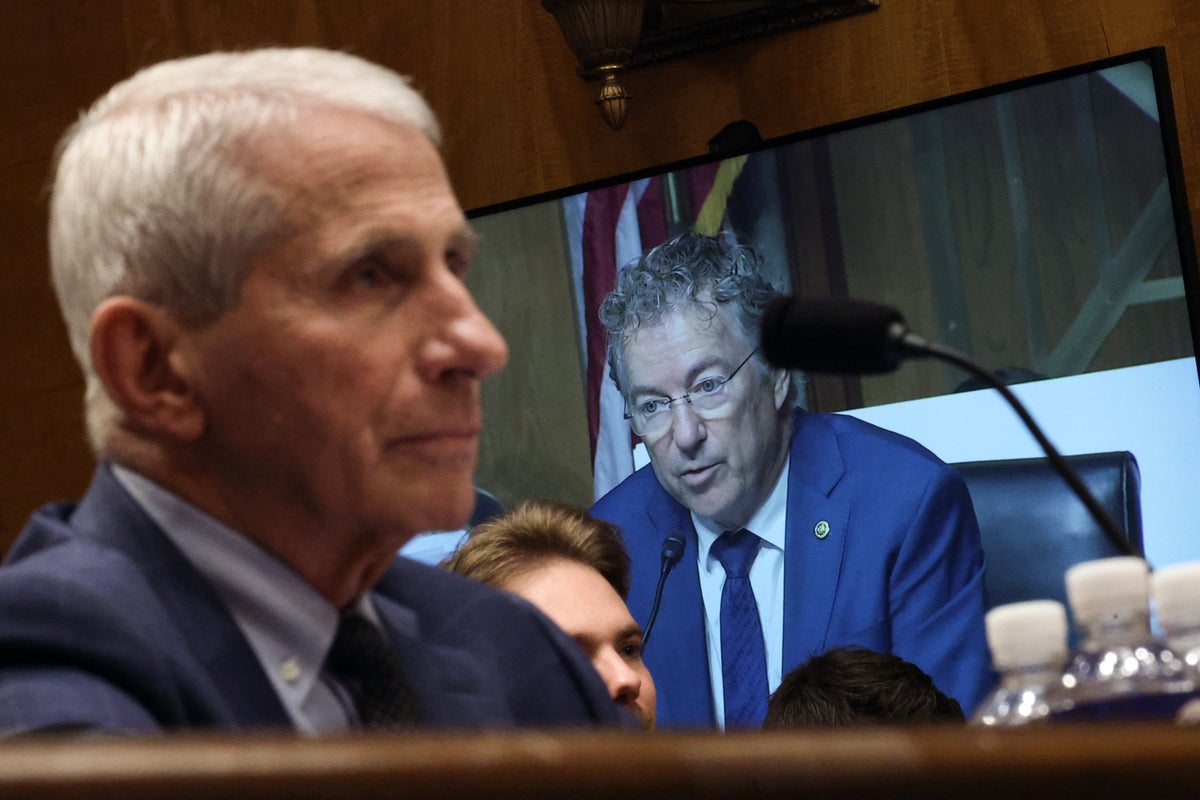
The constitutional friction between congressional oversight authority and individual self-incrimination protections manifests acutely when legislative committees issue subpoenas to executive branch figures. When former chief medical advisor Anthony Fauci invoked the Fifth Amendment more than one hundred times during a Senate Homeland Security and Governmental Affairs Committee hearing regarding pandemic origins and governance policies, the committee majority announced intentions to advance a contempt citation. This conflict exposes structural questions regarding the intersection of congressional subpoena enforcement, presidential pardons, and the constitutional threshold required to sustain a claim against self-incrimination.
Evaluating whether a legislative body can successfully penalize a witness for remaining silent requires breaking down the enforcement mechanisms available to Congress, the operational mechanics of the Fifth Amendment privilege, and the legal variables introduced by prior executive clemency.
The Tripartite Enforcement Architecture of Congressional Contempt
When a witness refuses to comply with a congressional subpoena or declines to answer questions during a hearing, the legislative branch must choose among three distinct enforcement vectors. Each vector engages a different branch of government, creating unique procedural constraints and failure points.
Inherent Contempt
The most direct mechanism relies on the internal police power of the legislative chamber itself. Under this doctrine, the Senate or the House of Representatives can direct its Sergeant-at-Arms to take a recalcitrant witness into custody, bring them before the bar of the chamber, and detain them either until compliance is secured or until the legislative session concludes.
- Operational reality: This power has remained dormant for nearly a century. Utilizing it against a prominent former federal official would trigger immediate petitions for writ of habeas corpus in federal courts, forcing the judicial branch to adjudicate the constitutional legitimacy of the detention.
Criminal Contempt
Under statutory provisions, a committee vote to approve a contempt citation is referred to the full chamber. If approved by a floor vote, the citation is transmitted to the United States Attorney for the District of Columbia, who is statutorily directed to present the matter to a grand jury for indictment.
- Operational reality: Prosecution depends entirely on the executive branch Department of Justice. If the executive branch concludes that the witness holds a valid legal defense or constitutional privilege, prosecutors may decline to bring charges, effectively neutralizing the congressional mandate.
Civil Contempt
Alternatively, Congress can authorize legal counsel to file a civil lawsuit in federal district court, seeking a declaratory judgment that the witness is legally required to answer. If the court issues an order compelling testimony and the witness continues to refuse, the judge can impose coercive sanctions, such as daily financial penalties.
- Operational reality: This path bypasses executive branch prosecutorial discretion initially, but it subjects the entire legislative inquiry to judicial review. Courts must determine whether the subpoenaed questions infringe upon protected constitutional rights.
The Constitutional Mechanics of the Fifth Amendment Privilege
The foundational constraint on all three enforcement mechanisms is the Fifth Amendment clause stating that no person shall be compelled in any criminal case to be a witness against themselves. Supreme Court precedent establishes that Congress's investigative power is strictly bounded by the Bill of Rights.
To sustain an invocation of the privilege before a committee, a witness does not need to prove guilt. The legal standard requires only a reasonable, objective fear that answering the specific question could provide a link in a chain of evidence usable in a future criminal prosecution, or lead to the discovery of such evidence.
When lawmakers pose queries regarding past official decision-making, historical policy execution, or newly disclosed personal records, the threshold for invoking the privilege is met if any potential criminal exposure exists under federal statutes. Legislative committees are legally bound to accept a valid invocation unless the privilege has been legally neutralized or waived.
The Presidential Pardon Variable
A central point of contention in recent high-profile legislative hearings involves the interaction between presidential pardons and the right to remain silent. Certain lawmakers argue that because a federal pardon eliminates the possibility of criminal prosecution for actions covered within its scope, the recipient no longer possesses a valid Fifth Amendment privilege regarding those events.
This argument rests on the premise that without criminal exposure, the fear of self-incrimination becomes legally nonexistent. However, this theory faces significant operational hurdles:
- Scope Limitations: A pardon only covers specific offenses committed within a defined temporal window. If legislative questions touch upon conduct outside that window, or involve separate statutory frameworks not explicitly covered by the executive order, the risk of prosecution persists, preserving the privilege.
- Judicial Testing: The precise boundary where a broad executive pardon extinguishes testimonial privilege remains an unsettled question that federal courts would ultimately have to resolve. Until a court issues a binding declaratory judgment narrowing the scope of the privilege, a witness retaining counsel faces a rational legal basis to maintain silence.
Legislative Remedies and Strategic Outcomes
For a committee determined to extract testimony despite a persistent invocation of the privilege, standard contempt citations carry a high probability of judicial dismissal if the courts find the invocation valid.
The sole statutory mechanism capable of piercing a valid Fifth Amendment assertion is the formal granting of use immunity under federal statute. By statutory design, Congress can compel testimony by offering immunity that prevents the use of the witness's statements or any derivative evidence in subsequent criminal prosecutions.
However, issuing immunity requires concurrence or coordination with executive branch prosecution priorities, transforming what appears to be a purely internal legislative dispute into an inter-branch negotiation. Absent an immunity statute or a definitive judicial ruling invalidating the protective scope of a prior pardon, pursuing contempt against a witness who invokes constitutional safeguards functions primarily as a political signaling mechanism rather than a viable enforcement tool.
Watch the legal analysis on the Fifth Amendment dispute
This video provides an expert breakdown of the legal mechanics governing executive branch testimony, official record handling, and the boundaries of congressional oversight.