The stadium lights eventually go dark. It is an immutable law of mega-gala sports. The cheering crowds packing up their flags, the sudden silence of a stadium that cost hundreds of millions of dollars to build, the wind sweeping trash across empty plazas—this is the ghost that haunts every modern Olympic host city.
Walk through parts of Athens or Rio de Janeiro today, and you will see it. Weeds push through cracks in Olympic-sized swimming pools. Rust eats away at the skeletons of abandoned white-elephant arenas. For decades, the global sporting circus has operated on a logic of hyper-acceleration: build massive, build fast, and figure out the aftermath later. In related developments, we also covered: Why the WNBA Under-the-Radar Roster Rules Are Creating a Hidden Transfer Market.
But in the Scalo di Porta Romana district of Milan, a former industrial railway yard is currently executing a different kind of math.
As the world tunes in for the closing chapters of the 2026 Milano-Cortina Winter Games, the real race in Milan is not for gold. It is a race against obsolescence. The city is attempting a feat of urban sleight of hand: constructing an Olympic Village designed from its very first blueprint to be temporary in purpose, but permanent in human utility. Yahoo Sports has analyzed this fascinating topic in extensive detail.
When the athletes pack their bags, a new community of 1,700 students will inherit the keys. To understand why this matters, you have to look past the glitz of the medals and look into the claustrophobic reality of modern student life in Europe's fashion capital.
The Crushing Weight of Four Walls
Consider a hypothetical student named Sofia. She is twenty-one, moving from a small town in Puglia to study architecture at the Politecnico di Milano. She represents thousands of young minds arriving in northern Italy every September.
Sofia’s biggest hurdle is not the rigorous curriculum. It is the rent.
Milan has become terrifyingly expensive. Over the last decade, private student housing has transformed into a speculative gold mine, leaving public options scarce. A single room in a shared apartment can easily swallow 700 to 800 Euros a month, often requiring students to live hours away from campus or stack themselves into cramped, poorly insulated flats. Last year, the desperation became visible. Students across Italy pitched tents outside university campuses in a quiet, furious protest against a housing market that was effectively priced to lock them out of their own futures.
This is the invisible crisis grinding beneath the postcard-perfect facade of Milan's Duomo and Galleria. Universities attract the brightest talent, but the city itself acts as a filter, favoring those with family wealth and punishing those without.
The Olympic Village at Porta Romana is being built right into this fracture line.
The Blueprint of the Rebound
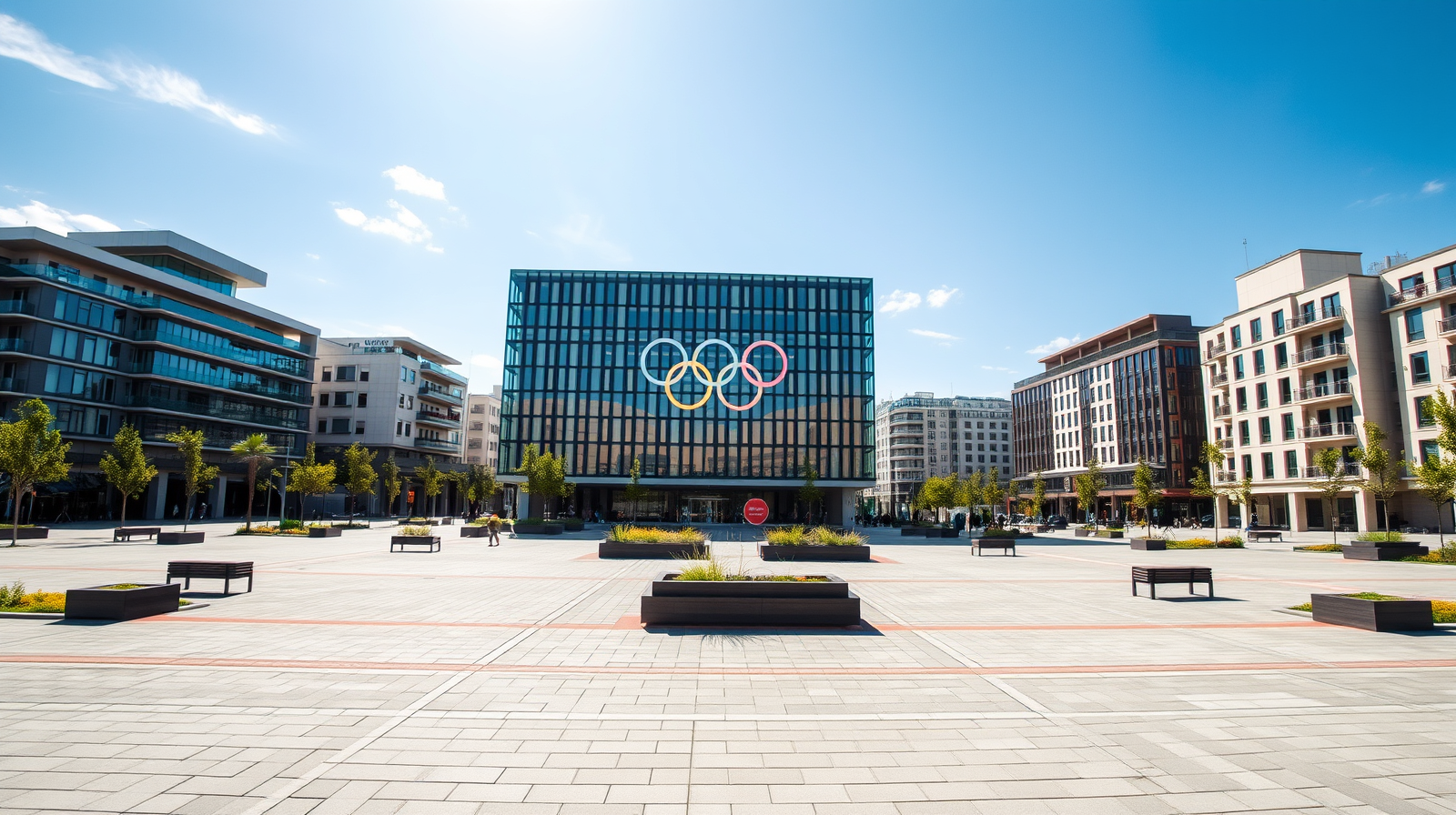
The physical structures occupying the 20-hectare site look like luxury urban design. They feature crisp geometric lines, timber-clad facades, and sprawling green commons. During the winter games, these buildings will house roughly 1,400 athletes, coaches, and officials from across the globe. They will eat in a massive communal dining hall, sleep in minimalist rooms, and walk paths designed for peak athletic efficiency.
But look closer at the architecture, and you realize the entire complex is a shapeshifter.
The walls inside the athlete apartments are dry-walled partitions, deliberately mapped out to be easily dismantled. Within months of the Olympic closing ceremony, teams will tear down these temporary structures to reconfigure the interior layout. Double bedrooms will transform into single student rooms or shared study pods. The athlete medical center will become a public health clinic. The sprawling Olympic dining hall will fragment into affordable student cafeterias, co-working spaces, and neighborhood shops.
Financially, this is not a charity project; it is a massive public-private partnership. Developed by COIMA SGR alongside Covivio and Prada Holding, the project forms part of a larger urban regeneration effort. The logic is simple: use the hard deadline and the immense global funding of the Olympics to fast-track infrastructure that a city would normally take twenty years to approve and fund.
The sustainability metrics are staggering, yet they miss the human point if viewed only as numbers. The buildings are designed to meet LEED Gold standards, utilizing solar panels, rainwater harvesting, and low-carbon construction materials. It is a fossil-fuel-free district. But the true sustainability here is social.
Transforming Scars into Neighborhoods
For generations, the rail yards of Scalo di Porta Romana were a scar on the face of Milan. They formed a vast, industrial barrier that sliced the southern part of the city away from the historic center. If you lived on the wrong side of the tracks, you were disconnected.
The Olympic project is tearing down that barrier. By turning the rail yard into a green corridor, the city is knitting itself back together. The village is surrounded by a park that acts as a natural sponge for heavy rains while providing a massive public space for a neighborhood starved of greenery.
When we think of Olympic legacies, we usually think of statues or massive stadiums named after corporate sponsors. We rarely think of a laundry room, a community kitchen, or a cheap grocery store. Yet, those are the exact elements being woven into the Porta Romana complex. The ground floors of the buildings will open directly to the public, integrating the student population into the existing fabric of the local neighborhood. It prevents the creation of a "student ghetto" or an isolated campus bubble.
It is an experiment in a concept urban planners call the 15-minute city—the idea that everything a human being needs to survive and thrive should be accessible within a short walk or bike ride from their front door.
The Risk of the Promised Tomorrow
Is it a perfect plan? Nothing in urban development ever is. Skeptics rightly point out that 1,700 beds, while significant, represents a drop in the bucket for a city with a student population hovering around 200,000. There are justified fears that the surrounding area will undergo a wave of hyper-gentrification, driving up prices for long-term residents who have called Porta Romana home for decades.
Trust is a fragile commodity in modern cities. We have been promised green utopias before, only to watch them turn into elite enclaves for the ultra-wealthy. The success of this village will not be measured by how smoothly the athletes move through it during their brief stay. It will be judged by the rent receipts issued to working-class students three years from now.
It requires a deliberate, unyielding political will to ensure that "affordable housing" remains truly affordable, and does not quietly morph into a marketing tagline for luxury real estate.
The Real Victory Lap
Imagine Sofia arriving at Porta Romana a year after the games have ended.
The Olympic rings have been taken down, replaced by the logos of local bakeries and bike repair shops. She walks through a courtyard where a gold medalist once stood, but she isn't thinking about sports. She is carrying a box of textbooks up to a room that faces a community garden. She has a quiet space to study, a metro station down the street, and a rent payment that does not force her to choose between buying groceries or buying software for her classes.
That is the hidden stakes of the Milan experiment.
The real value of the 2026 Winter Games will not be found in the record books or the television ratings. It will be found in the quiet, mundane moments of ordinary life that happen after the cameras leave. It will be found in the sound of coffee brewing in a communal kitchen, the murmur of students arguing over a design project late at night, and the sight of a once-abandoned railway yard alive with the messy, hopeful energy of a generation trying to build a future.
The circus will leave town. The tents will fold. But for the first time in a long time, the foundation left behind might actually hold up the people who need it most.