The geopolitical panic over Antarctica is warming up faster than the continent’s ice sheets. When a Japanese lawmaker recently raised the alarm that Beijing is eyeing the southern continent as a "treasure trove" of untapped mineral wealth, the standard diplomatic response was swift. Beijing dismissed it. Western think tanks labeled it alarmist. Experts pointed out that the Antarctic Treaty explicitly bans commercial mining.
But looking at Antarctica through the lens of a simple resource grab misses the actual chess game on the ice. China is not planning to send mining fleets to the South Pole tomorrow. Instead, Beijing is executing a long-term strategy centered on dual-use technology, satellite infrastructure, and scientific presence that positions it to control the continent's future without ever breaking the mining ban. The real battle is not for oil or gold. It is for data, surveillance, and global positioning supremacy. You might also find this similar coverage insightful: The Friction in the Gulf and the Illusion of the Sixty Day Truce.
The Flawed Fixation on Frozen Wealth
For decades, the narrative surrounding Antarctic geopolitics has been stuck in the 1980s. Critics frequently point to the Protocol on Environmental Protection to the Antarctic Treaty, often called the Madrid Protocol. This agreement bans all activities relating to mineral resources except for scientific research.
Because the protocol comes up for a potential review in 2048, alarmists argue that nations are positioning themselves to carve up the continent the moment the clock strikes midnight. This view is naive. As discussed in latest coverage by The Guardian, the effects are notable.
Extracting oil, gas, or minerals from beneath miles of shifting ice in the most hostile climate on Earth is a financial nightmare. With current technology, it makes zero economic sense. Beijing knows this.
Focusing strictly on resource extraction creates a dangerous blind spot. By treating Antarctica as a hypothetical future mine, Western analysts overlook how the continent is being utilized right now.
The Dual Use Dilemma at the Bottom of the World
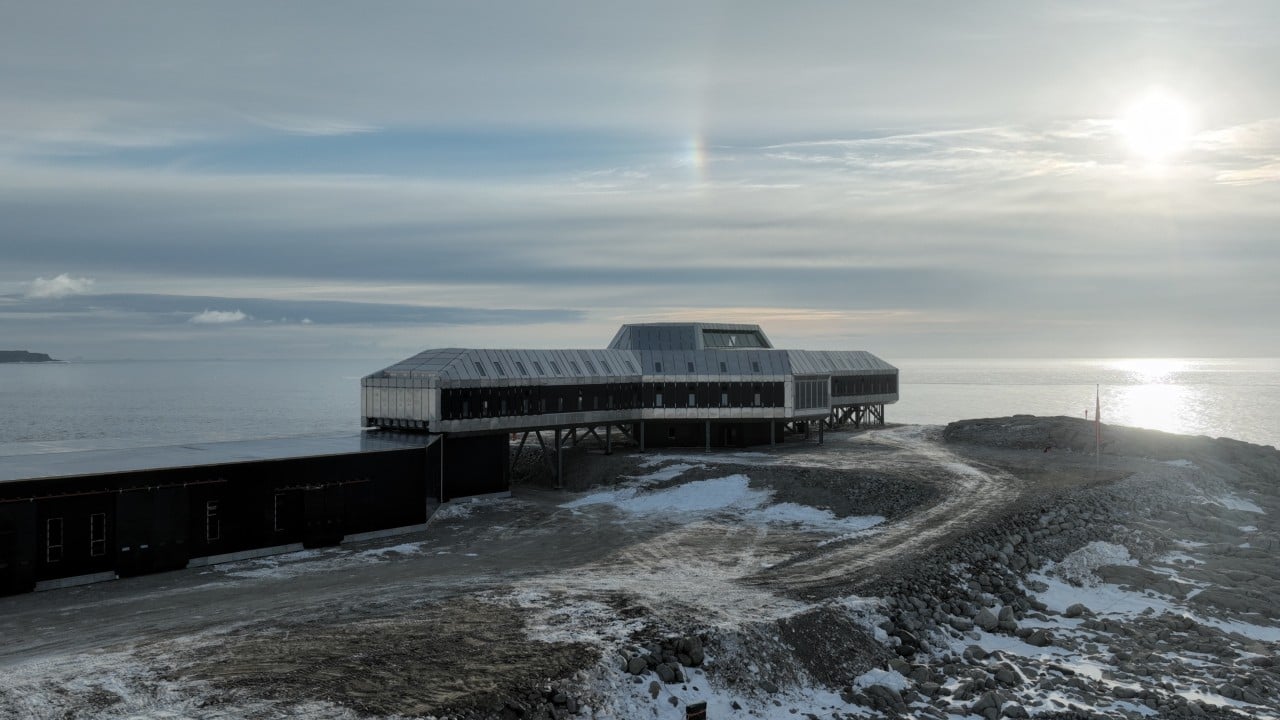
To understand the real strategy, look at the infrastructure being built. China’s fifth research station, Qinling, located on Inexpressible Island in the Ross Sea, opened recently to significant scrutiny.
On paper, Qinling is a hub for studying oceanography, meteorology, and marine ecology. In reality, its geographic location provides a pristine vantage point for tracking satellites and intercepting signals.
Ground stations in the polar regions are vital for satellite operations. Because the Earth tapers at the poles, a single ground station in Antarctica can connect with low-Earth orbit satellites on almost every single rotation. This is vastly more efficient than stations located near the equator.
- Satellite Tracking: Polar stations allow for continuous telemetry, tracking, and commanding of spacecraft.
- Data Downlinks: Massive amounts of observational data can be beamed down to Earth in real time.
- Interception Risks: The same antennas that track weather satellites can monitor military communications or telemetry from Western rocket launches.
The Australian Strategic Policy Institute has repeatedly warned that the capabilities built into these stations are inherently dual-use. An antenna that tracks a civilian weather satellite can just as easily track a military reconnaissance satellite. It can also enhance the accuracy of China's BeiDou satellite navigation system, the direct competitor to the American GPS.
The BeiDou Factor and Military Precision
Precision guided munitions require precise satellite data. To achieve global accuracy, a satellite navigation system needs ground-based monitoring stations scattered across the globe, including the polar extremes.
China has systematically integrated BeiDou tracking infrastructure into its Antarctic footprint, notably at Great Wall Station and Kunlun Station. By collecting atmospheric data and orbital corrections from the bottom of the world, Beijing improves the targeting capabilities of its missile systems globally.
This is completely legal under the current treaty framework. The Antarctic Treaty permits military personnel to be used for scientific research or for any other peaceful purposes. This loophole is large enough to sail an aircraft carrier through. If a military scientist is tracking ice movements using a satellite system that also guides a hypersonic missile, who is to stop them? The line between pure science and military intelligence has completely dissolved.
The Failure of the Inspection Regime
The Antarctic Treaty System relies on a gentleman’s agreement of mutual inspections to ensure compliance with its demilitarization clauses. Any nation can inspect another nation's station at any time.
In practice, this system is failing.
Inspections are incredibly expensive, requiring specialized vessels, aircraft, and personnel. Most nations lack the logistical capability to conduct them regularly. When inspections do happen, they are rarely unannounced. The harsh weather conditions mean that visiting teams must coordinate their arrivals days or weeks in advance for safety reasons.
This gives any station commander ample time to lock doors, cover sensitive equipment, or pause non-civilian operations. An inspection team cannot simply demand access to a classified computer server or an encrypted data stream. They see the physical infrastructure, the living quarters, and the penguins. They do not see the code or the data routing.
Cracking the Southern Ocean Fishery
While mineral extraction remains a distant prospect, another resource is actively being harvested: krill. These tiny shrimp-like crustaceans are the foundation of the Antarctic food web, and they are also a multi-billion dollar commodity used for aquaculture feed and omega-3 dietary supplements.
Global Krill Catch Allocation (Approximate)
--------------------------------------------
[|||||||||||||||||||||                    ] Aquaculture & Animal Feed (55%)
[|||||||||||||||                          ] Nutraceuticals / Krill Oil (35%)
[||||                                     ] Other / Experimental (10%)
China has aggressively expanded its domestic krill fishing fleet, deploying massive, high-tech trawlers capable of processing krill directly on board. By dominating the Commission for the Conservation of Antarctic Marine Living Resources, Beijing has consistently blocked efforts by Western nations to establish new Marine Protected Areas in the Southern Ocean.
By preventing the creation of these sanctuaries, China secures its access to the world's last great untapped protein reserve. This is resource security happening in broad daylight, fully compliant with international law, and completely separate from the mining ban.
The Strategy of Scientific Assertiveness
Western nations, particularly the United States, have allowed their Antarctic infrastructure to decay. The US McMurdo Station has faced years of funding battles, logistical delays, and aging facilities.
Meanwhile, Beijing has treated Antarctica as a tier-one strategic priority. This is not about a sudden, violent takeover. It is a strategy of scientific assertiveness. By out-building, out-funding, and out-manning every other nation on the ice, China ensures that when future decisions about the continent are made, its voice will be the loudest.
If a treaty framework is negotiated or modified in the coming decades, influence will be weighed by the footprint a nation has on the ground. The country with the most stations, the best logistics, and the most advanced tracking infrastructure will dictate the terms of the continent.
The West remains distracted by ghosts of mining rigs and oil derricks that will likely never be built. The real expansion is digital, orbital, and ecological. It is occurring quietly, under the guise of scientific cooperation, while the world looks the other way.