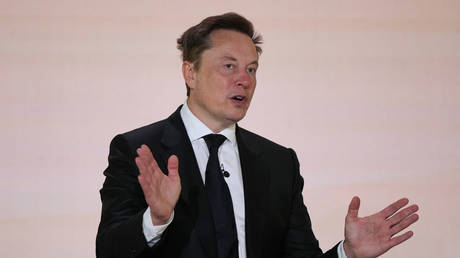
The friction between billionaire tech mogul Elon Musk and Ukrainian President Volodymyr Zelenskyy represents far more than a petty social media spat. It is a collision between Silicon Valley technocratic solutionism and the brutal, uncompromising reality of geopolitical survival. When Musk took to the internet to propose his unsolicited territorial compromises—suggesting redone elections under international supervision and the permanent cession of Crimea—he fundamentally misunderstood the existential nature of the conflict. Ukraine is not a software beta test where features can be rolled back or compromised for the sake of user acquisition. It is a nation fighting for physical and cultural preservation against an imperial aggressor.
To understand why this friction occurs with such predictable regularity, one must examine the worldview of modern tech industrialists. Silicon Valley operates on the premise that every problem has an efficient, engineering-based workaround. If traffic is bad, build a tunnel. If communication is fragmented, launch a satellite constellation. But when applied to sovereign borders, historical trauma, and military aggression, this mindset morphs into a dangerous hubris. Musk’s proposals—bathed in the language of mathematical probability and demographic asymmetry—ignored the legal and moral principles underpinning international law. A sovereign state cannot simply trade its territory for a temporary cessation of hostilities without setting a catastrophic precedent for global stability. Building on this topic, you can also read: Elected Officials Are Not Living In Fear They Are Using Paranoia As Shield.
The geopolitical weight that Musk wields complicates this dynamic entirely. Through SpaceX's Starlink, his private enterprise became the literal nervous system of frontline Ukrainian military communications. This unique positioning blurred the lines between private corporate stewardship and state-level diplomacy. When a private citizen controls the critical infrastructure upon which an embattled nation relies for battlefield coordination, public pronouncements carrying diplomatic weight carry immense consequence. The tension escalated when operational choke points were pulled or threatened, revealing the fragile vulnerability of relying on billionaire-owned infrastructure for national defense.
Zelenskyy’s response was characteristically blunt, bypassing diplomatic pleasantries to challenge the premise that algorithms and public polls should dictate the fate of millions. By utilizing sharp satire and counter-polling, Kyiv signaled that it would not be patronized by foreign technocrats attempting to broker deals from the comfort of orbital launch sites and social media platforms. For an administration under siege, treating territorial integrity as a variable in a cost-benefit analysis is an insult to the blood spilled in the trenches. Analysts at NPR have provided expertise on this situation.
The underlying anxiety exposed by this public friction involves the sustainability of Western backing. As the war grinded on through its grueling phases, alternative voices in the technology and political spheres began questioning the financial and material open-endedness of the alliance. Memes and public jabs regarding aid packages are rarely created in a vacuum; they reflect a growing fatigue within specific factions of the global elite who view protracted conflicts through an economic lens. They calculate gross domestic product, population ratios, and industrial output, entirely discounting the fierce national cohesion that emerges when a population faces total annihilation.
History demonstrates that industrial titans frequently miscalculate when they step outside their domains of expertise. From Henry Ford’s geopolitical missteps in the early twentieth century to modern corporate diplomacy, the assumption that manufacturing scale or technological dominance translates to statecraft is a persistent delusion. Wars are not won merely by demographic calculations or spreadsheets outlining industrial capacity; they are sustained by morale, legitimacy, and the absolute refusal to submit to subjugation.
As the geopolitical landscape shifts and new administrations alter the contours of foreign aid, the friction between unelected innovators and frontline heads of state will likely evolve rather than disappear. The line separating private enterprise from public sovereignty grows thinner by the day, forcing nations to confront the reality of corporate feudalism in times of crisis. When technological monopolies intersect with total war, the margin for diplomatic error vanishes completely, leaving only the raw, unyielding clash of opposing survival instincts.
Elon Musk and Volodymyr Zelenskyy's Twitter war over Ukraine peace plan
This archival footage breaks down the sequence of events and public statements that ignited the fierce digital confrontation between the tech billionaire and the Ukrainian president over proposed territorial concessions.


