Cold.
Not the brisk, invigorating chill of a weekend getaway in the Swiss Alps, where rich tourists sip mulled wine beside roaring fires, but the biting, metallic frost of a heavily guarded mountain resort in northern North Korea where every breath turns to white smoke and every camera lens is calibrated by the state.
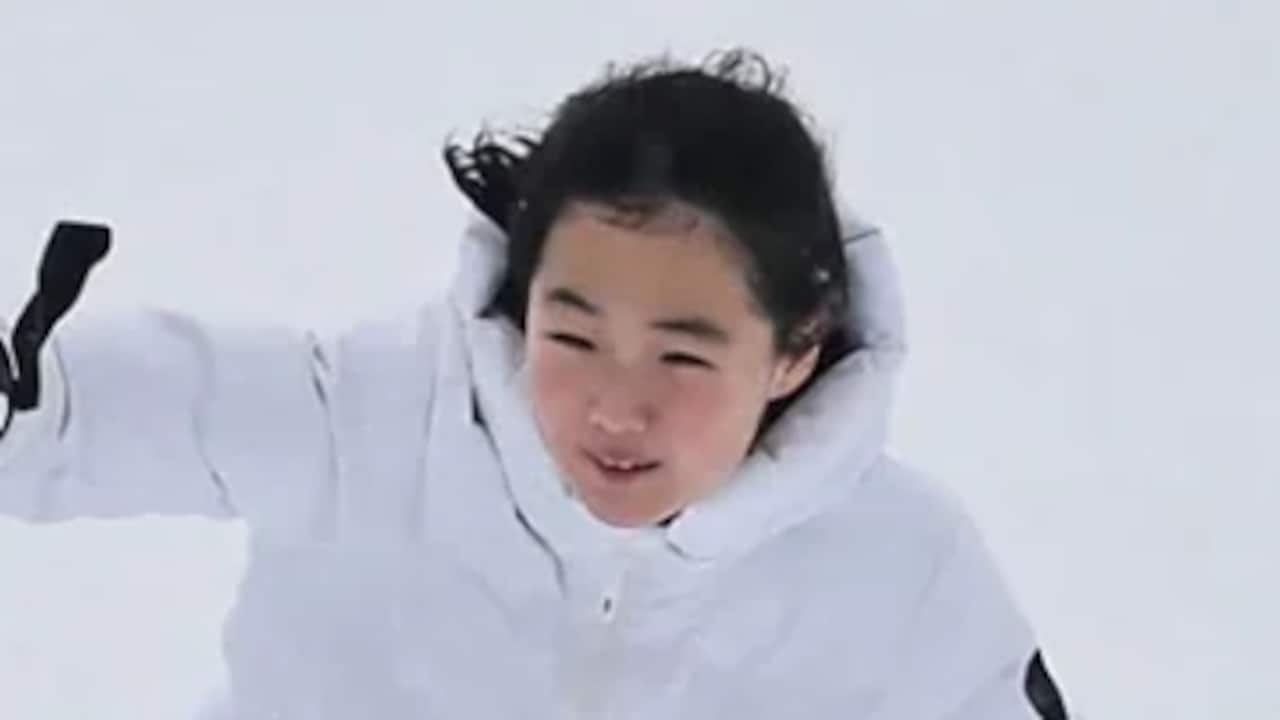
Imagine, for a moment, a hypothetical intelligence analyst sitting in a windowless room in Langley or Seoul at three in the morning. Fluorescent lights hum overhead. Empty coffee cups crowd a desk strewn with satellite imagery and decrypted cables. On the main monitor, a high-resolution photograph flickers to life, released by the Korean Central News Agency just minutes earlier. There is no missile on a launchpad in this frame. No subterranean enrichment facility. No artillery drill along the 38th Parallel. Instead, there is a man in a heavy dark coat, a thin cylinder of burning tobacco pinched between his fingers, squinting through a haze of blue-gray smoke. Nearby, carving down a manicured slope of artificial snow, is his preteen daughter, Kim Ju Ae, bundled in winter gear, her face turned toward the camera.
To the casual reader scrolling past a morning headline, this looks like bizarre trivia—a dictator taking a snow day while rumors swirl about another high-stakes summit with Donald Trump.
Look closer.
In the architecture of authoritarian survival, nothing is accidental, nothing is casual, and a cigarette is never just a cigarette. When Kim Jong Un lights up at a ski resort while his daughter glides down the mountain beside him, the regime is broadcasting a calculated psychological message directly to Washington, Seoul, and its own hungry population. It is a masterclass in visual propaganda disguised as a family vacation, timed precisely to the moment when the global diplomatic chessboard is tilting back toward negotiation.
The Choreography of the Casual
To understand why a dictator smoking on a ski slope matters to the fate of nuclear disarmament, you have to strip away the Western habit of reading photographs literally. When we see a politician at a ballgame or a family dinner, we assume we are witnessing a human moment—a brief shedding of the armor of office. In Pyongyang, the armor is never shed; it is merely painted to look like a winter parka.
Every frame released by state media undergoes a vetting process so ruthless it resembles theatrical production more than journalism. Lighting, posture, background figures, and props are scrutinized by propaganda officials whose careers—and lives—depend on projecting absolute authority. So when the state chooses to show Kim Jong Un exhaling cigarette smoke at the Masikryong Ski Resort—or a similar alpine facility built to showcase North Korean self-reliance—while Trump signals an openness to renewing their personal diplomacy, the image serves a dual purpose.
First, it projects supreme unconcern.
Think of the poker player who leans back in his chair, takes a slow drag on a cigar, and blows smoke toward the ceiling just as the stakes hit seven figures. He is telling the table that the pot means nothing to him, that he holds the cards, and that he can walk away at any second without breaking a sweat. By appearing relaxed, indulgent, and utterly unhurried on the eve of potential talks with Trump, Kim is signaling to the White House that North Korea is not negotiating from a position of desperation. Sanctions have not broken him. Isolation has not cornered him. He has time to smoke, time to watch his child ski, and zero urgency to trade away his nuclear arsenal for sanctions relief.
Second, the cigarette itself carries a specific historical resonance inside North Korea. Kim Il Sung, the nation’s founder and Kim Jong Un’s grandfather, was a notorious chain-smoker whose public persona blended patriarchal warmth with rugged decisiveness. By mimicking his grandfather’s posture, cadence, and nicotine habit, the third-generation ruler reinforces his dynastic legitimacy. He is not merely a modern head of state; he is the living continuation of the Mount Paektu bloodline, untouchable and eternal.
The Daughter on the Mountain
Then there is the girl on the skis.
For years, intelligence agencies knew almost nothing about Kim Jong Un’s children. Rumors circulated—whispers from former basketball star Dennis Rodman, fragments of defector testimony, speculative timelines cobbled together from absences in state media coverage. Then, in November 2022, Kim walked hand-in-hand with Kim Ju Ae in front of a Hwasong-17 intercontinental ballistic missile, and the curtain was pulled back forever.
Since that debut, her appearances have followed a deliberate, escalating trajectory. She has stood beside him at military parades, inspected naval destroyers, attended banquets with top generals, and now, glided down snow-covered slopes in front of state photographers.
Why put a child on skis when the world is watching for signs of a Trump-Kim reunion?
Consider the metaphor of the ski slope itself. Skiing is not a survival skill in a country where millions still struggle with chronic food insecurity and unreliable electricity. It is an aspirational luxury, a symbol of modernity, leisure, and technical mastery over nature. By placing Ju Ae on skis, the regime is constructing a visual promise for its citizens and a warning for its adversaries. To the domestic audience, the message is clear: This is the future we are building—a prosperous, joyful homeland where our children can play in the snow because our nuclear shield keeps the wolves at the door.
To Donald Trump and his advisors, the subtext is far sharper.
When Trump first met Kim in Singapore in 2018, and again in Hanoi in 2019, the American pitch relied heavily on the allure of economic transformation. Trump famously showed Kim a Hollywood-style trailer depicting bright beaches, high-speed trains, and gleaming resorts—a vision of what North Korea could become if it gave up its bombs. That pitch failed in Hanoi because Kim refused to surrender his nuclear core for the promise of real estate development.
Seven years later, bringing Ju Ae onto the stage—whether at a missile silo or a ski lodge—changes the temporal math of any negotiation. A man who brings his presumed heir to state events is not thinking in four-year presidential election cycles. He is thinking in decades. He is telling Washington that the Kim dynasty is preparing its fourth generation of leadership, and that the nuclear weapons built under the third generation are the inheritance meant to guarantee her survival. You do not casually barter away your daughter’s life insurance policy for a temporary lifting of trade restrictions.
The Ghost of Hanoi
I remember watching the live feeds out of Hanoi in February 2019, waiting for a signing ceremony that never happened. For forty-eight hours, the diplomatic press corps had convinced itself that a historic breakthrough was minutes away. Banquet tables were set. Pens were laid out. Security details swept the hallways of the Metropole Hotel. Then, abruptly, the motorcades rolled out early, the lunch was canceled, and both leaders flew home empty-handed.
The collapse of Hanoi left a scar on both sides, though each interpreted the wound differently.
In Washington, the prevailing consensus was that Kim had overplayed his hand, demanding the lifting of nearly all major sanctions in exchange for dismantling only the aging Yongbyon nuclear complex while keeping secret enrichment sites intact. In Pyongyang, the lesson was even starker: trust no American promise, never appear eager, and never walk into a room without overwhelming leverage.
Since that day in Vietnam, the world has shifted beneath their feet. North Korea has tested dozens of ballistic missiles, refined solid-fuel rockets that can be launched with almost no warning, and forged a deep military alliance with Vladimir Putin’s Russia, trading artillery shells and troops for fuel, food, and advanced space and missile technology. The isolated, cash-strapped regime that sat across from Trump in 2019 has evolved into a bolder, better-supplied nuclear state with a powerful patron in Moscow.
That shift explains the effortless arrogance captured in those winter photographs.
When you have Russian oil flowing across your border and a growing stockpile of warheads tucked beneath granite mountains, you do not need to look anxious ahead of a potential summit. You can afford to linger by the lodge, take a drag on a cigarette, and watch your daughter carve clean arcs through fresh powder.
What the Cameras Hide
Yet there is a profound vulnerability hidden inside this display of strength, and any honest observer has to wrestle with the tension between what Pyongyang projects and what it actually endures.
Authoritarian theater is expensive, both financially and psychologically. Every luxury ski resort maintained for the elite stands in silent contrast to the rural provinces where market traders scrape by on corn and cabbage, and where harsh winters mean burned firewood rather than heated ski lifts. The regime’s obsession with staging scenes of leisure and dynastic continuity reveals an underlying anxiety: the perpetual fear that without constant, overwhelming displays of confidence, the illusion of invincibility might crack.
Even the cigarette carries an unspoken contradiction. Kim Jong Un’s health has long been a subject of intense scrutiny by South Korean and American intelligence. A heavy smoker with a family history of cardiovascular disease, his physical stamina is one of the single greatest variables in Northeast Asian security. Every puff he takes on camera is simultaneously a gesture of relaxed command and a quiet reminder of his own mortality—which, in turn, circles back to why his young daughter is suddenly everywhere at once. If the crown is fragile, the succession must be made visible early.
And what of the diplomacy itself? We have to admit a humbling truth: predicting the outcome of a personal encounter between Donald Trump and Kim Jong Un is notoriously treacherous. Conventional diplomatic theory breaks down when two leaders who prize instinct, spectacle, and personal chemistry over briefing books decide to sit across from one another.
Trump views foreign policy through the lens of personal deal-making, convinced that his direct rapport with strongmen can unlock doors that decades of bureaucratic statecraft could not budge. Kim, despite his ruthless internal purges and nuclear brinkmanship, demonstrated during their first round of talks that he understands Trump’s appetite for grand theater. The famous "love letters" exchanged between the two leaders were not mere flattery; they were a deliberate effort by Pyongyang to bypass the skeptical advisors in the Pentagon and State Department and speak directly to the man at the top.
The Anatomy of a Signal
So when the headlines note that Kim smokes while his daughter skis ahead of a possible meeting with Trump, we are witnessing the opening gambit of a high-wire negotiation conducted entirely through images.
Think of how diplomatic signaling works in the absence of formal embassies. Because Washington and Pyongyang have no official diplomatic relations, every public gesture becomes a dispatch:
- The Setting: A domestic winter resort signals self-sufficiency and internal stability, countering Western narratives of an economy on the brink of collapse.
- The Posture: Smoking casually in the cold communicates patience, defiance of Western health and diplomatic norms, and an absence of urgency.
- The Companion: Including Kim Ju Ae anchors the regime’s timeline in the next generation, signaling that North Korea’s nuclear status is permanent rather than negotiable.
It is an intuitive language, once you learn how to read the grammar. Just as a seasoned sailor watches the color of the horizon and the shift in wind direction long before the storm hits, intelligence analysts watch the props in a dictator’s hand and the people standing three paces behind him.
If a meeting between Trump and Kim does materialize in the coming months, the terms of engagement will look radically different from Singapore or Hanoi. Kim will not arrive seeking validation on the world stage; he already won that in 2018. He will not arrive begging for sanctions relief; his trade with Russia and China has blunted the sharpest edges of Western economic pressure. If he steps onto a red carpet to shake Trump’s hand again, he will come seeking something far more consequential: tacit recognition of North Korea as a permanent nuclear power, a reduction in joint US-South Korean military exercises, and a seat at the table as an equal rather than a supplicant.
And if Trump declines those terms—or if the summit never happens at all—Kim has already prepared his exit ramp. Nothing in those winter photographs binds him to the negotiating table. He never promised a freeze. He never hinted at a concession. He simply stood in the snow, watched his daughter ski, and let the smoke drift upward into the freezing air.
Beyond the Frame
Late in the afternoon, the mountain shadows stretch across the white slopes of Masikryong, turning the groomed snow from dazzling gold to bruised purple. The cameras pack up. The security perimeter tightens. The black armored Mercedes-Benzes idle softly near the base of the lodge, exhaust curling into the dusk.
Somewhere inside that motorcade, a young girl unbuckles her ski boots, flushed from the cold, having spent another afternoon learning the ancient family craft of being watched by the world. Beside her, a man reaches into his coat pocket for another cigarette, lights the tip against the gathering dark, and stares out through tinted glass toward a horizon where missiles wait in underground silos and distant capitals try to guess his next move.