The Strait of Hormuz is a twenty-one-mile-wide strip of water that dictates the survival of modern industry. It is not merely a shipping lane. It is a juggernaut of geopolitical leverage where a single misstep can send oil prices into a vertical climb, yet the conversation around it often remains trapped in superficial maps and naval posturing. While most commentators focus on the hardware—the destroyers and the speedboats—the true story lies in the calculated economic friction that turns this waterway into a global pressure cooker.
Roughly one-fifth of the world’s total oil consumption passes through this corridor daily. When you factor in the massive liquefied natural gas (LNG) shipments from Qatar, the stakes move beyond fuel for cars and into the very electricity that powers cities and server farms. The reality is that neither side wants a total shutdown, because a closed strait is a weapon that destroys the wielder as surely as the target. Instead, we are witnessing a permanent state of managed instability.
The Geography of Vulnerability
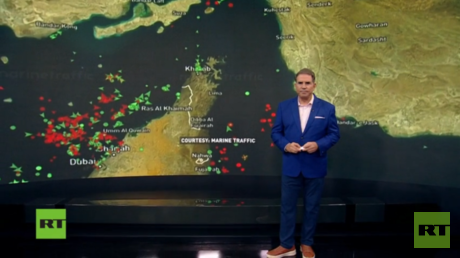
Look at a nautical chart of the Strait and the problem becomes clear. Ships cannot simply sail anywhere. Due to the shallow depths and the presence of islands, the actual navigable channels for supertankers are incredibly narrow. The "Traffic Separation Scheme" consists of two-mile-wide lanes for inbound and outbound traffic, separated by a two-mile buffer zone.
This creates a predictable, slow-moving target. A tanker cannot swerve. It cannot accelerate quickly. It is a sitting duck for any actor with enough shore-based anti-ship missiles or a handful of naval mines. Iran’s military strategy isn't built on matching the U.S. Navy in a fair fight. They have spent decades perfecting "asymmetric" warfare. They use swarms of fast-attack craft and sophisticated mobile missile batteries hidden in the rugged limestone cliffs of the northern coast. It is a low-cost, high-impact defense that makes the entry price for any conflict prohibitively expensive for the West.
The Mine Warfare Factor
Mines are the most underrated threat in the region. They are cheap, easy to deploy from even a civilian dhow, and incredibly difficult to clear. During the "Tanker War" of the 1980s, even primitive mines caused massive disruptions. Today, the technology has evolved to include "smart" mines that can distinguish between the acoustic signatures of a small patrol boat and a massive crude carrier.
Clearing these mines is a slow, agonizing process. It requires specialized vessels that move at a crawl. If the Strait were mined today, global markets wouldn't just jitter; they would freeze. The insurance premiums for tankers would skyrocket instantly, making the cost of shipping more expensive than the oil itself.
Why Pipelines Are Not a Real Escape Hatch
There is a persistent myth that new pipelines in Saudi Arabia and the United Arab Emirates have neutralized the Hormuz threat. This is a dangerous oversimplification.
While the East-West Pipeline in Saudi Arabia can move crude to the Red Sea, its capacity is limited. It cannot handle the full volume that normally goes through the Strait. Furthermore, the infrastructure at the Red Sea terminals isn't built to replace the massive export hubs in the Persian Gulf. Moving oil via pipe is also more expensive than maritime transport.
The UAE’s Habshan-Fujairah pipeline is another attempt to bypass the chokehold, ending at a terminal outside the Strait. It helps, but it is a drop in the bucket. These pipelines are insurance policies, not replacements. They provide a buffer for domestic needs and some critical exports, but they cannot save the global economy from a total Hormuz blockage. The world remains tethered to the water.
The Hidden Players and the LNG Crisis
We talk about oil, but we should be talking about gas. Qatar is one of the world's largest exporters of LNG. Unlike oil, which can be stored in massive strategic reserves or diverted through different channels over time, LNG is a "just-in-time" commodity. The cooling processes and specialized ships required to move it mean that any interruption in the Strait immediately impacts the energy grids of Europe and Asia.
Japan and South Korea are particularly exposed. They have almost no domestic energy resources and rely on a constant stream of tankers through Hormuz. For these nations, the Strait isn't a foreign policy issue; it is a matter of national survival. If the flow stops, the lights go out in Tokyo and Seoul within weeks. This creates a fascinating diplomatic tension where the U.S. is expected to police the waters, while the primary beneficiaries are often economic competitors in the East.
The Insurance Shadow Market
Behind the scenes of every tanker movement is a London-based insurer. When tensions rise, "War Risk" premiums are applied. We saw this in 2019 after a series of limpet mine attacks on tankers. These costs are never absorbed by the shipping companies; they are passed directly to the consumer.
Even without a single shot being fired, a "heated" atmosphere in the Strait acts as a hidden tax on every barrel of oil. This is the goal of low-level harassment. By seizing a tanker here or flying a drone there, Iran can manipulate the global "fear index." This allows them to exert pressure on Western economies without triggering a full-scale war that would lead to their own destruction. It is a masterful, if cynical, use of economic gravity.
The Technology of Interdiction
The modern battlefield in the Strait has moved beyond the deck gun. We are now seeing the integration of electronic warfare and GPS jamming. Tankers have reported "spoofed" GPS signals that make them appear to be in different territorial waters than they actually are. This is a legal trap. If a captain unknowingly drifts into Iranian waters due to manipulated navigation data, it provides a legal pretext for seizure.
Drone Swarms and Coastal Defense
The Iranian Revolutionary Guard Corps (IRGC) has invested heavily in long-range loitering munitions. These "suicide drones" can be launched from the back of a truck deep inland. This makes them nearly impossible to eliminate with preemptive strikes.
A coordinated swarm of fifty drones, each costing less than a mid-sized sedan, could overwhelm the sophisticated Aegis defense systems of a billion-dollar destroyer. The math simply doesn't favor the defender. You cannot keep shooting million-dollar interceptor missiles at thousand-dollar drones indefinitely. The "magazine depth" of a naval task force is a finite resource. Once those tubes are empty, the fleet is vulnerable.
China’s Complicated Calculus
China is the largest importer of Persian Gulf oil. On the surface, you would think they would be the loudest voices calling for stability. However, Beijing views the Strait through a different lens.
They see the U.S. presence in the Gulf as a strategic vulnerability for Washington. As long as the U.S. is tied down protecting these shipping lanes, it has fewer resources to pivot to the South China Sea. Furthermore, China has been deepening its ties with Iran through long-term investment deals. They are positioning themselves as the only power that can talk to both sides.
If a crisis occurs, China doesn't want to be the policeman. They want to be the mediator who "saves" the world from a Western-led conflict. This shift in the power dynamic is perhaps the most significant change in the region over the last decade. The U.S. no longer holds all the cards in the Gulf.
The Brutal Reality of a Blockage
If the Strait were truly closed—meaning no ships could pass for more than thirty days—we would see an economic event unlike anything since the 1930s.
$200 per barrel of oil is not a hyperbole in that scenario; it is a starting point. The global supply chain, which is already fragile, would snap. The cost of fertilizer would soar, leading to food shortages in developing nations. The "Strategic Petroleum Reserve" in the U.S. would provide some breathing room, but it is a finite cushion.
The military response required to reopen the Strait would be massive. It would involve a "clearance" operation of the entire northern coast, a task that would likely require ground troops and a sustained air campaign. This isn't a "surgical strike" situation. It is a regional conflagration. This is why, despite the rhetoric, every major player is terrified of the Strait actually closing.
The Deadlock of the Status Quo
The current situation is a stalemate that serves multiple interests. For the oil producers, high tension keeps prices supported. For the military-industrial complex, it justifies the carrier groups. For Iran, it provides a seat at the table they would otherwise not have.
The losers are the consumers and the smaller nations whose economies are held hostage by this twenty-one-mile stretch of water. We are not moving toward a resolution. We are moving toward a more digitized, more automated version of the same standoff that has existed since the fall of the Shah.
The next time you see a headline about a drone over the Gulf or a seized tanker, don't look for a "winner" in the military sense. Look at the shipping rates. Look at the insurance premiums. Look at the LNG delivery schedules to Europe. That is where the real war is being fought, and so far, the house is winning.
Companies operating in this space should stop waiting for a diplomatic breakthrough that isn't coming. Diversifying energy sources and investing in localized power generation aren't just "green" initiatives; they are the only way to opt out of a game where the rules are written by whoever happens to hold the high ground in the Musandam Peninsula. The Strait of Hormuz is a permanent risk factor, a structural flaw in the global economy that we have learned to live with, but can never truly fix. You don't manage this crisis; you survive it.