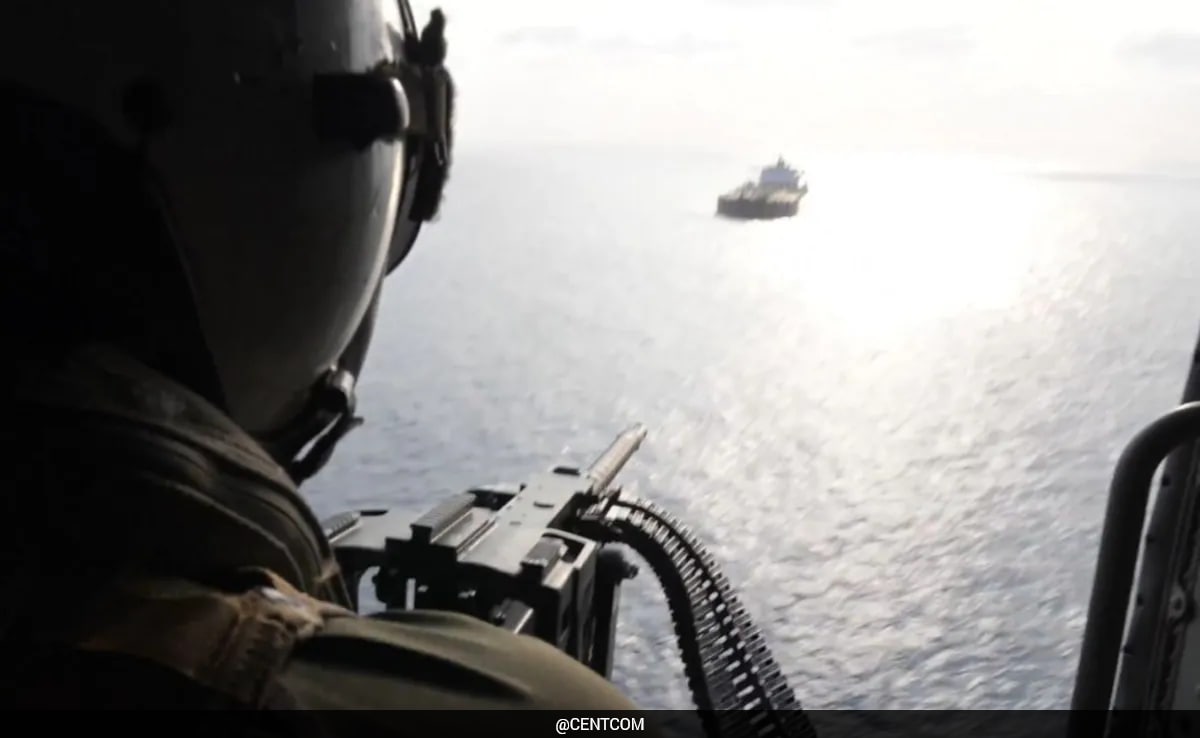
The steel under your boots is humming. It is a low-frequency vibration, more felt in the marrow of your bones than heard with your ears. You are standing on the deck of a commercial tanker, a vessel the size of a horizontal skyscraper, carrying enough crude oil to keep a mid-sized city breathing for a month. To your left and right, the jagged, sun-bleached cliffs of the Musandam Peninsula and the Iranian coast lean in.
This is the Strait of Hormuz.
At its narrowest point, the shipping lane is only two miles wide. It is the jugular vein of the global economy. One-fifth of the world’s total oil consumption passes through this tiny needle’s eye every single day. If this vein is pinched, the world gets a migraine. If it is cut, the global economy suffers a stroke.
But today, the tension isn’t just about the geography or the cargo. It is about the shadow moving across the water.
A fast-attack craft, low and lean, streaks across the wake of your ship. It doesn’t fly a flag you recognize immediately, but the intent is clear. Then comes the voice over the bridge radio, crackling with a cold, bureaucratic authority that sends a chill through the humid Gulf air.
"You are entering a military blockade."
The Anatomy of a Stand-off
Most people think of international conflict as a series of red lines on a map or heated speeches in carpeted rooms. Reality is much louder. It sounds like the cyclic thrum of a Browning .50 caliber machine gun being racked into a ready position.
Recent escalations in the Strait have moved beyond diplomatic posturing. We are seeing a shift toward "gray zone" warfare—actions that sit just below the threshold of open combat but far above the norms of peacetime navigation. When a United States Navy destroyer or a Coast Guard cutter patrols these waters, they aren't just sailing; they are performing a high-stakes choreographed dance with Iranian Revolutionary Guard Corps (IRGC) vessels.
Consider the physics of the encounter. An American vessel, bristling with sensors and long-range missiles, is a titan. But the IRGC favors "swarm tactics." They use small, agile boats equipped with machine guns and rocket launchers. They dart in close, weaving between massive tankers, using the behemoths as human shields.
In these moments, the high-tech superiority of a billion-dollar ship is neutralized by the simple proximity of a $50,000 speedboat. It is a nightmare for a commander. You have seconds to decide if the boat approaching at forty knots is a group of curious fishermen or a suicide strike.
The Invisible Chains of the Global Market
Why should a person sitting in a coffee shop in Seattle or a flat in London care about a machine gun pointed at a tanker ten thousand miles away? Because the world is smaller than we like to admit.
The Strait of Hormuz is a psychological trigger for the global market. The moment a report hits the wire about a "hostile interaction" or a "seizure of a vessel," the algorithms that run our stock markets react in nanoseconds. The price of Brent Crude spikes. Shipping insurance premiums—the invisible tax on everything you buy—skyrocket.
We live in a "just-in-time" world. Your car, your plastic toothbrush, the fertilizer used to grow your morning toast—they all rely on the uninterrupted flow of energy through this thirty-mile-wide stretch of water.
The U.S. presence in the region, often criticized as overreach, is fundamentally an exercise in market stabilization. By mounting machine guns on the decks of transport ships or flying persistent drone surveillance, the military is attempting to project a sense of "predictability." They are trying to tell the world’s nervous investors that the lane is open.
But predictability is a fragile thing when two opposing forces are staring at each other through iron sights.
The Human in the Crosshairs
Let’s look at a hypothetical sailor named Elias. He isn't a politician. He isn't an oil tycoon. He is a twenty-four-year-old from Ohio serving on a Navy patrol craft. His job is to stand behind a mounted machine gun, sweat stinging his eyes under a heavy helmet, watching a Persian boat scream toward him.
Elias has been trained in the "Rules of Engagement." He knows he cannot fire unless he perceives an "imminent threat." But "imminent" is a subjective word when a boat is closing the distance at sixty feet per second.
If he fires too late, his ship is gone. If he fires too early, he starts a war.
This is the "tactical corporal" dilemma. Decisions made by the lowest-ranking individuals on the front lines now have strategic, global consequences. A single nervous finger in the Strait of Hormuz could theoretically trigger a chain reaction: oil prices hit $150 a barrel, gas stations in Europe run dry, and a regional skirmish expands into a global conflagration.
The machine gun isn't just a weapon in this scenario. It is a communication device. Its presence says: We are here, we see you, and we are prepared for the worst. It is a language of deterrence that everyone understands, regardless of what tongue they speak.
The Evolution of the Blockade
Traditional blockades involved long lines of ships preventing anything from entering or leaving a port. They were static. Today’s "military blockade" in the Gulf is fluid and digital.
Iran has increasingly used electronic warfare to "spoof" GPS signals. Tankers suddenly find their navigation systems telling them they are miles away from their actual location, sometimes tricking them into wandering into Iranian territorial waters. Once they cross that invisible line, they are "legally" seized.
In response, the U.S. and its allies have integrated AI-driven unmanned surface vessels—essentially robot boats—to act as eyes and ears. These drones don't get tired. They don't get nervous. They provide a constant, unblinking stream of data.
Yet, for all the talk of AI and high-tech sensors, the ultimate deterrent remains the same as it was a hundred years ago: a human being with a weapon, prepared to use it. There is something primal and terrifying about the sight of a manned machine gun on a ship’s rail. It breaks through the abstractions of geopolitics and reminds everyone involved that the stakes are flesh and blood.
The Thin Blue Line of the Sea
The ocean is a lawless place by nature. International waters are governed by treaties that are only as strong as the entities willing to enforce them. Without a dominant power—or a coalition of powers—ensuring the "Freedom of Navigation," the seas would revert to a state of piracy and privateering.
We often take for granted that a ship can sail from Singapore to Rotterdam without being harassed. We assume the grocery store shelves will be full tomorrow. We assume the lights will turn on when we flip the switch.
But the reality is that our entire way of life is built upon the silent, tense standoff happening right now in the Gulf. It is built upon the discipline of sailors who choose not to fire, and the resolve of those who show they are ready to.
The sun sets over the Strait, turning the water into a sheet of hammered gold. The cliffs of Iran fade into a jagged purple silhouette. On the bridge of the tanker, the radar screen pulses—green sweeps across a dark void, marking the positions of friends and foes.
The machine gun remains manned. The hum of the engine continues. The world keeps turning, fueled by the very oil that sits beneath your feet, protected by a thin, precarious line of steel and will.
The threat of a blockade is always there, lurking just below the surface of the headlines. It is a reminder that peace is not the absence of conflict, but the successful management of it. In the Strait of Hormuz, peace is a machine gun that stays silent, even when the world is screaming for it to speak.

:strip_icc()/pic2513216.jpg)