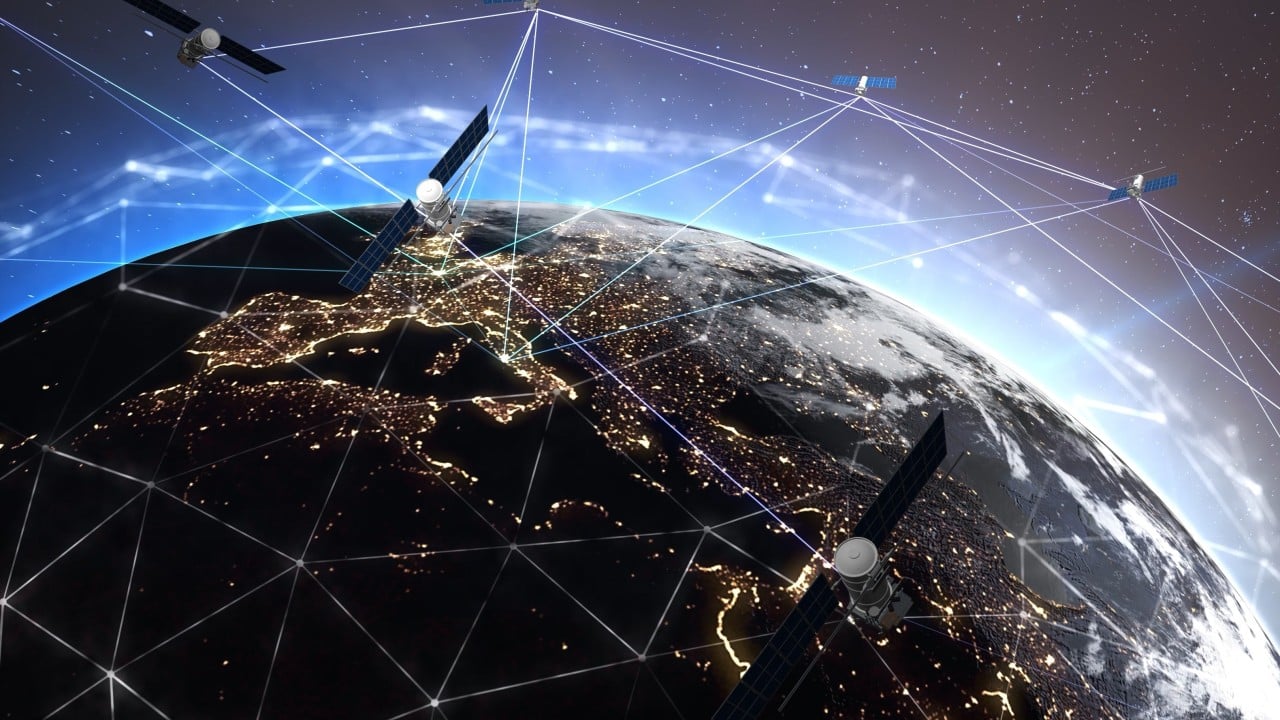
The headlines are panting over "lighthouses in space." They want you to believe that China’s new pulsar-based navigation and low-earth orbit (LEO) jam-resistant constellations are about to make GPS look like a sundial. They are selling a narrative of total orbital dominance and the death of electronic warfare as we know it.
They are wrong.
Actually, they are worse than wrong; they are falling for a classic procurement trap. If you have spent five minutes in a signal processing lab or a defense acquisition meeting, you know that "jam-proof" is a marketing term used by people who want more budget, not a physical reality. China isn't building a better GPS. They are building a massively expensive redundancy system that relies on physics so fragile it would crumble the moment a real kinetic conflict starts.
The Pulsar Myth and the Precision Problem
The core of this "jam-proof" claim usually rests on X-ray Pulsar-based Navigation (XNAV). The logic goes like this: pulsars are distant stars that emit periodic radiation. Since the source is light-years away, you can't "jam" a star.
True. You can’t jam a star. But you can absolutely drown out the signal at the receiver.
Pulsar signals are incredibly weak. We are talking about photon-starved environments where a sensor might only pick up a handful of X-ray photons per second. To get a positioning fix that rivals the $10$-centimeter accuracy of modern GNSS (Global Navigation Satellite Systems), you need massive detectors and hours—sometimes days—of integration time.
If you are a hypersonic missile traveling at Mach 5, or a drone trying to dodge a signal inhibitor in a cramped urban canyon, you don't have three hours to wait for a pulsar signal to tell you where you are. You’re already a crater.
The Signal-to-Noise Reality
In electronic warfare, the only thing that matters is the signal-to-noise ratio ($SNR$).
$$SNR = \frac{P_{signal}}{P_{noise}}$$
To "jam" a signal, I don't need to turn off the star. I just need to flood the local environment with enough X-ray or radio frequency noise that your receiver can't distinguish the pulsar’s "tick" from the background static. Proponents of the Chinese network claim that because these signals come from high-energy cosmic sources, they are "un-jammable." This ignores the fact that the receiver is still a piece of silicon and metal sitting on a satellite or a plane. If I hit that receiver with a localized burst of energy, it’s blinded.
I’ve seen engineers burn through nine-figure grants trying to shrink XNAV sensors to a usable size. Every time you shrink the detector to fit on a tactical missile, you lose the sensitivity required to actually find the signal. It’s a physical stalemate.
The LEO Constellation: More Targets, Not More Security
The second pillar of this supposed "GPS-killer" is a massive swarm of LEO satellites. The argument here is that by putting thousands of small satellites in orbit, China creates a network too big to fail and too low to be easily disrupted by traditional long-range jamming.
This is a misunderstanding of how orbital mechanics and terrestrial interference work.
- The Proximity Paradox: Yes, LEO satellites are closer to Earth, which means their signals are stronger when they reach the ground. But being closer also means they move across the sky at blistering speeds. A receiver has to hand off the signal from one satellite to the next every few minutes. Every handoff is a point of failure. Every handoff is a moment where a sophisticated spoofer can inject false data.
- The Debris Field: By launching thousands of satellites into an already crowded shell, you aren't just building a network; you’re building a minefield. In a high-tension scenario, a single kinetic intercept—a "misunderstanding" involving a kinetic kill vehicle—creates a cloud of shrapnel that doesn't care about your "jam-proof" encoding. It hits the solar panels at $17,500$ mph and the network goes dark.
We are obsessed with "software-defined" security, but we keep forgetting that space is a hardware environment.
The Boring Truth: Inertial Navigation is the Real King
If you want to talk about "jam-proof," stop looking at the stars and start looking at high-end Inertial Navigation Systems (INS).
The real industry insiders know that the future of navigation isn't a better satellite; it's the ability to function without any external signal at all. This is where the "Lighthouses in Space" article fails most spectacularly. It assumes that the goal is to fix GPS.
The goal isn't to fix GPS. The goal is to move past the need for any "lighthouse" whatsoever.
Modern Cold Atom Interferometry and advanced MEMS (Micro-Electro-Mechanical Systems) gyroscopes are reaching a point where a vessel can track its own position with extreme precision for weeks without ever "calling home" to a satellite.
- Satellite Nav: Requires a signal. Signals can be spoofed, blocked, or intercepted.
- Inertial Nav: Requires zero input. It is mathematically impossible to jam a device that doesn't listen to the outside world.
China’s massive investment in these satellite constellations is actually a sign of insecurity. It shows a desperate need to maintain a centralized, top-down command and control structure. They want a "lighthouse" because they want to control the light.
The Economic Mirage
Let’s talk about the money. Building, launching, and maintaining a $10,000$-satellite constellation is a recurring tax on a nation’s economy. GPS is "free" for the world because the US military has already written off the cost as a baseline utility.
When China builds a "jam-proof" alternative, they are asking their domestic industries to bear the cost of dual-hardware integration. If you are a logistics firm in Shanghai, you now have to buy receivers that can talk to BeiDou, the new LEO network, and potentially the pulsar experimental band.
This isn't efficiency. It’s a redundancy tax.
I’ve watched aerospace firms choke on the complexity of "multi-constellation" support. You end up with more code, more bugs, and more power consumption. You aren't making the system more secure; you’re making the attack surface larger. Every new signal you add to a receiver is a new door for a hacker to kick down.
Stop Asking "Is it Jam-Proof?"
The question itself is a distraction. The correct question is: "What is the cost per bit of reliable positioning data?"
When you frame it that way, China’s new network looks less like a breakthrough and more like a vanity project. They are spending billions to solve a problem that high-end inertial sensors and local terrestrial backups (like eLORAN) solve for a fraction of the cost.
eLORAN (Enhanced Long-Range Navigation) uses high-power, low-frequency signals from ground-based towers. Because the power levels are so high, you’d need a jammer the size of a small city to block it. It’s ugly. It’s old-school. And it works better than any experimental X-ray sensor ever will.
But eLORAN isn't "space-age." It doesn't look good in a propaganda film. So, we get "lighthouses in space" instead.
The Vulnerability of Complexity
There is a fundamental law in systems engineering: complexity is the enemy of security.
GPS is vulnerable because it is a thin, weak signal from $20,000$ km away. But it is simple. We know exactly how it fails. We know how to shield against it.
The proposed Chinese network is a sprawling, multi-layered, heterogeneous mess of X-ray sensors, LEO satellites, and ground-based augmentation. To make this work, you need a level of cross-platform synchronization that has never been achieved in a combat environment.
Imagine a scenario where a fleet is relying on this "jam-proof" network. The pulsar timing is slightly off due to a sensor glitch. The LEO handoff latency spikes because of a solar flare. The receiver, trying to reconcile three different "truths" about its location, suffers a software hang.
In that moment, a "jammed" GPS receiver—which simply says "Signal Lost"—is actually safer than a "jam-proof" receiver that is giving you a high-confidence, perfectly calculated, incorrect coordinate.
The more "lighthouses" you put in the sky, the more shadows you create.
If you’re betting on this network to change the balance of power, you’re betting on the triumph of marketing over physics. The real winners of the next decade won't be the ones with the most satellites; they’ll be the ones who figured out how to navigate when the sky goes dark.
Stop looking up. The answer is in the hardware on the ground.
Would you like me to break down the specific failure rates of Cold Atom Interferometry versus LEO-based timing sync?