You can't win a tech war by building a fortress when your rival is busy building a global network.
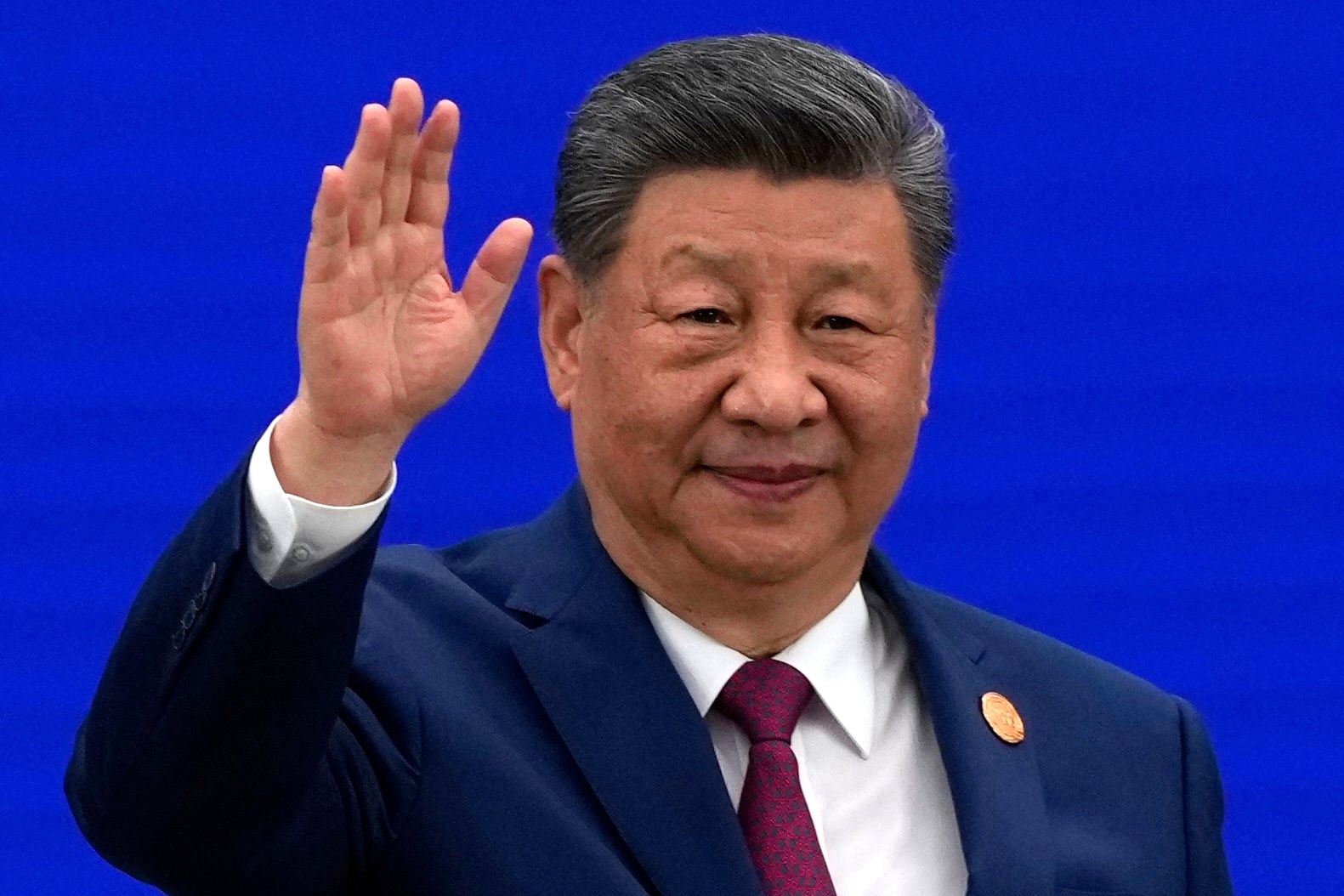
Washington thinks it's winning the artificial intelligence race by cutting off Beijing's supply of high-end graphics processing units (GPUs). They're wrong. While the U.S. relies on export bans to choke off hardware access, Chinese President Xi Jinping just used the World Artificial Intelligence Conference in Shanghai to execute a massive geopolitical pivot. He isn't trying to copy America's expensive, hardware-heavy approach. He's making China the default AI provider for the rest of the world. Meanwhile, you can find other stories here: The Vulnerability Architecture of Electronic Voting Infrastructure and Democratic Threat Modeling.
If you think China is losing the tech race because they can't buy Nvidia chips, you're missing the bigger picture.
The global south strategy
On July 17, 2026, Xi stood before leaders from Southeast Asia, Africa, and the Middle East to pitch a new version of the global tech order. He called for a "symphony of global cooperation" and explicitly slammed the U.S. for overstretching national security concerns to keep advanced technology for itself. To understand the bigger picture, we recommend the excellent article by TechCrunch.
This isn't just empty rhetoric. It's an aggressive diplomatic push backed by concrete offers that Washington simply isn't matching.
- The World Artificial Intelligence Cooperation Organization. Just before the summit, 29 nations—including Russia, Pakistan, and Kazakhstan—signed on to this new Shanghai-headquartered body. It's a direct counterweight to the U.S.-led Pax Silica initiative launched last year.
- Massive talent injection. Beijing promised 5,000 AI training opportunities to developing countries over the next five years. They're literally training the next generation of global tech bureaucrats.
- Infrastructure diplomacy. China is giving 30 countries direct access to a homegrown AI meteorological system for early disaster warning.
While U.S. companies like Microsoft and Meta are burning billions of dollars trying to brute-force bigger models, China is positioning itself as a reliable partner for the developing world. George Chen, chair of digital practice at The Asia Group, noted from the conference floor that Xi's speech sends a clear signal: China won't let America hold a monopoly on AI.
Efficiency beats brute force
The standard consensus in Silicon Valley is that without advanced semiconductor manufacturing equipment, Chinese AI will stall. That assumption is dangerously flawed.
U.S. sanctions forced Chinese engineers to innovate under extreme hardware constraints. Because they can't easily buy or build massive data centers, they focused heavily on energy efficiency and algorithmic breakthroughs.
Take the open-source model ecosystem. Chinese models like DeepSeek are open-sourced, letting a massive developer pool optimize them to run on cheaper, less powerful hardware. Earlier this year, DeepSeek released its "dSpark" paper, showing a 600% increase in large language model throughput using the same token count.
American companies are actually getting addicted to these cheaper alternatives. On popular marketplaces like OpenRouter, Chinese-origin models have consistently grabbed a massive chunk of enterprise token volume. U.S. startups use them because American models are too expensive to run at scale.
The domestic shield
There's another massive edge China has that nobody talks about: public sentiment.
In the West, tech CEOs are firing thousands of workers while bragging about AI efficiency. It's creating a massive anti-AI backlash among regular workers and unions. China took a completely different path. Beijing implemented strict labor laws preventing widespread corporate layoffs driven by AI automation.
Because workers don't view the technology as an immediate threat to their livelihood, societal adoption is moving much faster. Universities run massive AI and robotics competitions, and companies easily weave these tools into everyday operations. Instead of fighting the tech, the workforce is adopting it.
The hardware reality check
Don't mistake this for a total victory yet. China still faces massive hurdles.
The hardware gap is real. Huawei used the Shanghai summit to show off its Atlas 950 SuperPoD computing system, proving it can build powerful architecture domestically. But scaling that manufacturing without Western lithography equipment is an uphill battle.
Furthermore, Beijing is heavily conflicted. While Xi preaches open global collaboration, Chinese authorities have secretly met with top tech firms to discuss restricting foreign access to their most advanced models. They're worried about tech leaks and national security, mimicking the exact behavior they criticize in the West.
If you're an enterprise leader or investor trying to navigate this landscape, relying purely on U.S. infrastructure is becoming a risky bet. You need to diversify your model architecture. Start integrating high-efficiency, open-source models into your stack to hedge against rising U.S. compute costs. Keep a close eye on the World Artificial Intelligence Cooperation Organization regulations; the standards they set will soon dictate how tech operates across Southeast Asia, Africa, and Latin America.