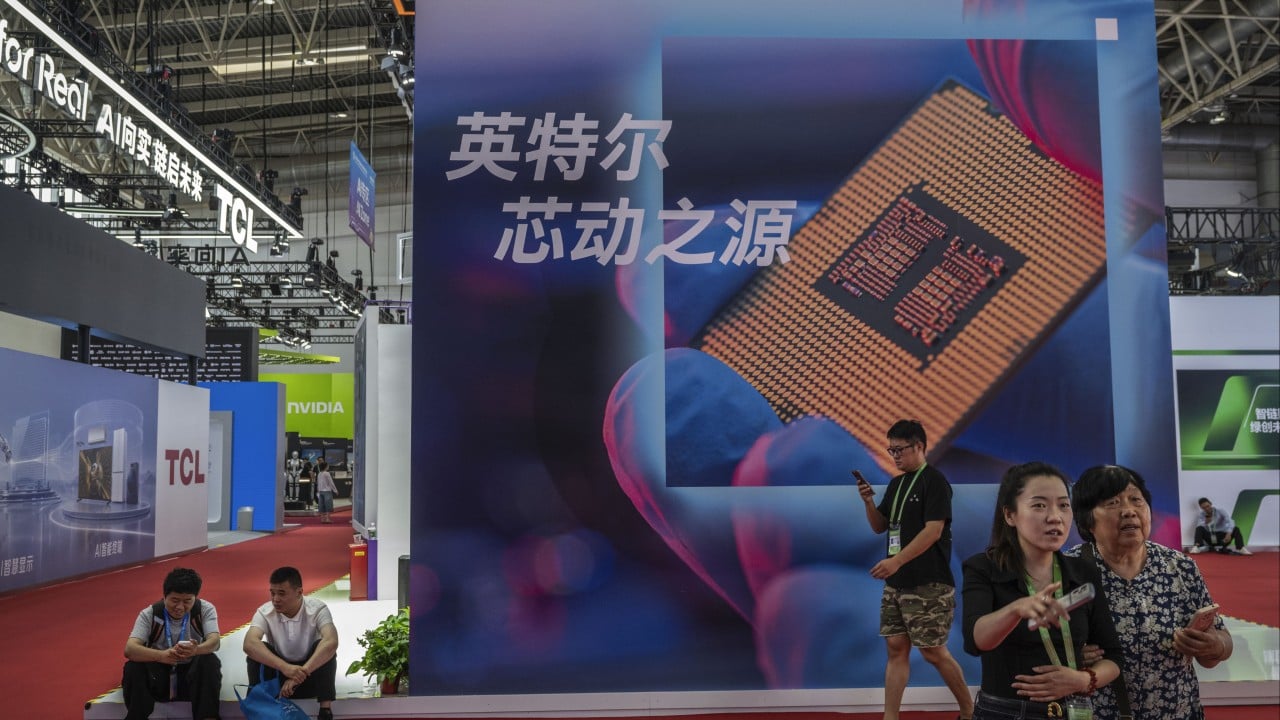
Everyone loves talking about trade bans until reality sets in. Wall Street forecasters keep pointing out that domestic lithography tools inside Beijing's borders sit roughly two decades behind Western giants. They point to extreme ultraviolet scanner blockades like they are permanent stop signs. They miss the broader picture entirely. Goldman Sachs recently published notes indicating that despite heavy machinery constraints, China's domestic output for advanced silicon will surge significantly heading toward 2035.
Let's look past the headlines about export controls. Equipment blockades create painful speed bumps, but they also force massive capital allocation toward local substitution. When you cut off access to foreign machinery, domestic players stop waiting for shipments. They build their own ecosystem from scratch. You might also find this similar coverage interesting: How the James Webb Space Telescope Rewrote the Universe With Three Ancient Monster Black Holes.
The Equipment Reality Check
Lithography remains the biggest hurdle in semiconductor manufacturing. Advanced chip production relies heavily on extreme ultraviolet technology controlled almost exclusively by ASML and protected by strict Western trade policy. Analysts calculate that matching those exact specifications takes decades of specialized research and billions in capital expenditure.
Domestic equipment makers inside China currently hover around older nodes. That sounds like a definitive win for trade restrictions. Yet it misunderstands how industrial policy works under pressure. Chinese foundries are getting remarkably creative with older deep ultraviolet systems. They use multi-patterning techniques to push older hardware past standard physical limits. As extensively documented in detailed articles by Wired, the implications are widespread.
Yield rates are messy. Costs are high. But volume scales anyway because state-backed funding covers the losses.
Where the 2035 Surge Actually Comes From
Markets often confuse perfection with progress. Western firms demand ultra-efficient 2-nanometer nodes to squeeze every drop of performance out of consumer devices. China's domestic market operates on different priorities. Industrial automation, electric vehicles, and local artificial intelligence hardware do not always require bleeding-edge nodes to function at scale.
Mature and intermediate nodes drive the engine. Local fabrication plants are expanding physical footprint at an aggressive rate. By 2035, the sheer volume of mature and near-advanced silicon produced locally will saturate domestic demand and spill over into global markets.
We are watching a massive supply duplication happen in real-time. Two separate semiconductor worlds are forming. One runs on Western toolchains, while the other runs on forced self-reliance.
What Investors and Tech Watchers Miss
Most commentary treats trade restrictions as an absolute ceiling. History shows supply chains always find a way around political walls given enough financial incentive. Domestic foundries are pouring money into packaging innovations, alternative materials, and indigenous tool design.
If you want to understand where hardware markets are heading, stop staring at current lithography gaps. Look at the capital pouring into domestic equipment makers and heavy industrial infrastructure instead. The hardware bottleneck is real today, but treating it as a permanent block on 2035 output is a massive analytical mistake.
Audit your supply chain exposure now. Diversify hardware dependencies before domestic alternatives change global pricing dynamics for good.