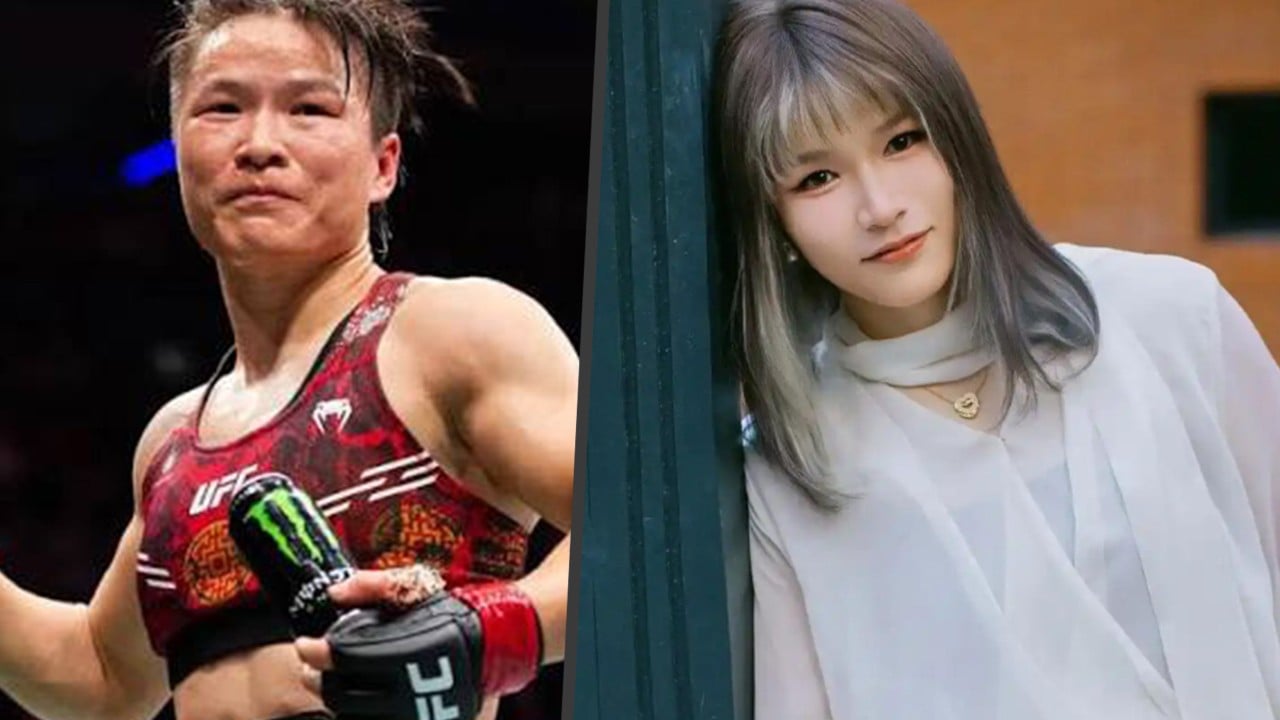
China MMA champion Zhang Weili has captured multiple UFC strawweight titles, conquered the world's toughest cage fighters, and earned millions in global prize money, yet she still faces relentless family pressure to settle down and go on blind dates. In late 2023 and throughout 2024, the superstar openly discussed how her mother and relatives repeatedly urge her to find a boyfriend, even attempting to arrange matchmaking sessions whenever she returns home to Hebei province. Despite her historic athletic dominance, Zhang's personal life remains subject to deeply ingrained traditional expectations regarding marriage, filial duty, and the perceived biological clock facing unmarried Chinese women in their mid-thirties.
She can dismantle elite strikers inside an octagon. Yet across a quiet family dinner table in Handan, the two-time Ultimate Fighting Championship titleholder becomes just another unmarried thirty-something daughter answering awkward questions about her romantic future. For Western sports fans accustomed to viewing championship athletes as untouchable cultural icons, the image of a world-renowned combat sports superstar fielding matchmaking requests from her mother feels almost surreal. Inside modern China, however, Zhang Weili's predicament reflects an enduring social reality where global professional success rarely grants immunity from domestic expectations.
The Collision of Cage Dominance and Filial Piety
Zhang Weili's rise from a kindergarten teacher and fitness instructor in Hebei to China's first UFC champion is already combat sports lore. She did not inherit athletic privilege. She built her career through grueling twelve-hour training days, sleeping on gym floors and enduring financial instability before signing with the world's premier mixed martial arts promotion. By the time she reclaimed the strawweight belt and defended it against top contenders like Amanda Lemos and Yan Xiaonan, Zhang had cemented her status as a national sporting hero.
That status carries massive commercial weight. She headlines major pay-per-view cards, commands lucrative endorsement deals, and serves as a symbol of modern Chinese athletic grit.
None of that professional hardware shields her from filial piety, the foundational Confucian virtue that places family obligation and respect for parents at the center of personal morality. In interviews with Chinese media and during UFC press appearances, Zhang has candidly recounted how her mother views her championship belts not as the ultimate life achievement, but as a temporary career phase that should eventually give way to marriage and children. When Zhang returns home between training camps, conversations quickly pivot from fight analytics to eligible bachelors.
Her mother's anxiety is not rooted in malice or indifference to her daughter's historic achievements. Within traditional family structures, a parent's duty is considered incomplete until their child establishes a stable household. In the eyes of an older generation that equates marital security with lifelong protection, a daughter who makes a living trading punches in a steel cage represents an unsettling anomaly. Victory inside the octagon is temporary; a husband and family are viewed as permanent insurance against future vulnerability.
The Cultural Mechanics of Sheng Nu and Matchmaking
To understand why an athlete of Zhang Weili's stature faces blind date pressure, one must examine the persistent stigma surrounding sheng nu, a derogatory term popularized in the late 2000s that translates roughly to "leftover women." Originally used to describe urban, educated, unmarried women over the age of twenty-seven, the label weaponized social anxiety to push women toward early marriage regardless of their professional accomplishments.
While younger generations in tier-one cities like Beijing and Shanghai increasingly reject the phrase, the underlying social pressure remains potent, particularly in smaller cities and rural provinces like Hebei, where Zhang was raised.
The Economics of the Marriage Market
In traditional Chinese matchmaking—often visible in public "marriage corners" where parents trade laminated resumes of their adult children—candidates are evaluated on tangible metrics. Age, height, property ownership, stable civil service employment, and family background frequently outweigh personal compatibility.
For an elite female combat athlete, this traditional rubric creates an immediate friction point. High-achieving women often encounter what sociologists call the "A-quality woman, B-quality man" paradox. Traditional gender norms still subtly encourage women to marry partners of equal or higher social and financial standing, while simultaneously discouraging men from pursuing partners who out-earn or physically outmatch them. When a woman is a multi-millionaire world champion capable of incapacitating almost any man on earth in under two minutes, the conventional matchmaking pool shrinks dramatically.
Consider a hypothetical scenario illustrating this dynamic. Imagine a successful thirty-four-year-old software engineer in Beijing meeting Zhang Weili through a family-arranged introduction. Even if he respects her athletic career, the logistical reality of her lifestyle—months spent in high-altitude training camps in Thailand or Las Vegas, strict dietary regimens, media tours, and the physical toll of professional fighting—clashes directly with traditional expectations of domestic availability. Many prospective partners and their parents simply do not know how to integrate a global combat sports icon into a conventional family template.
Why Professional Fighting Complicates Modern Romance
Beyond broad cultural expectations, the specific mechanics of mixed martial arts create unique barriers to dating that athletes in other sports rarely face. Tennis players, swimmers, and track stars operate within familiar mainstream athletic frameworks. Mixed martial arts, by contrast, remains visceral and misunderstood by older generations.
Zhang has spoken openly about how potential suitors sometimes react with hesitation—or outright intimidation—when confronted with her profession. On social media, a recurring joke among Chinese netizens is that nobody dares date Zhang Weili because an argument at home might end in a rear-naked choke. While Zhang routinely laughs off these comments and emphasizes that she is gentle and easygoing outside the gym, the underlying perception persists.
The Intimidation Factor and Gender Norms
Masculinity in traditional East Asian contexts has historically been tied to the role of protector and provider. Dating a woman who requires zero physical protection and generates immense independent wealth upends that script entirely.
- Physical Asymmetry — Men raised to view themselves as physical guardians often struggle psychologically when their partner is an elite martial artist trained in Muay Thai, Brazilian Jiu-Jitsu, and wrestling.
- Schedule Incompatibility — A UFC champion's calendar is dictated by fight announcements, weight cuts, and international travel, leaving almost zero room for spontaneous weekend dates or predictable holidays.
- Public Scrutiny — Any man seen alongside Zhang immediately becomes a subject of intense internet speculation, with fans dissecting his appearance, career, and suitability for a national icon.
Zhang herself has noted that she does not reject the idea of romance or marriage. She has simply stated that she refuses to rush into a relationship just to satisfy external timelines, insisting that fate cannot be forced through awkward blind dates.
The Double Standard Facing Elite Male and Female Athletes
The pressure Zhang Weili endures highlights a sharp gender divide in how China views its sporting superstars. When male Olympic gold medalists or prominent male athletes remain unmarried into their thirties, public discourse generally frames them as dedicated professionals prioritizing national glory over personal distraction. Their bachelor status is treated as a badge of monastic commitment.
Female athletes rarely receive the same grace.
Look across the history of Chinese sports, from Olympic divers and table tennis legends to tennis icon Li Na. Female champions are routinely subjected to invasive press conference questions about their romantic status, wedding plans, and intentions regarding motherhood immediately after winning major titles. Even during peak competitive years, their biological timelines are treated as matters of public concern.
| Dimension | Male Chinese Sports Stars | Female Chinese Sports Stars |
|---|---|---|
| Media Framing of Singlehood | Viewed as disciplined focus on career and national honor | Framed as a personal deficit or looming life crisis |
| Post-Retirement Expectations | Transition into coaching, business, or commentary | Expected to prioritize marriage and childbearing quickly |
| Partner Selection Dynamics | Broad acceptance of marrying younger, non-athlete partners | Narrower pool due to social anxiety around high-earning women |
| Family Pressure | Present, but frequently deferred until after retirement | Intense and continuous throughout peak competitive years |
This disparity reveals that athletic excellence does not erase traditional gender scripts; it merely delays their enforcement. As long as Zhang Weili continues defending her UFC championship, her team and promoters can shield her from most distractions. Yet the moment she steps out of the gym and returns to civilian life, the cultural clock resumes ticking louder than ever.
How Zhang Weili Navigates the Noise
Rather than confronting her family's traditional values with hostility, Zhang has adopted a pragmatic, disarming approach that reflects the same composure she displays under fire inside the octagon. She acknowledges her mother's good intentions without surrendering her autonomy.
In various interviews, Zhang has explained that she understands her mother's worries come from love and a desire to see her cared for when she is older. Instead of arguing ideology, she uses humor to deflect matchmaking attempts, occasionally joking that she is too busy training or playfully asking her mother if any prospective date can survive a sparring session. By keeping the tone light, she preserves family harmony while quietly maintaining absolute control over her life choices.
Shifting Attitudes Among Younger Fans
Crucially, Zhang's candidness has sparked a broader conversation among younger Chinese women who face identical pressures at home without the buffer of global fame or financial independence. Across platforms like Weibo and Xiaohongshu, thousands of women have rallied behind Zhang, pointing out the absurdity of pressuring a world champion to settle for a mediocre blind date simply to check a societal box.
For many young urban professionals, Zhang Weili represents proof that a woman's worth is defined by her character, discipline, and achievements rather than her marital status. Her refusal to compromise her standards—even when pushed by well-meaning relatives—resonates deeply with a generation increasingly skeptical of traditional marriage timelines.
The Unspoken Reality of Post-Fight Life
Still, the tension between Zhang's career and her family's wishes is unlikely to disappear anytime soon. Mixed martial arts is an unforgiving sport with a finite competitive window. Now in her mid-thirties, Zhang is navigating the late prime of a grueling athletic career that has already spanned more than a decade of professional competition.
Every training camp demands total physical and mental absorption. Entering a serious relationship requires emotional bandwidth that a reigning UFC champion simply cannot spare while preparing for five-round title wars against the best fighters on the planet. Zhang knows this reality intimately, which is why she treats dating as something that can only happen naturally when the timing aligns with her competitive goals.
Her family, however, looks past the next title defense toward the decades that follow retirement. In their view, the roar of the arena eventually fades, sponsorships expire, and a former champion is left with the quiet reality of everyday life. That generational gap—between an athlete living at the absolute pinnacle of human performance and parents worrying about quiet companionship twenty years down the road—cannot be bridged by another championship belt.
Zhang Weili has spent her entire adult life proving that physical limitations and social doubts can be overcome through sheer willpower. Yet until she decides on her own terms to step away from the cage and build a domestic life, the toughest opponent waiting for China's greatest fighter will remain the polite, persistent expectation of a Sunday afternoon blind date.