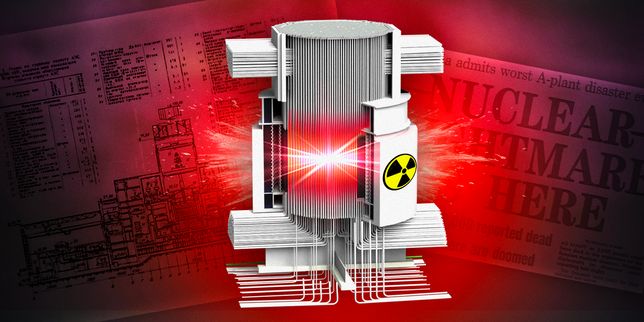
On a quiet April night in 1986, the world changed in a way most people still don't fully grasp. Reactor 4 at the Chernobyl Nuclear Power Plant didn't just break. It tore a hole in the idea that we've mastered the atom. Now, four decades later, we're looking back at a scar on the European continent that refuses to fade. People often ask what actually happened inside that reactor, thinking it was a simple explosion. It wasn't. It was a perfect storm of design flaws, ego, and a desperate attempt to follow a safety protocol that was anything but safe.
The fatal mistake inside Reactor 4
Most people assume the disaster started with a massive fire. Actually, it started with a test. The operators wanted to see if the plant's turbines could keep the cooling pumps running during a power failure. To do this, they disabled the automatic shutdown systems. It’s the kind of decision that feels like a minor shortcut until it isn't. For an alternative view, see: this related article.
By the time the test began, the reactor was already unstable. RBMK reactors have a specific quirk called a "positive void coefficient." Basically, as water turns to steam, the nuclear reaction speeds up. Most Western reactors do the opposite. In Chernobyl, the more the water boiled, the hotter the core got. It’s like a car that accelerates when you hit the brakes.
When the shift supervisor, Aleksandr Akimov, finally pressed the AZ-5 button to trigger an emergency shutdown, it was too late. The control rods, which were supposed to stop the reaction, had graphite tips. For a split second, those tips actually increased the reaction as they entered the core. The pressure became so intense that it blew the 2,000-ton lid right off the reactor. Further coverage on this matter has been shared by BBC News.
Radioactive clouds and the silence of Moscow
The Soviet Union didn't tell anyone for days. While the reactor was spewing iodine-131 and cesium-137 into the atmosphere, people in the nearby city of Pripyat were going about their morning. Kids walked to school. Families watched the distant glow from their balconies. They called it the "Chernobyl flicker." They had no idea they were breathing in a death sentence.
Sweden was actually the first to sound the alarm after workers at their own nuclear plant detected high radiation levels on their clothes. They realized the wind was carrying something horrific from the east. By the time the Kremlin admitted there was a "problem," the cloud had already reached Scandinavia and parts of Western Europe.
What the liquidators faced
We owe a debt to the "liquidators"—the roughly 600,000 people sent in to clean up the mess. These weren't just soldiers. They were miners, firemen, and regular citizens. Some had to go onto the roof of the adjacent reactor to shovel chunks of highly radioactive graphite back into the hole. They could only stay out there for 40 to 90 seconds. Any longer and the radiation would literally start melting their internal tissues.
They didn't have high-tech robots. The robots they tried to use actually fried because the radiation was so intense it scrambled their circuits. So, they used "bio-robots." Humans. They wore lead suits that offered almost no real protection against the invisible rain of gamma rays. You can still see the equipment they used rusting away in the exclusion zone. It’s too "hot" to move, even forty years later.
The exclusion zone today
Walking through Pripyat now is a surreal experience. It’s a ghost town frozen in 1986. Soviet posters still hang in classrooms. Bumper cars in the famous amusement park sit rusted and still. But nature is aggressive. Trees are growing through the floors of gymnasiums. Wolves, lynx, and even Przewalski's horses roam the streets.
There’s a common myth that the animals are all mutated monsters with two heads. That's not true. Scientists have found that while some birds have smaller brains and certain insects have different wing patterns, the lack of humans has been a net positive for wildlife. The "Zone of Alienation" has accidentally become one of Europe's largest nature preserves. It turns out humans are more toxic to the environment than a melted nuclear core.
The New Safe Confinement
The original "sarcophagus"—the concrete shell built in a rush after the explosion—started crumbling years ago. It was a ticking time bomb. If it collapsed, it would have sent a fresh cloud of radioactive dust into the air.
In 2016, an international effort finally completed the New Safe Confinement. It’s a massive silver arch, the largest movable land-based structure ever built. It’s designed to last 100 years. Inside, robotic cranes are slowly dismantling the old structure and the remains of the fuel. But don't get your hopes up about a quick fix. We’re talking about a cleanup process that will take centuries.
Why 1986 matters in 2026
You might think Chernobyl is just a history lesson. It's not. As we push for more carbon-free energy, nuclear power is back on the table in a big way. We have to decide if we can trust the technology. Modern reactors are nothing like the RBMK design. They have passive safety systems that don't require human intervention to prevent a meltdown.
But Chernobyl taught us that the biggest risk isn't just the machine. It’s the culture around it. It’s the desire to save face, the suppression of "bad news," and the belief that a system is "fail-safe." No system is fail-safe if the people running it are incentivized to ignore the warning signs.
The health reality
The official death toll from the UN and WHO is still a subject of massive debate. The initial blast killed two people immediately, and 29 more died shortly after from acute radiation syndrome. But the long-term numbers? That’s where it gets messy.
Estimates for cancer deaths related to Chernobyl range from 4,000 to over 90,000 depending on which study you read. Thyroid cancer in children skyrocketed in the years following the blast because they drank milk contaminated with iodine-131. The psychological toll is arguably worse. Hundreds of thousands of people were displaced, lost their homes, and have lived with the "radiophobia" of not knowing if their next headache is actually a tumor.
Practical steps for the curious
If you're fascinated by the history of the zone, don't just watch a miniseries and call it a day.
- Read the primary sources: Svetlana Alexievich’s Voices from Chernobyl is essential. It’s an oral history of the people who were actually there. It’s devastating and honest.
- Support the survivors: Organizations like Chernobyl Children's Project International still provide medical care for those affected by the long-term health consequences.
- Educate yourself on energy: If you're going to have an opinion on nuclear power, learn the difference between fission and fusion, and how Gen IV reactors differ from the old Soviet models.
- Visit responsibly: Tours are possible, but they're strictly regulated. You aren't allowed to touch anything, and you certainly aren't allowed to wander off the path. The radiation is mostly gone from the air, but it’s still in the soil.
Chernobyl isn't a finished story. It's an ongoing experiment in how long it takes for a planet to heal from a human mistake. We're forty years in, and we've barely scratched the surface.
[/article]