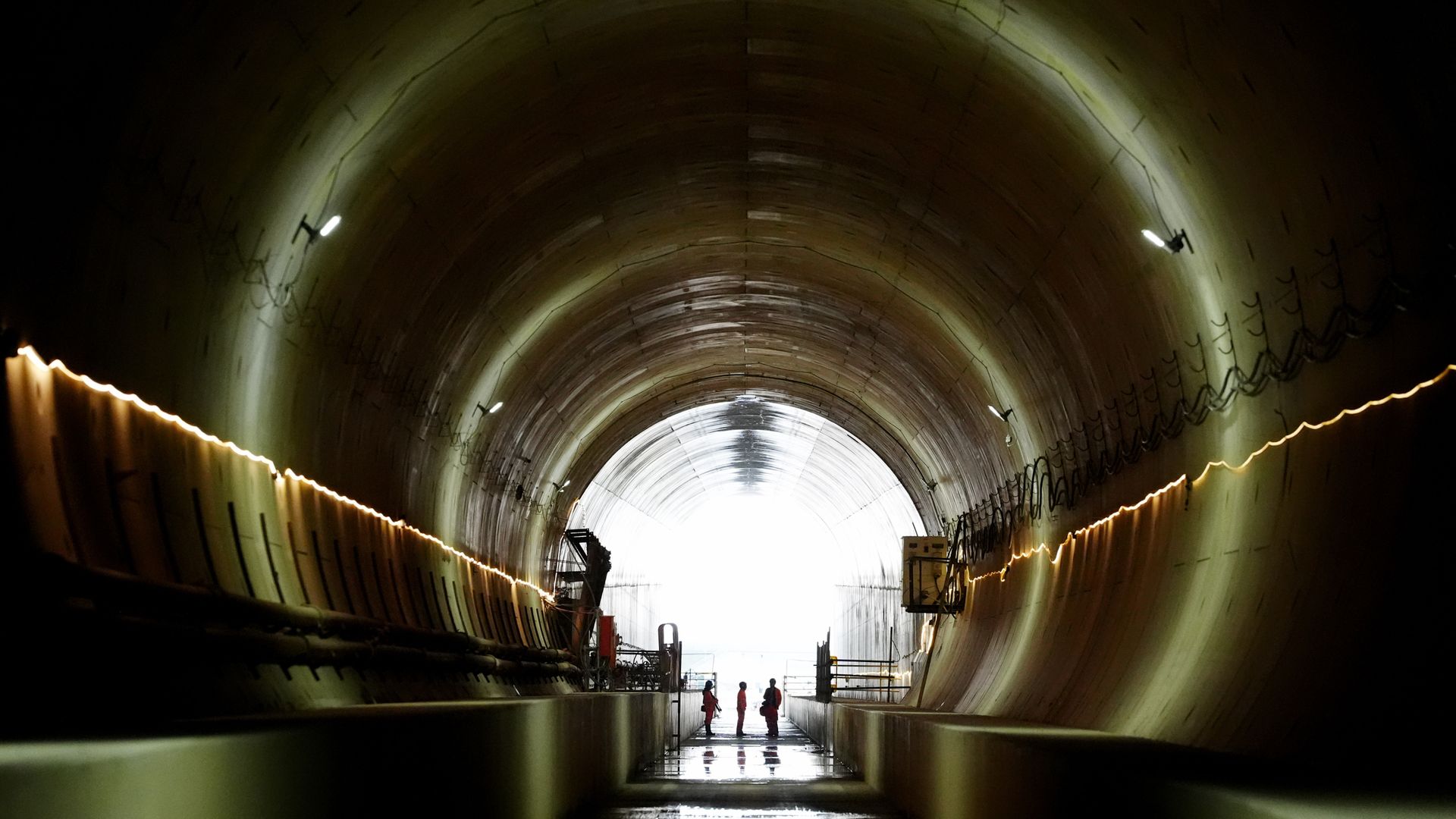
The headlines are singing the same tired tune. Government officials are patting themselves on the back for renegotiating key High Speed Two contracts, claiming they have found ingenious ways to slash soaring infrastructure costs.
The lazy consensus says saving money on a bloated megaproject is always a win. In related news, read about: Strait of Hormuz Chokepoint Dynamics A Quantitative Blueprint of Maritime Risk.
They are wrong. Every single cent trimmed from these contracts today is a down payment on a compounding catastrophe tomorrow.
I have watched public infrastructure budgets implode for two decades. I have seen project managers trim contingencies, squeeze suppliers until their margins turn negative, and celebrate immediate paper savings while baking systemic failure into the concrete. Investopedia has also covered this important issue in great detail.
When you force contractors to slash bids on a high-speed rail network, you do not find magical efficiencies. You cut competence. You trim safety buffers. You delay maintenance schedules that will hit the public purse twice as hard twenty years down the line.
Let us dismantle the fiction that cheaper high-speed rail contracts equal fiscal responsibility.
The Margin Squeeze Fallacy
Look at how infrastructure procurement actually works. When the government turns the screws on Tier 1 contractors to lower costs, those firms do not absorb the deficit. They are publicly traded entities with fiduciary duties to their shareholders.
Instead, they lowball the bid to secure the work, banking on change orders, redesigns, and future government capitulation to make their margins back. Or worse, they execute the project with substandard materials and underpaid engineering talent.
When a contractor operates on razor-thin margins, innovation dies. Risk management becomes an exercise in box-ticking rather than engineering reality.
Imagine a scenario where a contractor saves fifty million pounds on tunneling equipment to meet an arbitrary government budget cap. Two years later, ground subsidence halts the boring machine for six months. The resulting delays, legal battles, and emergency remediation cost three hundred million pounds.
That is not cost control. That is financial illiteracy disguised as fiscal discipline.
Why Speed Is Not The Enemy of Cost
The common narrative blames the sheer speed of the proposed trains for the budget blowouts. Politicians wring their hands over the engineering complexity required to hit two hundred and fifty miles per hour.
This is a red herring.
The astronomical cost of High Speed Two has very little to do with the physics of fast trains. It has everything to do with endless political interference, rampant land acquisition inflation, archaic planning laws, and constant scope changes driven by shifting administrations.
Every time a minister halts construction to review the route, billions evaporate into consulting fees and idle machinery. Renegotiating construction contracts does nothing to fix the underlying pathology. It merely puts a fresh coat of paint on a rotting foundation.
If you want to save money on rail infrastructure, stop stopping the project. Continuity of execution lowers costs. Constant renegotiation spikes them.
The Maintenance Trap
Here is the dirty secret nobody in Whitehall wants to admit. Deferred capital expenditure is just borrowing from the future at a predatory interest rate.
When you pressure builders to deliver a high-speed line for less, they compromise on durability. Track foundations are laid with thinner aggregate beds. Signaling systems rely on cheaper, less resilient architecture. Stations are value-engineered down to unmaintainable concrete boxes.
The lifecycle cost of a rail network dwarfs its initial construction bill. Build it right once, and you spend decades on routine upkeep. Build it cheap to satisfy a quarterly Treasury report, and you will rebuild the entire asset within a generation.
Great Britain already has a historic habit of under-investing in long-term capital assets because politicians only care about election cycles that span four to five years. Shaving a few billion off the build phase to look good on the evening news is an act of intergenerational vandalism.
Stop Trying to Save Money and Start Protecting Value
If the Department for Transport actually wanted to fix this mess, they would throw out the procurement playbook entirely.
Stop running race-to-the-bottom auctions where the lowest bidder wins the right to bankrupt themselves and delay the nation. Move to transparent, collaborative contracting models where suppliers are incentivized to solve engineering challenges rather than game the change-order system.
Stop pretending that infrastructure is a discretionary luxury item you can bargain down like a used car. High-capacity rail is the nervous system of a modern economy. You do not save money by pinching pennies on your central nervous system.
The renegotiated contracts are a political sedative. They numb the public into thinking fiscal prudence is taking place while the underlying asset is compromised beyond recognition.
When the bills for deferred maintenance, chronic delays, and premature renewals come due, the politicians who signed these cost-cutting deals will be long gone.
You will be left paying the difference.